
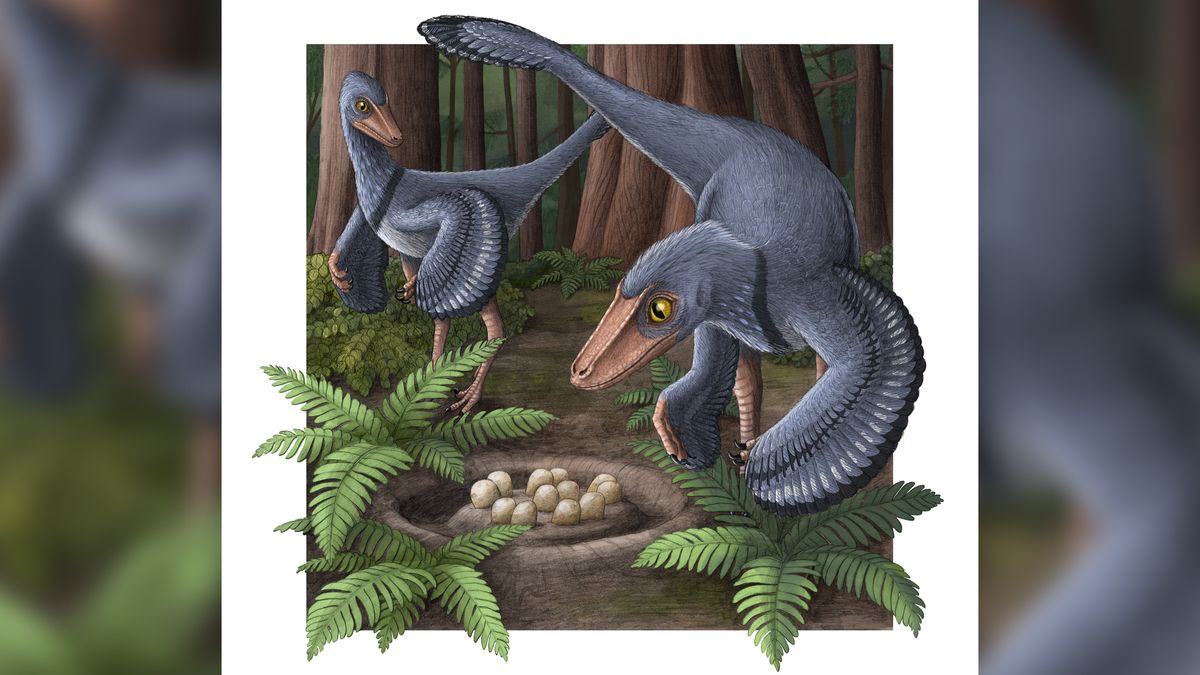
Ancient bird-like dinosaurs nested communally, study shows.
Fossilized eggshells have revealed that Troodon, a bird-like dinosaur that lived up to 74 million years ago, shared communal nests where several female nestmates often laid more than 20 eggs together, which these feathery dinos then brooded to keep warm. The dinosaurs were endotherms, meaning they were warm-blooded and could self-regulate their body temperature. They could probably switch between a warm-blooded state and a state of cold-blooded torpor — a strategy common in modern birds, called heterothermy. The finding sheds light on the evolutionary transition from cold-bloodedness to endothermy in dinosaurs.