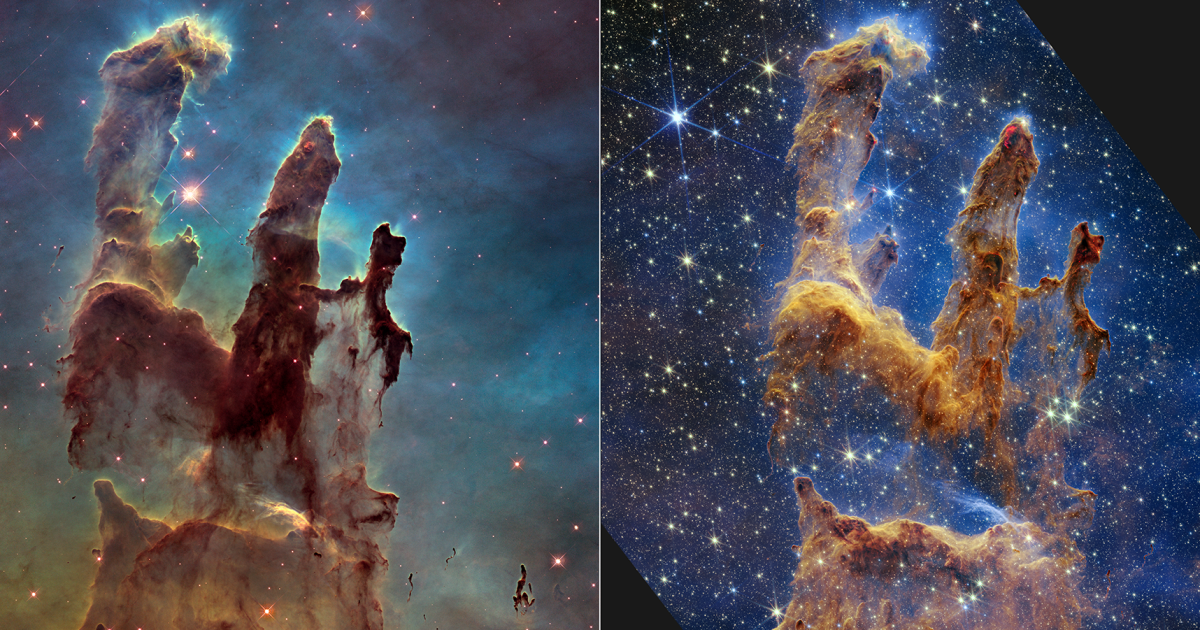
How Scientists Add Color to the Universe's Canvas
Astronomical images often use colorization techniques to convey information not visible to the human eye. Scientists assign colors to different wavelengths of light captured by telescopes like Hubble and JWST, which may include non-visible spectra such as infrared or X-rays. This process helps highlight specific features, such as the presence of certain elements or energetic phenomena, allowing for a more comprehensive understanding of celestial objects. The choice of colors is not fixed and can vary depending on the data and the features scientists wish to emphasize.