McLean clinicians are developing a new model to address childhood OCD, inspired by personal stories and increased awareness of mental health issues, aiming to improve diagnosis and treatment for young patients.
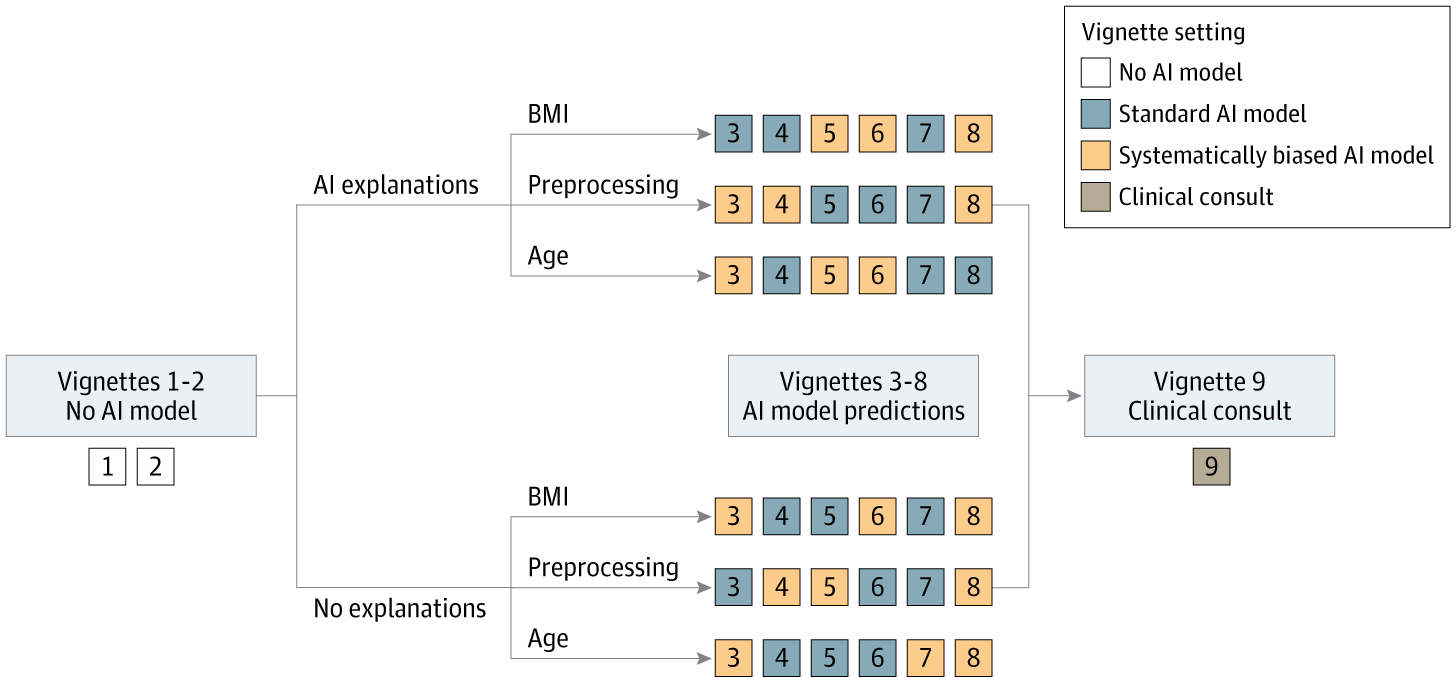
A study evaluated the impact of artificial intelligence (AI) models on clinician diagnostic accuracy in the diagnosis of hospitalized patients. The results showed that when clinicians were provided with standard AI model predictions and explanations, diagnostic accuracy increased by 4.4%. However, when clinicians were shown systematically biased AI model predictions, diagnostic accuracy decreased by 11.3%, and the explanations did not mitigate the negative effects. This suggests that while AI models can improve diagnostic accuracy, systematic bias in AI models can worsen clinician accuracy, and image-based AI model explanations may not help clinicians recognize biased models.
A study led by the University of Cambridge and King's College London found that patients' experiences and self-assessments are often undervalued by clinicians when making diagnostic decisions. The research highlighted biases related to ethnicity and gender, with women more likely to be told their symptoms were psychosomatic. The study called for a shift away from the "doctor knows best attitude" and emphasized the importance of listening to and valuing patients' insights. While some clinicians highly valued patient opinions, fewer than 4% ranked patients' self-assessments as important evidence. The inclusion of patient insights could lead to improved diagnostic accuracy, fewer misdiagnoses, and greater patient satisfaction.
A study led by researchers from the University of Cambridge and Kings' College London found that clinicians rank patient self-assessments as the least important factor in diagnostic decisions. The study highlighted the under-valuation of patient reports and the tendency for patients to be disbelieved or have their symptoms downplayed. Clinicians ranked their own assessments highest, despite acknowledging their lack of confidence in diagnosing invisible symptoms. The study emphasized the need to value patients' insights and experiences, particularly for long-standing diseases, and called for a more collaborative relationship between patients and clinicians. Including patients' perspectives in diagnosis could lead to improved accuracy, fewer misdiagnoses, and greater patient satisfaction.
Google has introduced MedLM, a suite of health-care-specific artificial intelligence (AI) models aimed at assisting clinicians and researchers in complex studies and summarizing doctor-patient interactions. The suite includes a large and medium-sized AI model, both built on Med-PaLM 2, a language model trained on medical data. Google plans to introduce health-care-specific versions of its newest AI model, Gemini, to MedLM in the future. Companies like HCA Healthcare have been testing Google's technology, using it to automate documentation of doctor-patient interactions and improve workflows. However, challenges remain, such as the potential for incorrect information and the need for careful implementation to avoid risks to patients.
Clinicians warn that leprosy, also known as Hansen's disease, may now be endemic in Florida based on growing evidence. A recent case of a 54-year-old man from Florida who presented with a painful and progressive rash and was diagnosed with leprosy has raised concerns. Contact tracing by the National Hansen's Disease Program revealed no associated risk factors, such as travel, zoonotic exposure, occupational association, or personal contacts. Clinicians emphasize the need for heightened awareness and vigilance among healthcare professionals in Florida.
Researchers at the University of Pennsylvania have discovered a simple and effective way to reduce medical errors in patient diagnosis and treatment. By using structured networks to connect clinicians with their peers, doctors were found to be twice as accurate in their recommendations when they had access to the diagnostic decisions of their colleagues. The study, involving nearly 3,000 doctors, demonstrated that having a support network improves clinical care and decision-making. The researchers suggest that implementing these information-sharing networks could be a valuable tool in reducing medical errors and improving patient outcomes.
A large language model designed to generate text-based language from large datasets is advancing rapidly, but current models are not suitable for use in clinical settings. While these models outperform previous iterations, they still remain inferior to clinicians in terms of medical knowledge and expertise.