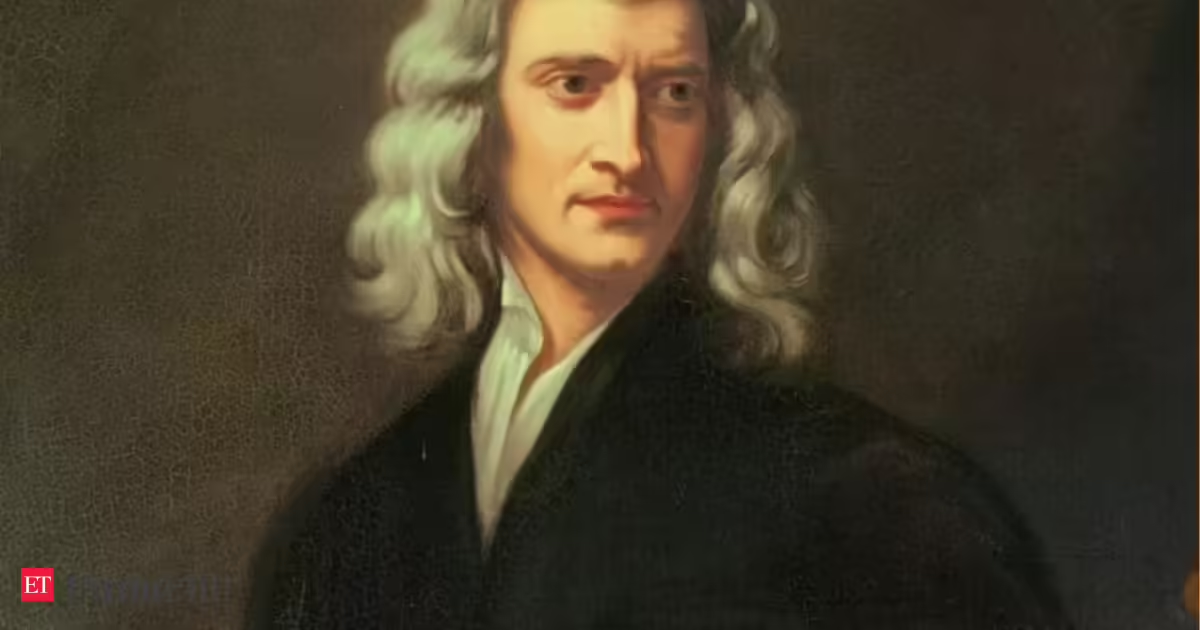
Isaac Newton, a pivotal figure of the Scientific Revolution, revolutionized our understanding of the universe with his laws of motion and universal gravitation, emphasizing simplicity in scientific inquiry, and his work continues to influence science today.
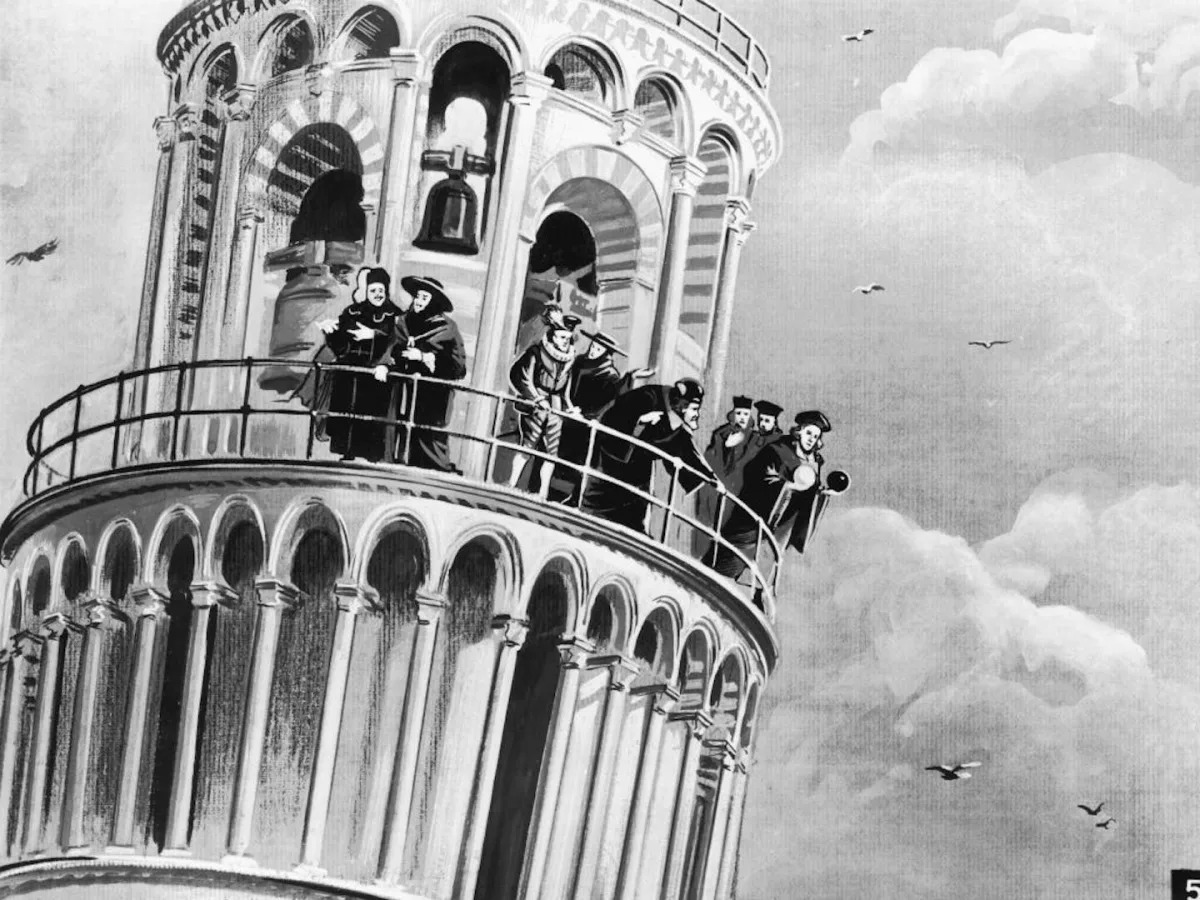
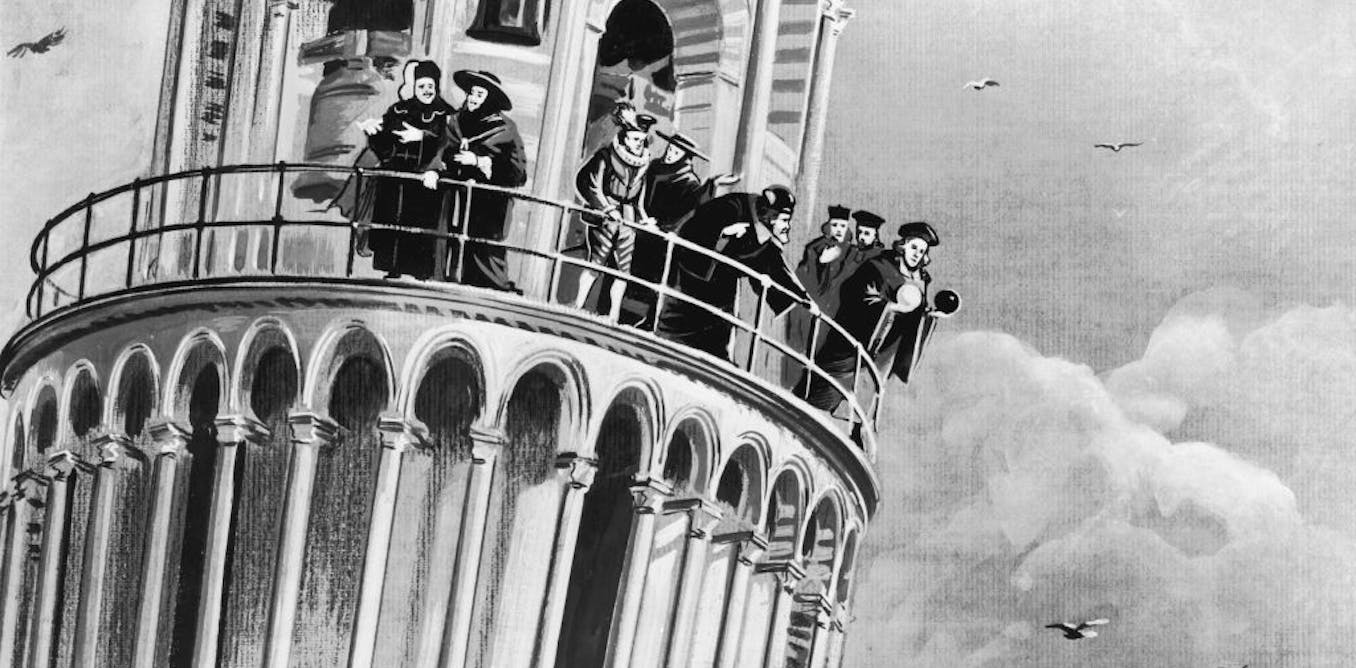
Galileo Galilei's Leaning Tower of Pisa experiment demonstrated that objects of different masses fall with the same acceleration due to the Earth's action force. However, when sliding on a smooth table, the accelerations of objects with different masses differ due to the interaction forces. In modern mechanics, the concept of force has evolved to view it as an action force field that radiates outward from its source, rather than an interaction force between objects. This shift in understanding has led to a deeper comprehension of the dynamics of objects and the nature of force fields.
Galileo Galilei's Leaning Tower of Pisa experiment, a classic thought experiment in dynamics, demonstrated that objects of different masses fall with the same acceleration due to the Earth's action force. However, when sliding on a smooth table, objects of different masses have different accelerations due to the fundamental forces being different. In modern mechanics, the concept of force has evolved to view it as an action force field that radiates outward from its source, with the magnitude depending only on the mass of the object itself. This reinterprets Galileo's experiment and other interactions, providing a deeper understanding of the nature of reality.
Physicists at the Stevens Institute of Technology have revisited Christiaan Huygens' 350-year-old work on pendulums and used his mechanical theorem to uncover connections between the properties of light. By applying mechanical concepts, they found that the degree of polarization in a light wave is directly related to the degree of vector-space entanglement. This research helps simplify our understanding of the world by revealing underlying connections between seemingly unrelated physical laws.