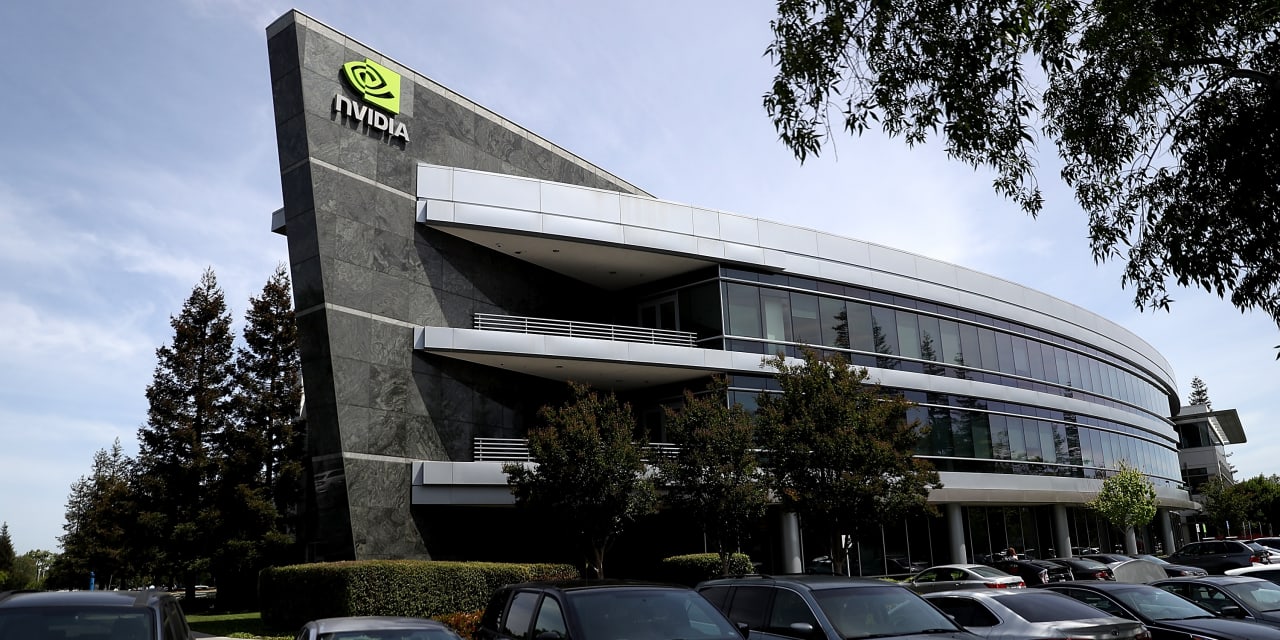
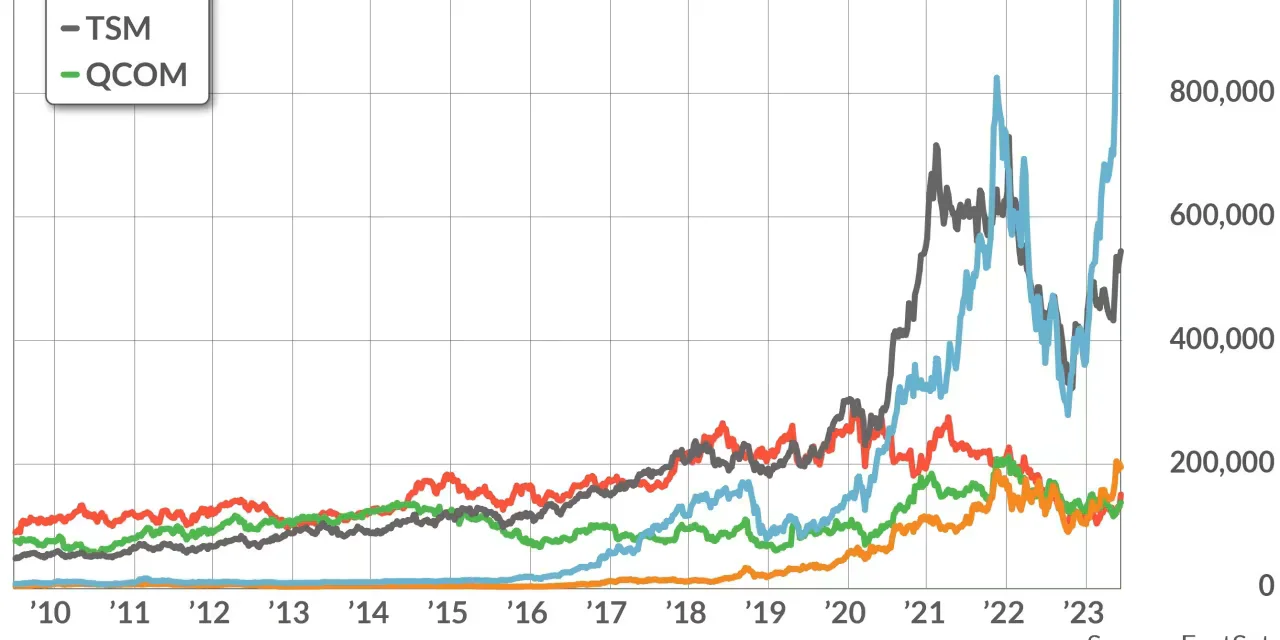
Nvidia stock plummeted by 10% below its 10-week moving average, signaling a sell-off amidst a broader market retreat. The AI chip giant, which had been leading the artificial intelligence boom, is down about 22% from its March high, prompting investors to consider locking in profits or closing positions. The stock's decline mirrors a broader market sell-off, with Super Micro Computer (SMCI) also experiencing a slide, as both companies flashed sell signals in Friday's trading.
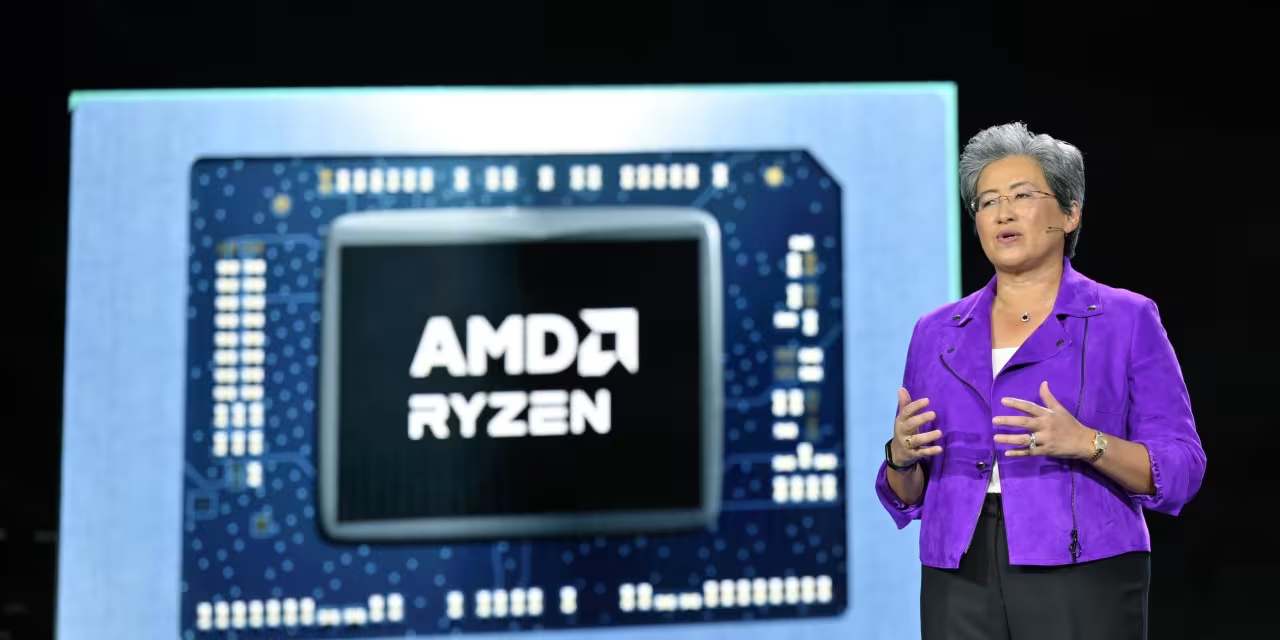
Advanced Micro Devices Inc. (AMD) has reached a market value of over $300 billion for the first time, marking a significant milestone in its impressive rise. The company's stock rose 9% in Thursday afternoon trading, reflecting its growing prominence in the semiconductor industry. AMD's surge is part of a broader trend in the booming chip market, with other semiconductor stocks also experiencing strong gains. This growth is fueled by increasing demand for AI-optimized servers, with companies like Dell reporting strong interest and orders for products featuring AMD's technology.
Nvidia's chief executive, Jensen Huang, declared that artificial intelligence (AI) has reached a "tipping point" as the company reported a staggering 265% increase in revenues to $22bn in the last quarter. The chip maker also forecasted a 233% jump in quarterly revenues for the current quarter, surpassing analysts' expectations. The surge in demand for AI and accelerated computing, along with rapid growth in data center sales, contributed to Nvidia's record-breaking performance, despite challenges such as supply chain constraints and increased trade restrictions with China. The company's stock market value has soared by 225% over the last year, solidifying its position as one of the most valuable companies in the US.
NVIDIA has surpassed Alphabet to become the third most valuable company in the US, with a valuation of $1.83 trillion, largely due to its dominance in the high-end chip market driven by the boom in AI. The company's expansion into custom chips for cloud computing firms is expected to further solidify its position. With its quarterly report imminent, NVIDIA's performance will be closely watched, with predictions indicating a significant increase in earnings and net profits.
Intel's stock experienced its largest one-day drop in over three years after the company's first-quarter revenue forecast fell well below analyst expectations. Analysts expressed concerns about the company's challenges in the data-center and artificial-intelligence unit, as well as its broader road ahead. Some downgraded the stock and highlighted the impact of competition from AMD and ARM, while others remained more optimistic about Intel's potential in AI. The stock fell 11.9% in Friday trading, marking its worst single-day percentage decline since July 2020.
Nvidia's stock has surged at the start of the year, surpassing other tech giants, and could potentially rival Amazon's market valuation if its positive performance continues.
Nvidia is expected to be the biggest contributor to Q3 corporate profits for the S&P 500 index, thanks to its impressive performance and the AI boom. However, the company will need to meet high expectations to sustain its rally and continue its upward trajectory.
Intel's stock dropped after its annual technology conference, as analysts remain skeptical about the company's ability to compete with Nvidia in artificial intelligence, protect its core market, and expand its semiconductor manufacturing capabilities.
Chip maker AMD is set to report its second-quarter earnings, with analysts expecting adjusted earnings of 57 cents per share on revenue of $5.32 billion. The company has forecasted revenue between $5 billion and $5.6 billion, with gross margins of about 50%. Analysts are particularly interested in the performance of AMD's data-center and PC sales, as well as its gaming and embedded sales. The results will be compared to rival Intel's recent earnings, which showed a decline in PC and data-center sales. AMD's shares have gained 76.6% year to date.
Intel's stock rose in late trading after the company reported strong earnings and provided a revenue forecast for the September quarter that exceeded expectations.
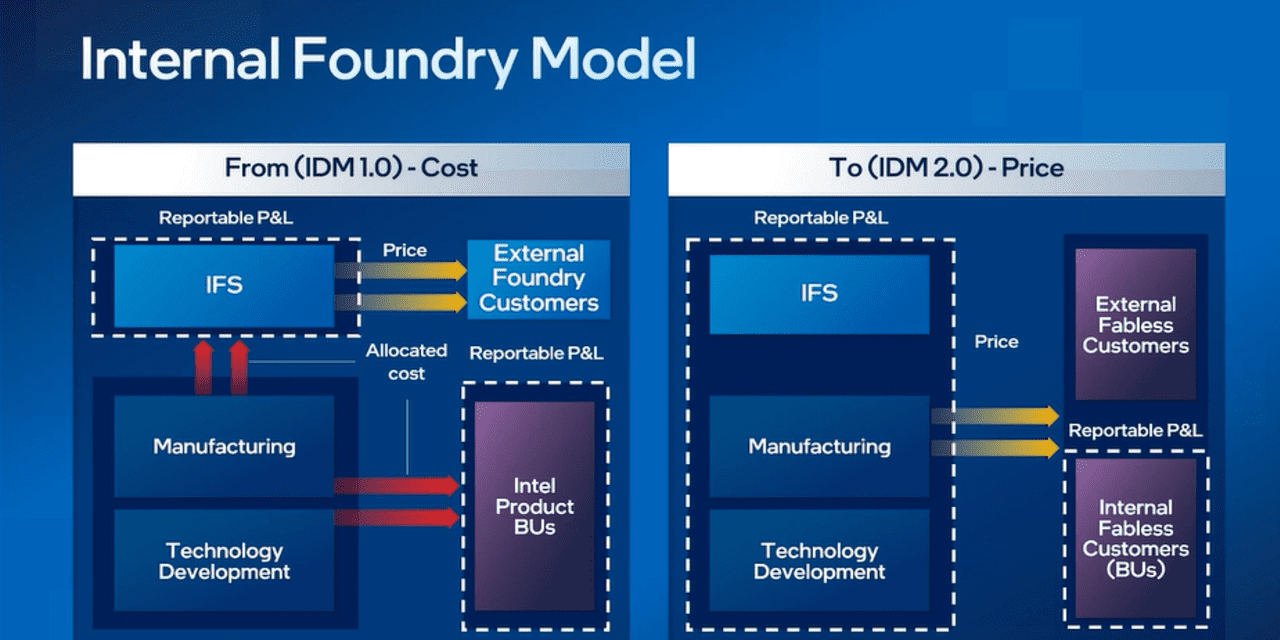
Intel's stock fell more than 4% to an intraday low of $33.43, making them the worst performer on the Dow Jones Industrial Average for the second day in a row. The chip maker seeks to compete against third-party fab giant Taiwan Semiconductor Manufacturing Co. Intel said it was providing more transparency into its manufacturing arm as it seeks to build out its Intel Foundry Services business, which hopes to name a major customer by the end of the year. Intel margins have been under fire since they have fallen well below the 51% to 53% margins range, and the chip maker will start giving its manufacturing business its own profit and loss statement as it moves to become competitive in the third-party fab sector.
Intel is set to provide an update on its foundry business today, with a focus on expanding its custom chip-making business. The chip maker's stock is dropping ahead of the event, which is scheduled to start at 11:30 a.m. EST.
Morgan Stanley analyst Joseph Moore has switched his "top pick" stock to Nvidia from Advanced Micro Devices (AMD) on the basis that Nvidia is better positioned to make money in the near term. Moore said "only one company is in a position to beat and raise this year," and that was Nvidia. Shares of Nvidia rose 0.1% to finish Friday at $426.92, for a weekly gain of 10.1%, while AMD shares fell 3.4% to close at $120.08, for a weekly loss of 3.9% during AMD's AI data-center product launch during the week.
China's cyberspace regulator has banned US memory chip maker Micron Technology's products from key infrastructure projects in the country, citing "serious network security risks" and "significant security risks to China's critical information infrastructure supply chain, affecting China's national security". The move marks China's first major action against a US chip maker and comes amid increasing tensions between the two countries. The US government has said it will work with allies to address "distortions of the memory chip market caused by China's actions".