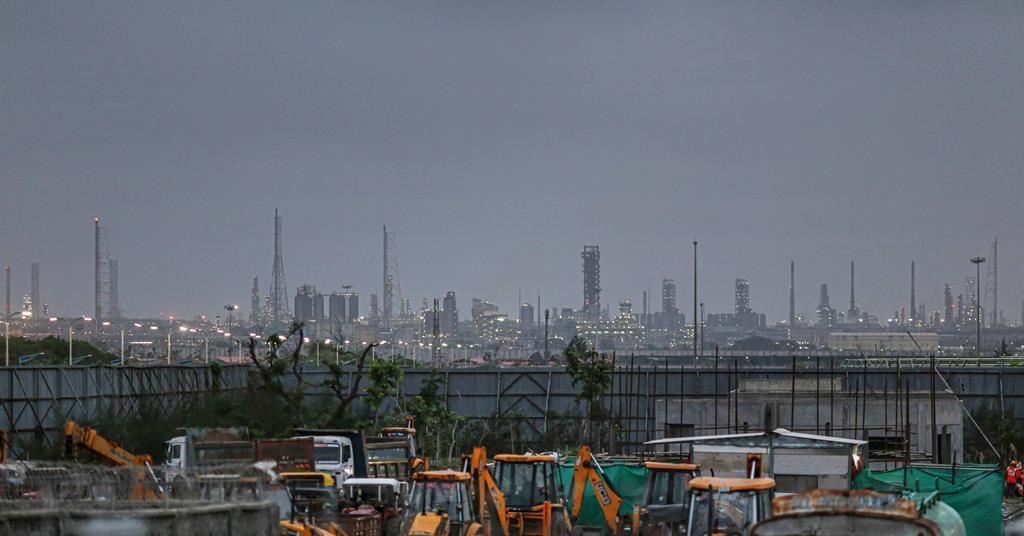
The chemical industry in 2025 faces ongoing uncertainty due to tariffs, geopolitical tensions, and overcapacity, especially in Europe, which is experiencing plant closures and economic contraction. Meanwhile, India shows rapid growth driven by domestic demand, and China continues to reshape global trade with significant capacity expansion. AI integration is rising across the sector, while sustainability efforts are subdued, impacted by economic and political factors. Overall, the industry is undergoing a major reshaping, with a long-term outlook of recovery possibly not until 2027.
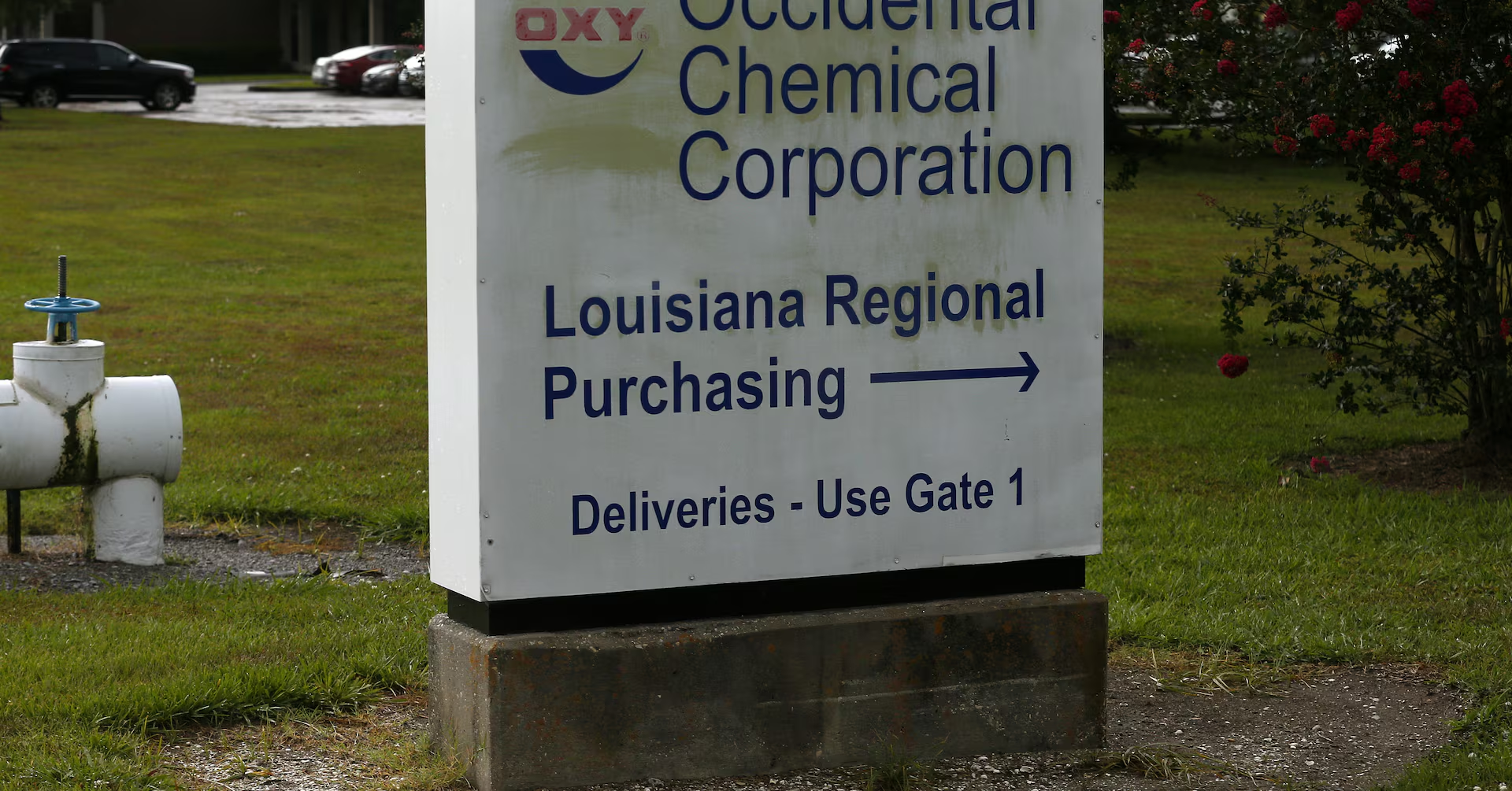
Occidental Petroleum is selling its chemicals division, OxyChem, to Berkshire Hathaway for $9.7 billion to reduce debt following costly acquisitions, with plans to use most of the proceeds to lower its debt below $15 billion and refocus on its core oil and gas business.
Berkshire Hathaway is in talks to acquire Occidental Petroleum's petrochemical business for about $10 billion, marking its largest deal since 2022, as Warren Buffett's firm re-engages in major acquisitions with a substantial cash reserve.
Dow Inc. reduced its quarterly dividend by half to conserve cash amid a prolonged industry downturn and lower earnings, leading to a decline in its stock price and analyst downgrades, despite efforts to control costs and improve future earnings.
Albemarle (ALB) exceeded Q4 earnings and revenue expectations, with earnings of $1.85 per share and revenues of $2.36 billion, beating estimates. However, the stock has underperformed the market, and its earnings outlook is currently unfavorable, leading to a Zacks Rank #5 (Strong Sell). The chemical industry's outlook also impacts the stock's performance, with the industry currently ranked in the bottom 8% by Zacks. Huntsman (HUN) is yet to report its results, with an expected quarterly loss and decreased revenue.
DuPont De Nemours expects to report a fourth-quarter loss due to destocking and weaknesses in key markets, with a non-cash goodwill impairment charge at a unit of its water and protection segment. The company anticipates destocking to continue impacting sales into the first quarter of 2024 and projects first-quarter sales to be lower than analysts' estimates. CEO Ed Breen cited additional channel inventory destocking and weak demand in China as contributing factors, while rival Dow's shares also fell in premarket trade.
Scientists from Brazil and Germany have developed a safer and more economical method for producing acetone, a key component in the chemical industry. The new process uses light and a photoactive iron chloride catalyst, eliminating the need for high-temperature and high-pressure steps. This innovation simplifies acetone production, enhances safety, and reduces costs. The researchers plan to scale up the process for industrial use and are seeking partnerships with companies. The method also has the potential to be used with other substances and can be further optimized for sustainable production.
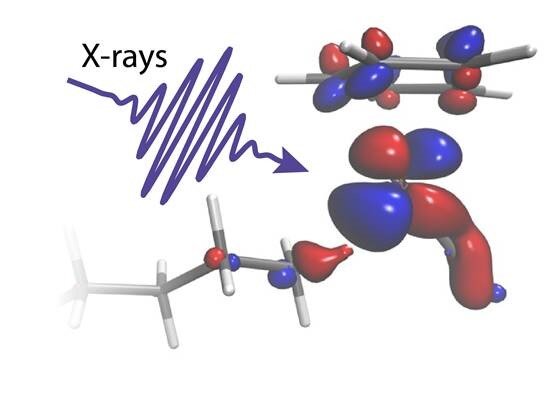
Scientists have used X-ray flashes to reveal how carbon-hydrogen bonds of alkanes break and how the catalyst works in this reaction. The research solves a 40-year-old mystery about how an activated catalyst can actually break strong C-H bonds by carefully exchanging fractions of electrons and without the need for huge temperatures or pressures. The researchers next want to learn how to direct the flow of electrons to help develop better catalysts for the chemical industry in order to make something useful out of methane and other alkanes.
Makers of PFAS, or "forever chemicals," covered up their health risks for decades, according to an analysis of previously secret industry documents by UC San Francisco researchers. The paper documents a timeline of what industry knew versus public knowledge and analyzes strategies the chemical industry used to suppress information or protect their harmful products. PFAS are widely used chemicals in clothing, household goods, and food products, and are highly resistant to breaking down, making them ubiquitous in people and the environment.
Scientists from Tsinghua University in China have developed a new organocatalyst that could reduce the energy consumption of the chlor-alkali process, which generates chlorine and sodium hydroxide. The catalyst, made of relatively cheap organic quinazoline-2,4-diones, could save approximately 1.8-4.6% of the 150TWh consumed by the process each year. However, the catalyst's stability still needs improvement before it can be adopted by the industry. The chlor-alkali process is responsible for more than half of the European chemical industry sales and consumes around 4% of the world's electricity production.