
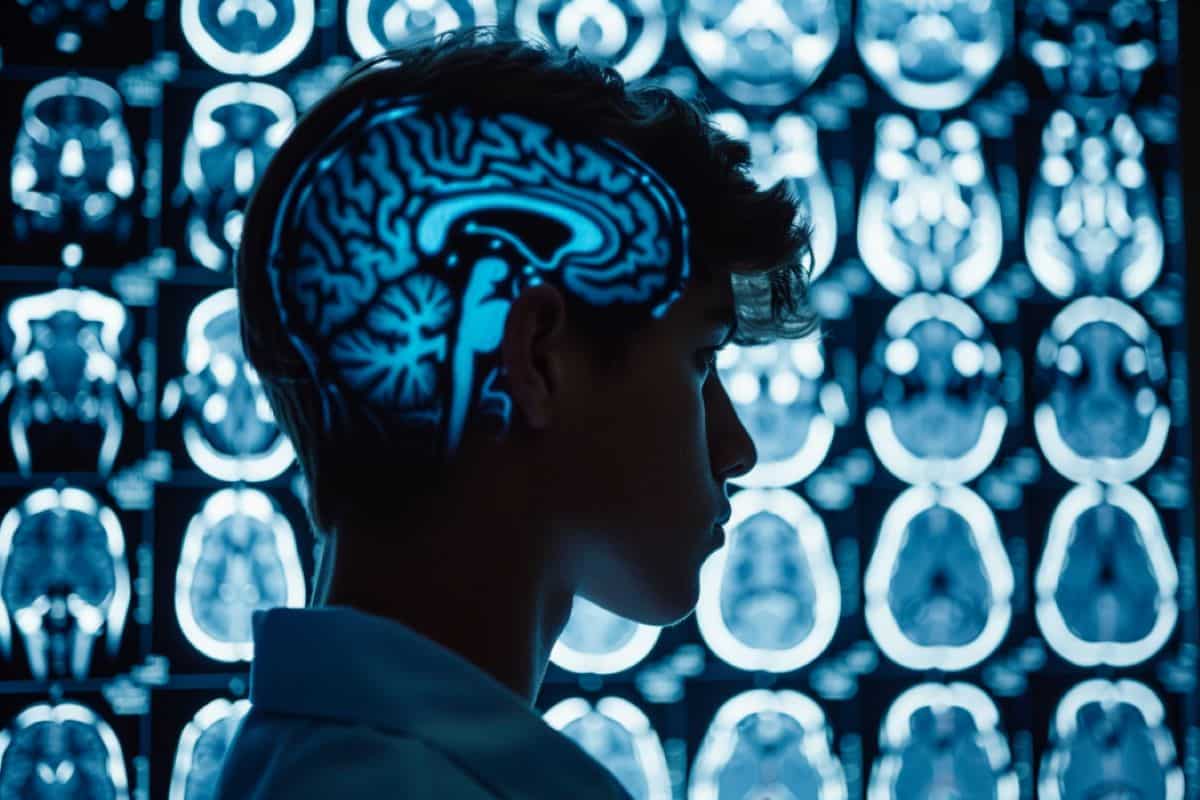
A study by NIH researchers found that young people with conduct disorder exhibit significant changes in brain structure, particularly a smaller cerebral cortex, which may affect behavior, cognition, and emotion. These findings could improve diagnosis and treatment approaches for the disorder.

Scientists have discovered a universal pattern of brain waves in multiple primate species, including humans, which involves distinct electrical activity in the six layers of tissue covering the outer surface of the brain. This pattern, revealed in a recent study published in Nature Neuroscience, suggests a mechanism for how the brain consciously switches focus from one piece of information to the next. The researchers hope to further study how conditions affecting the brain may disrupt this universal pattern, potentially aiding in the diagnosis and treatment of conditions like Alzheimer's and schizophrenia.
Children with Autism Spectrum Disorder (ASD) who have language impairment show lower gray matter volume and greater gyrification in the temporal and frontal lobes of the cerebral cortex, which are crucial for language function. The study’s findings could help design specialized education programs for children with autism by understanding the structural characteristics that contribute to behavioral deficits. Researchers found language impairment in children with ASD to be associated with a lower volume of gray matter and greater gyrification in the temporal and frontal lobes of the cerebral cortex.