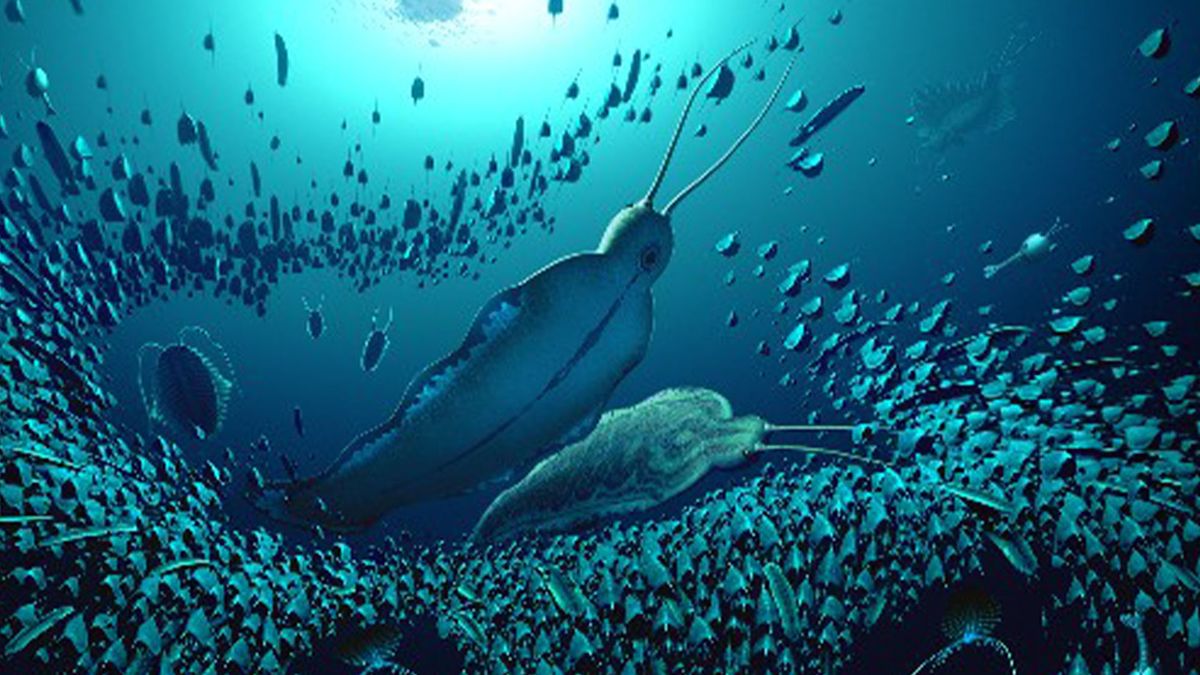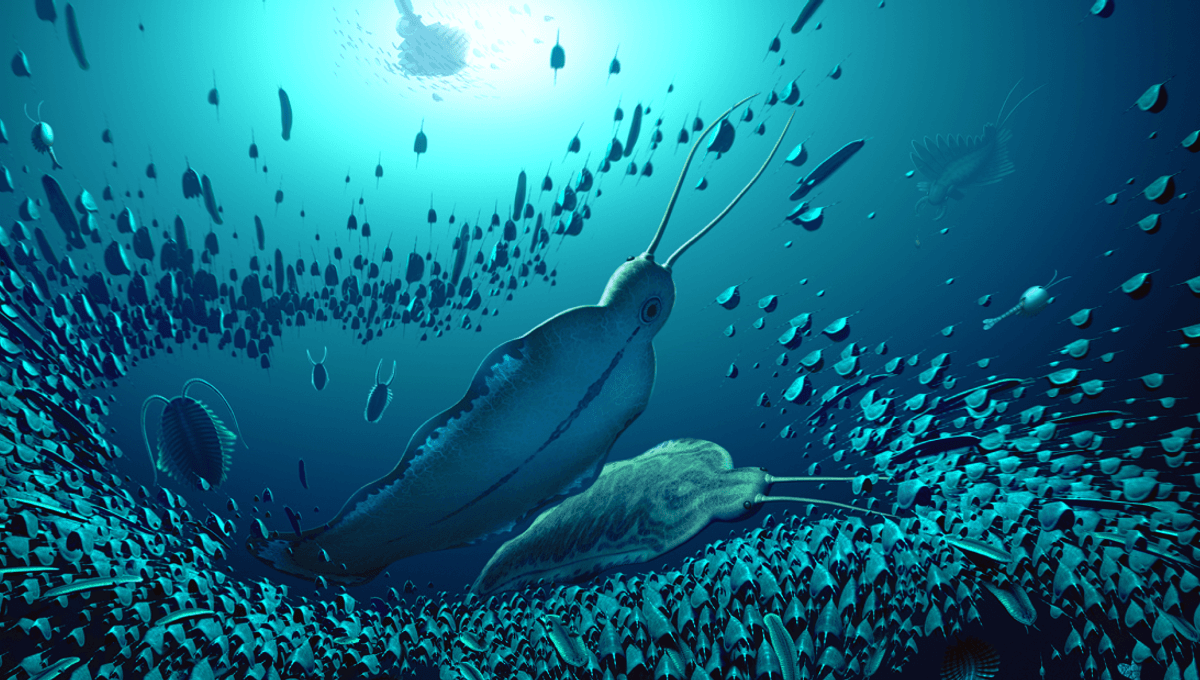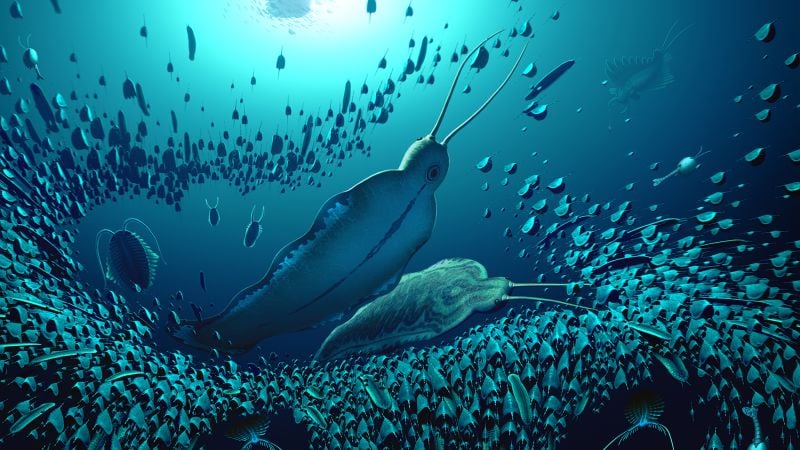
Scientists have discovered fossils of large predatory worms, named Timorebestia, in North Greenland, which thrived over 500 million years ago during the early Cambrian Period, predating the first sharks. These worms, reaching nearly a foot in length, challenge previous beliefs that primitive arthropods were the apex marine predators of that time. The study, published in Science Advances, reveals that these worms were a significant part of a complex and tiered marine ecosystem, providing new insights into the evolution of early carnivorous animals and their impact on the environment.
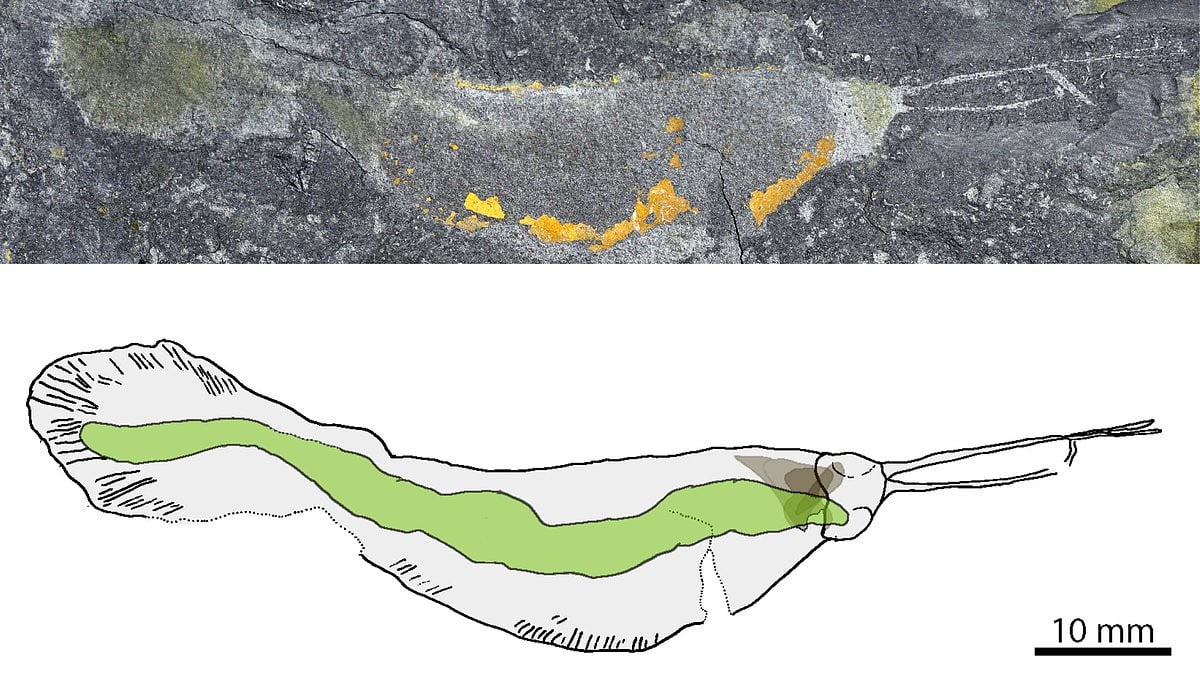
Scientists have discovered fossils of a giant carnivorous worm, Timorebestia koprii, in northern Greenland, which thrived during the Early Cambrian period over 518 million years ago. These 'terror beasts' were top predators of their time, reaching over 30 centimeters in length, and are related to modern-day arrow worms. The findings from the Sirius Passet fossil locality provide new insights into ancient ocean ecosystems and the evolution of carnivorous animals. The research, which also uncovered well-preserved anatomical details like digestive and nervous systems, was published in the journal Science Advances.
Scientists have discovered fossils of a large marine worm species, named Timorebestia koprii, from the early Cambrian period in northern Greenland. These "terror beasts" were top predators of their time, growing up to 12 inches long with a giant jaw, fins, and antennae. The well-preserved fossils allowed researchers to study their digestive systems and even identify their prey, mainly the marine arthropod Isoxys. The study, published in Science Advances, also found that these ancient worms are distant relatives of modern-day arrow worms, providing insight into the evolution of marine predators.
A team of scientists has discovered fossils of a half-billion-year-old predatory worm, Timorebestia, in the high-Arctic zone of North Greenland. These ancient creatures, which were among the largest predators of the Early Cambrian period, are related to modern arrow worms but were significantly larger, reaching up to 30 centimeters in length. The discovery provides new insights into the evolution of early marine ecosystems and the predatory dominance of these ancient worms before the rise of arthropods. The findings, including the preservation of unique nerve structures, support the hypothesis that Timorebestia and similar fossils are closely related to arrow worms, contributing to our understanding of early animal evolution. The research was published in the journal Science Advances.
Scientists have discovered fossils of giant predatory worms, named Timorebestia, in North Greenland, dating back 518 million years to the Early Cambrian period. These worms, which could grow up to 30 centimeters long, were top predators of their time, similar to the role of sharks and seals in modern oceans. The findings, which include details of their anatomy and evidence of their diet, provide new insights into ancient marine ecosystems and the evolution of predatory species. The study has been published in Science Advances.
Scientists have discovered fossils of large predatory worms, named Timorebestia, in North Greenland, dating back more than 518 million years to the Early Cambrian period. These 'terror beasts' were significant swimming predators, reaching lengths of over 30cm, and are considered to be distant relatives of modern arrow worms. The findings, which include preserved digestive systems and nervous centers, suggest a complex ancient ocean ecosystem with multiple predator tiers and provide new insights into the evolution of early carnivorous animals. The research, revealing a past dynasty of predators, is published in the journal Science Advances.