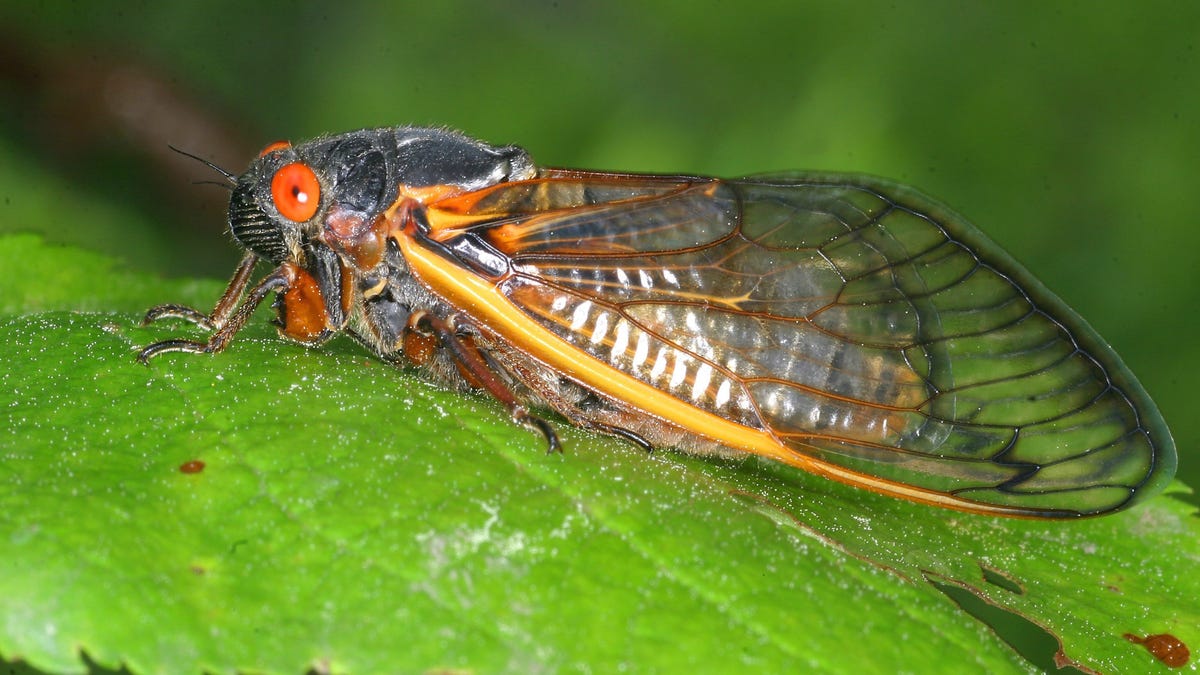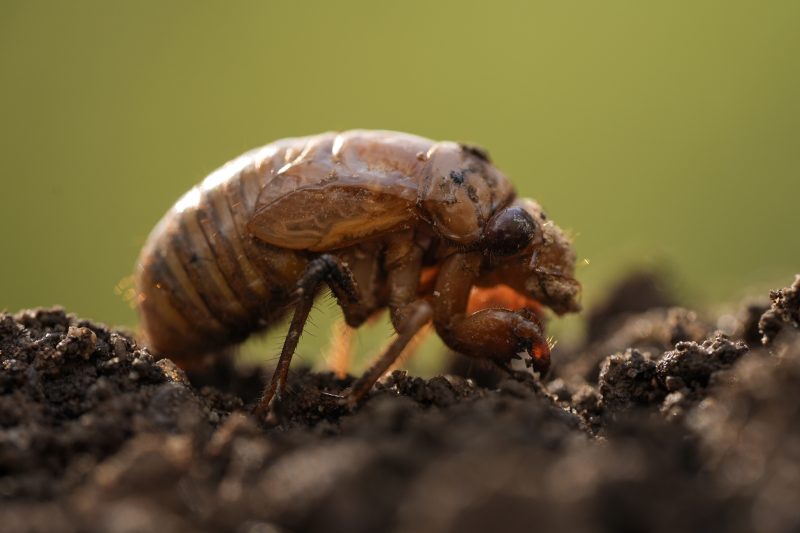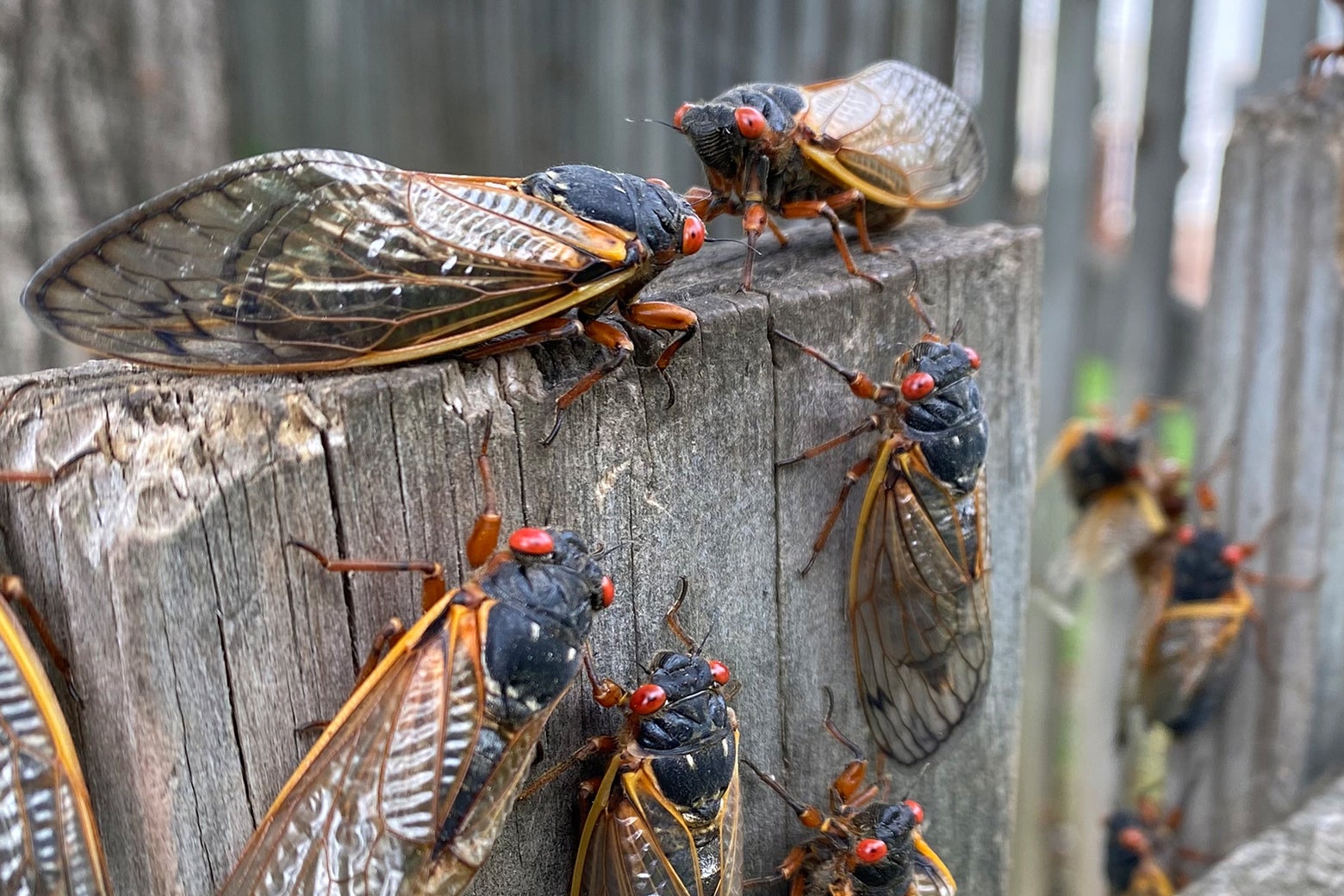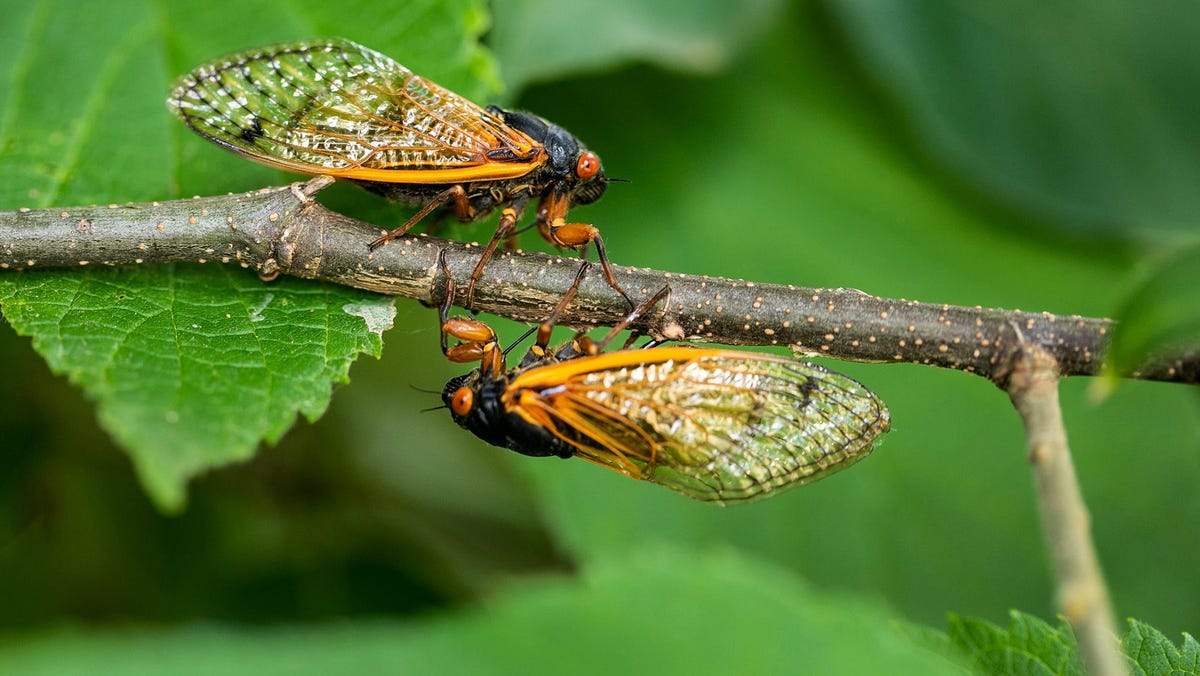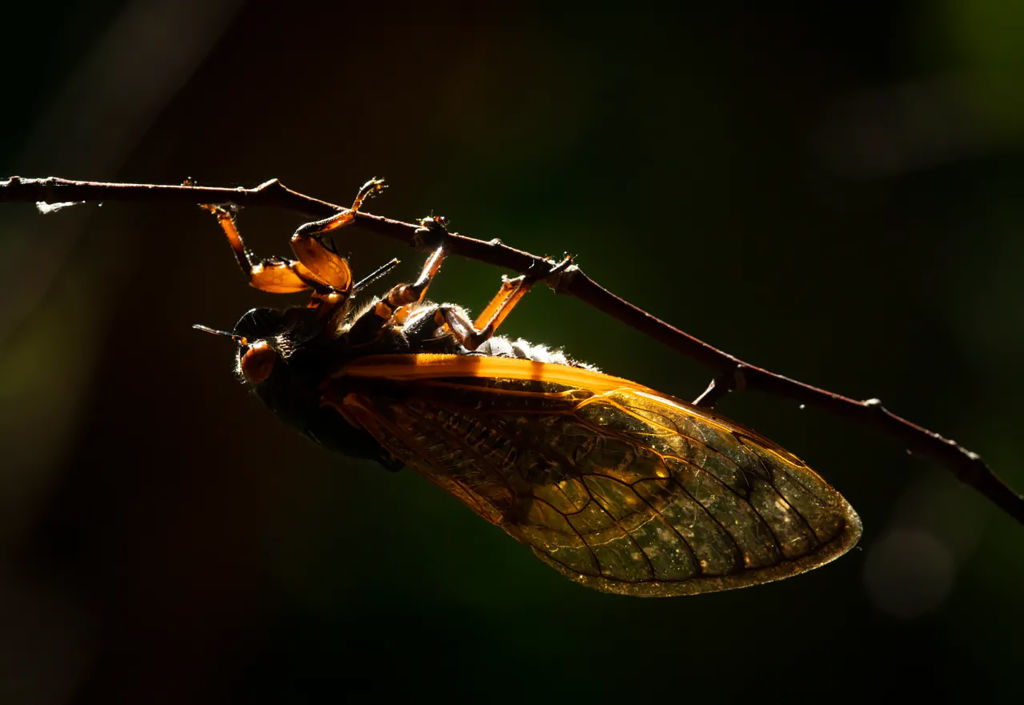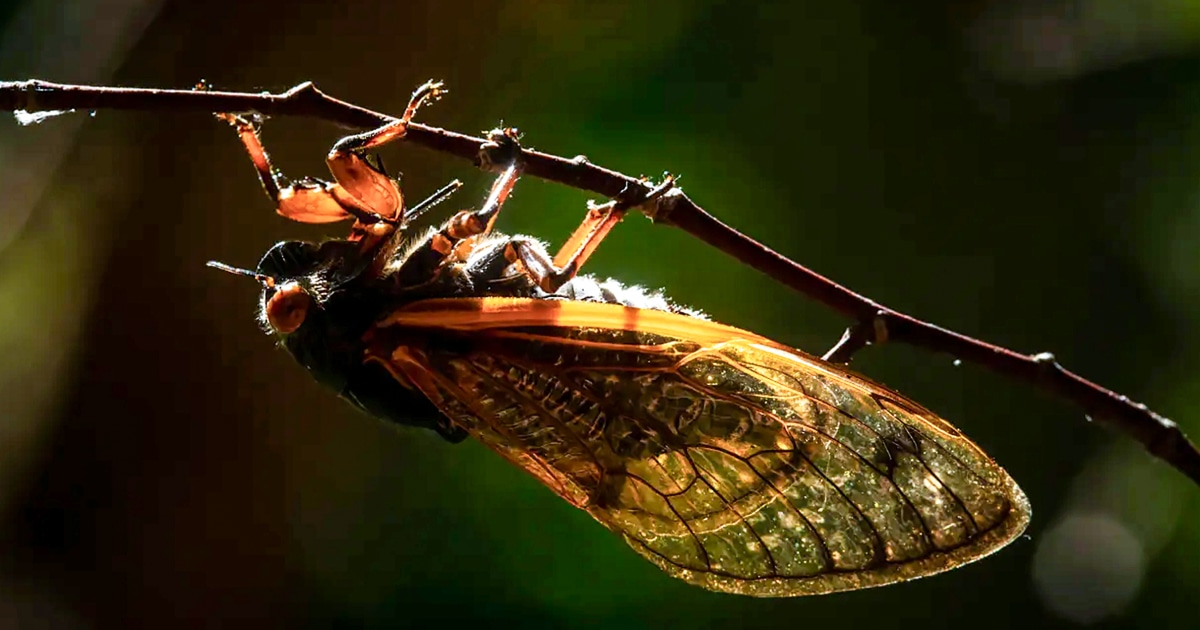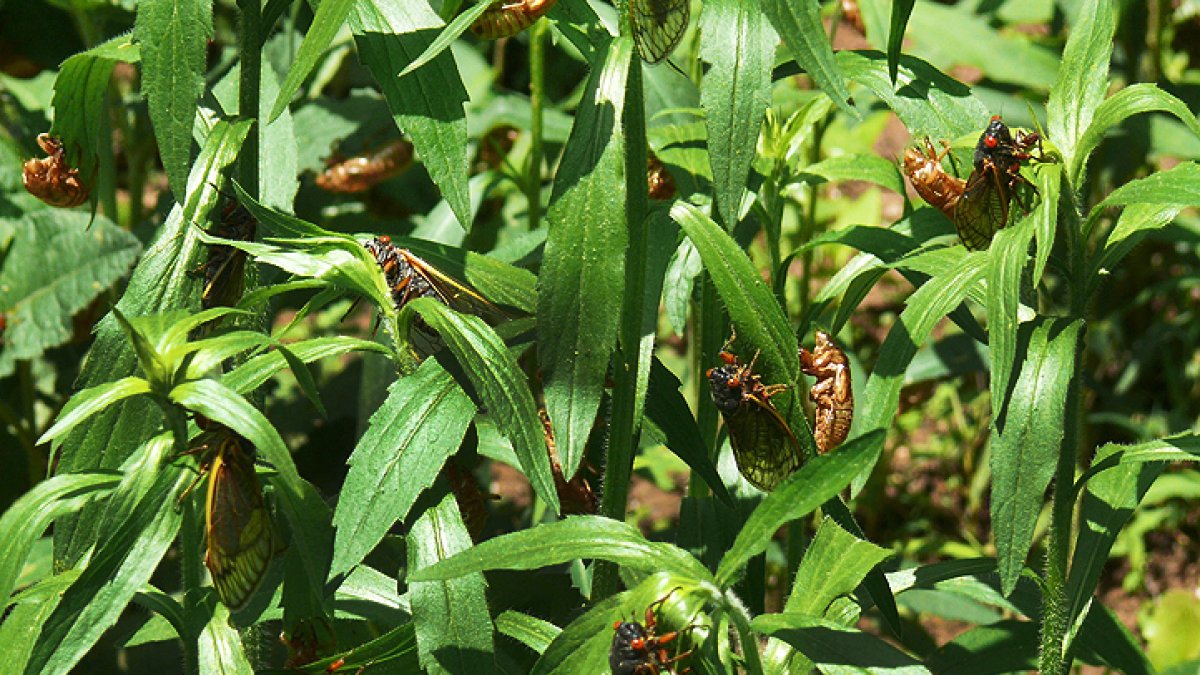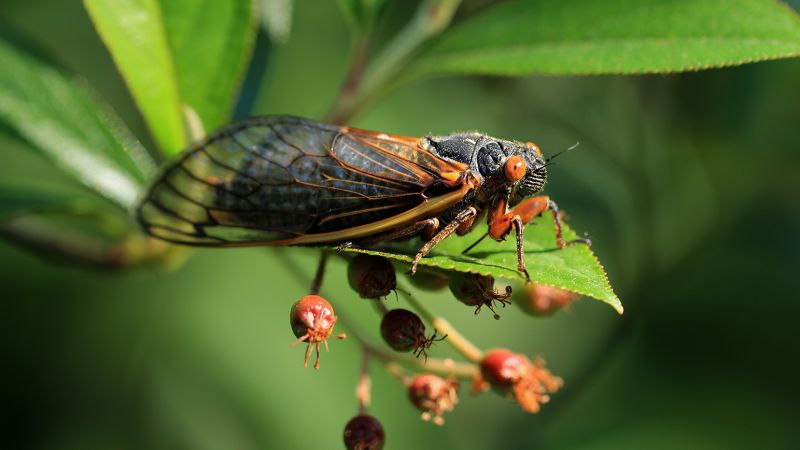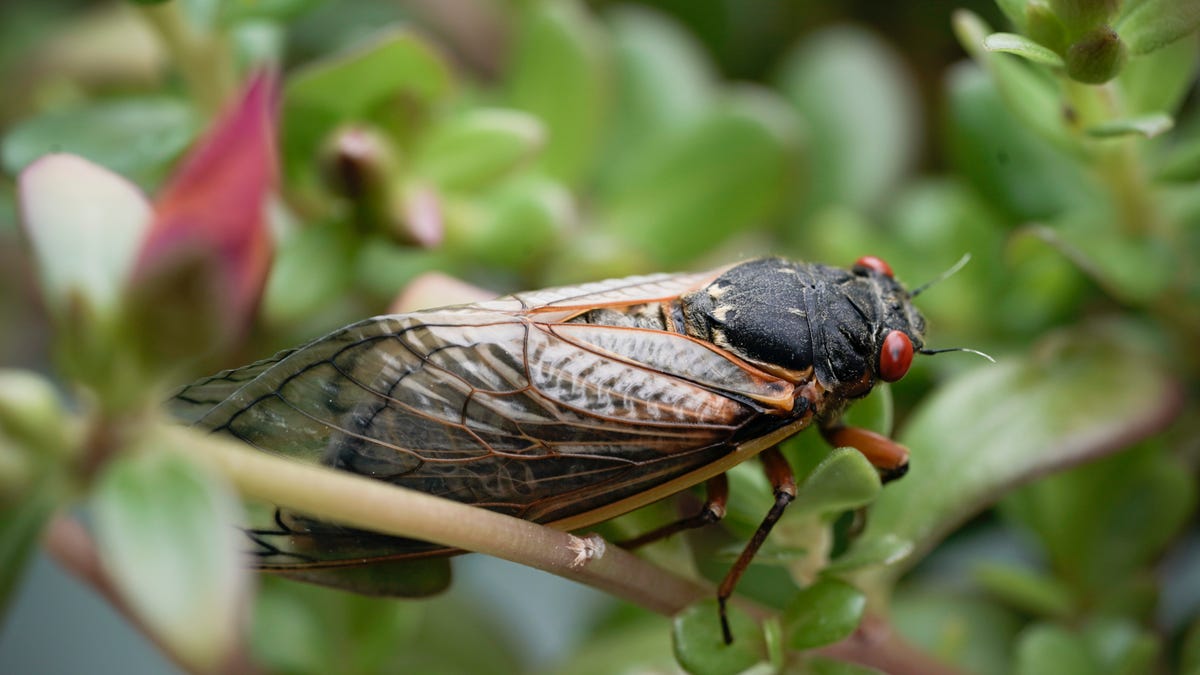
A map by the U.S. Forest Service shows where cicadas from Brood XIX and Brood XIII will emerge in 2024, and Brood XIV in 2025. Brood XIX, the largest geographic brood, will be concentrated in Missouri and Illinois, while Brood XIII will inundate Illinois and Iowa. In 2025, Brood XIV will appear in Southern Ohio, Kentucky, Tennessee, and parts of West Virginia, Virginia, and North Carolina. Despite their large numbers, cicadas are not dangerous.
This year, Brood XIX and Brood XIII of periodical cicadas, which have 13-year and 17-year life cycles respectively, are emerging together in the US for the first time since 1803, leading to high numbers of cicadas and their distinctive sounds in many areas.
The 17-year "Northern Illinois Brood" (Brood XIII) and the 13-year "Great Southern Brood" (Brood XIX) of cicadas are set to emerge in 2024, spanning across 17 states with some overlap in Illinois and Indiana. Michigan may not see as many cicadas as other states, and the emergence is expected to begin in late April or May when soil temperatures reach 64 degrees Fahrenheit. Cicadas are harmless insects that emerge in groups known as "broods" once every 13 or 17 years to reproduce, and they do not pose a danger to humans or animals. If you want to witness the emergence, heading to Indiana and Illinois is recommended.
Trillions of periodical cicadas set to emerge in the Midwestern and Southeastern states next month will face a unique predator, the cicada killer wasp, which preys on cicadas and may disturb lawns. The two broods, XIX and XIII, set to emerge in mid-to-late May, will be targeted by these wasps, which sting if threatened and can cause minor damage to lawns. The next double-emergence of these broods is not predicted until 2245.
Trillions of cicadas from Brood XIX and Brood XIII are set to emerge in the U.S., with some areas expecting up to a million cicadas per acre. Brood XIX, the largest periodical cicada group, will emerge across several states in mid-May, followed by Brood XIII in Indiana, Illinois, Iowa, Wisconsin, and potentially Michigan. The cicadas are harmless to humans and pets, but their emergence is expected to be a spectacle not seen in centuries.
Trillions of cicadas from Brood XIX and Brood XIII are set to emerge in the U.S., with Brood XIX emerging in mid-May across 15 states and Brood XIII in a few Midwestern states. The emergence, occurring for the first time since 1803, will bring around 1 million cicadas per acre, overwhelming some areas. However, states west of the Mississippi River are likely to be spared from the invasion. Despite their loud singing and large numbers, cicadas are harmless to humans and pets.
Billions of cicadas are set to emerge across the eastern U.S. this spring, with two periodical broods, Brood XIX and Brood XIII, emerging simultaneously for the first time since 1803. This year's emergence is significant as it marks the first time since 1998 that geographically adjacent 13- and 17-year broods have coemerged, covering almost all of Illinois. The event is anticipated to be a spectacle, drawing interest from scientists and the public alike, and providing a unique opportunity to witness the natural wonder of periodical cicadas.
Trillions of cicadas will emerge in a rare, double-brood event across 17 states in the Southeastern and Midwestern U.S., with an overlap in Illinois and Iowa, beginning in mid-May and lasting through late June. These two broods, Brood XIX and Brood XIII, have the longest life cycle of any insect, waiting 13 or 17 years to emerge. Despite their overwhelming numbers, cicadas are not harmful to humans, pets, or crops, and can provide environmental benefits such as serving as a food source for predators and improving soil quality.
In a rare event, two massive groups of cicadas, Brood XIII and Brood XIX, will emerge simultaneously in the Midwest, with their loud calls reaching motorcycle-level decibels. Michigan State University Extension states that the cicada populations will be centered in northern Illinois and Missouri/southern Illinois, with their noise potentially heard in parts of southwest Michigan. The rest of the state will still hear the summertime song of annual cicadas, which emerge in smaller numbers and don't make as much noise.
More than a trillion cicadas are set to emerge across the Midwest and Southeast this spring, marking a rare event that occurs once every 17 years. The insects, which spend the majority of their lives underground, will begin to surface when the soil temperature reaches around 64 degrees Fahrenheit. Despite their loud buzzing, cicadas are harmless to humans and are beneficial to the ecosystem, providing aeration to the soil and serving as a food source for various animals.
Billions of cicadas are set to emerge in a rare synchronized event across the Midwest and Southeast, with two different broods of periodical cicadas expected to appear starting early May. This year's emergence is expected to be unusually large, with some experts estimating that more than a trillion cicadas could blanket parts of the country where the two broods overlap. Cicadas are harmless to humans but are known for their loud mating songs, and bug enthusiasts are excited about this once-in-a-lifetime opportunity to witness the two cicada broods emerging together, a phenomenon that last occurred 221 years ago. People are encouraged to report cicada sightings on apps and websites to help track their range.
Two cicada broods are set to emerge in Illinois this spring and summer, with densities of up to a million and a half per acre. The noise from these insects, which can reach decibels similar to a lawn mower or passing jet, is expected to be disruptive, but their life cycle is short, lasting just four to six weeks. The emergence is predicted to occur between mid-May and early June, with the Northern Illinois Brood's emergence typically lasting approximately four weeks. While the noise may be substantial, cicadas are harmless and can be appreciated by nature lovers, and they also provide benefits such as being a valuable food source for birds and improving water filtration into the ground.
Billions of cicadas are set to emerge this spring in a rare "double brood emergence" as two different broods, one appearing every 13 years and the other every 17 years, emerge simultaneously in the United States. The insects, known as periodical cicadas, are harmless but will be loud and numerous. The emergence is expected to occur in parts of the Midwest and Southeast, and while the two broods' geographic ranges may potentially overlap in some areas, a major overlap is unlikely. Scientists encourage people to embrace this rare natural phenomenon and participate in community science apps to help study and track the cicadas.
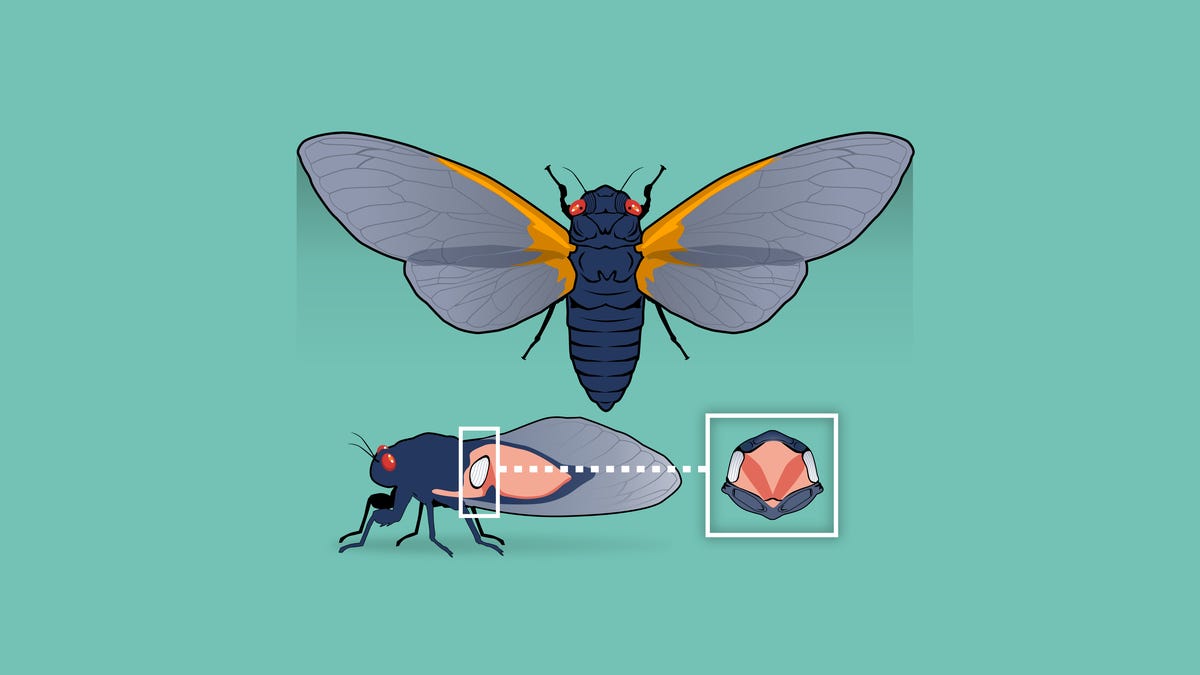
In mid-May, over 1 trillion cicadas from Brood XIX and Brood XIII will emerge in 17 U.S. states, creating a loud, high-pitched buzz that will last for weeks. This rare overlap in emergence, not seen since 1803, is caused by the 13 and 17-year cycles of the two broods. The cicadas will make their distinctive noise using vibrating membranes called tymbals, and their emergence will vary depending on location and weather, with a lifespan of four to six weeks. Unlike locusts, cicadas do not cause severe destruction to plant life.
After the solar eclipse, a rare double brood of cicadas, Brood XIX and Brood XIII, is set to emerge in multiple states across the Southeast and Midwest, marking the first such emergence in 221 years. The 13-year Brood XIX will emerge in 14 states, while the 17-year Brood XIII will emerge in five Midwestern states around mid-May to late June, triggered by warm rain when the soil 8 inches underground reaches 64 degrees. This phenomenon, akin to the rarity of the solar eclipse, won't happen again until 2245.