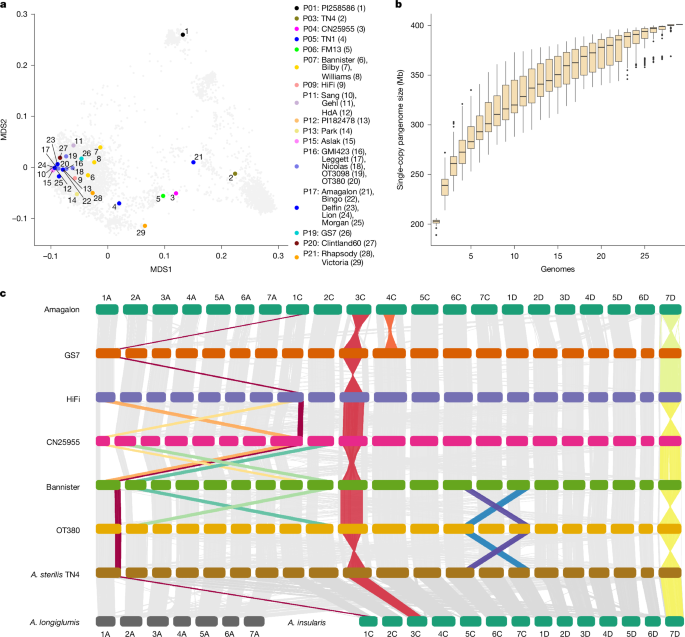
The article presents a comprehensive study of the oat genome, including the assembly of 33 diverse oat lines, analysis of gene expression, structural variations, and the impact of chromosomal rearrangements on breeding and traits like flowering time and yield, highlighting the importance of pangenomic resources for oat improvement.
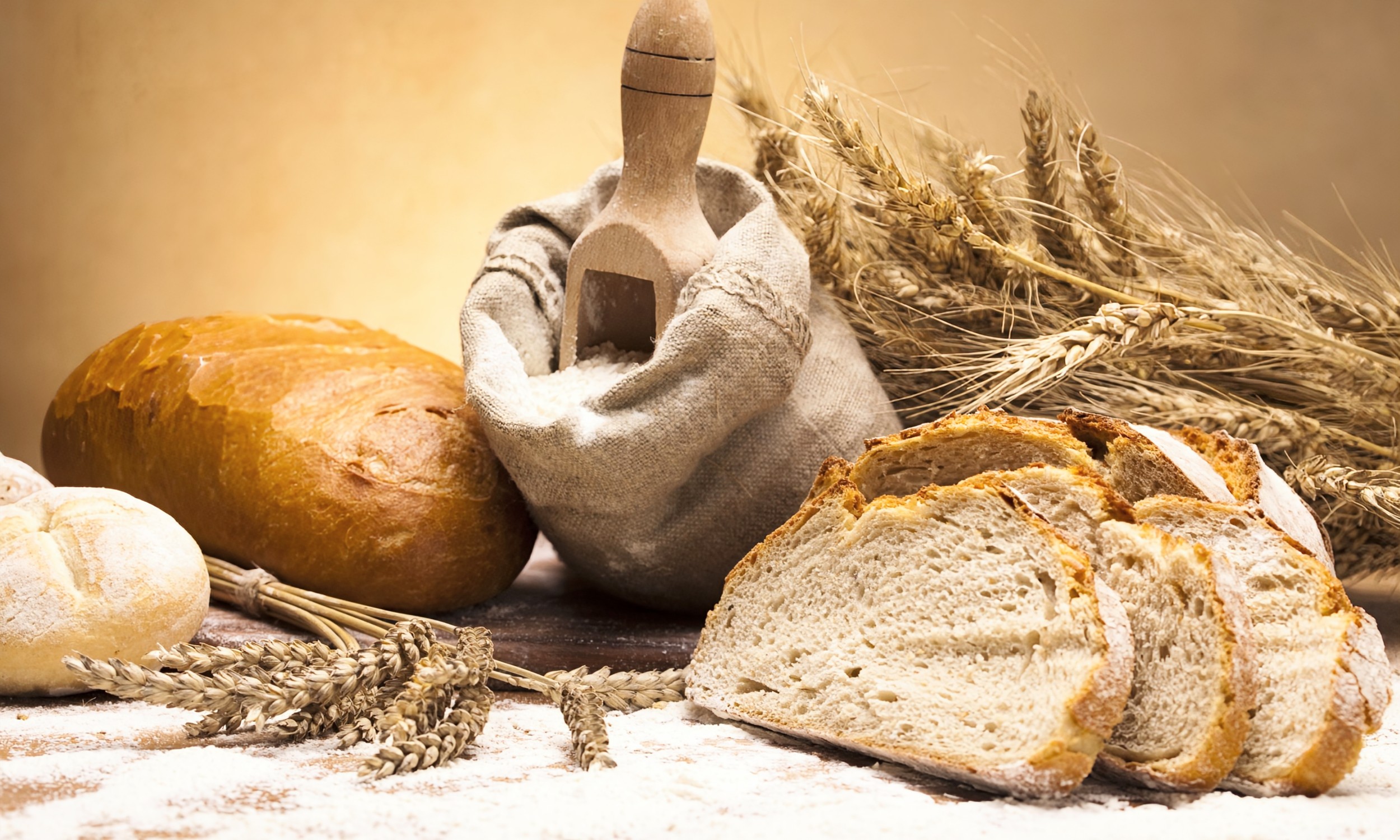
A study highlights how wheat's nutritional value can be enhanced through breeding, growing, and baking techniques, emphasizing the importance of consuming whole grains and using specific baking methods like sourdough to maximize nutrient availability in bread.
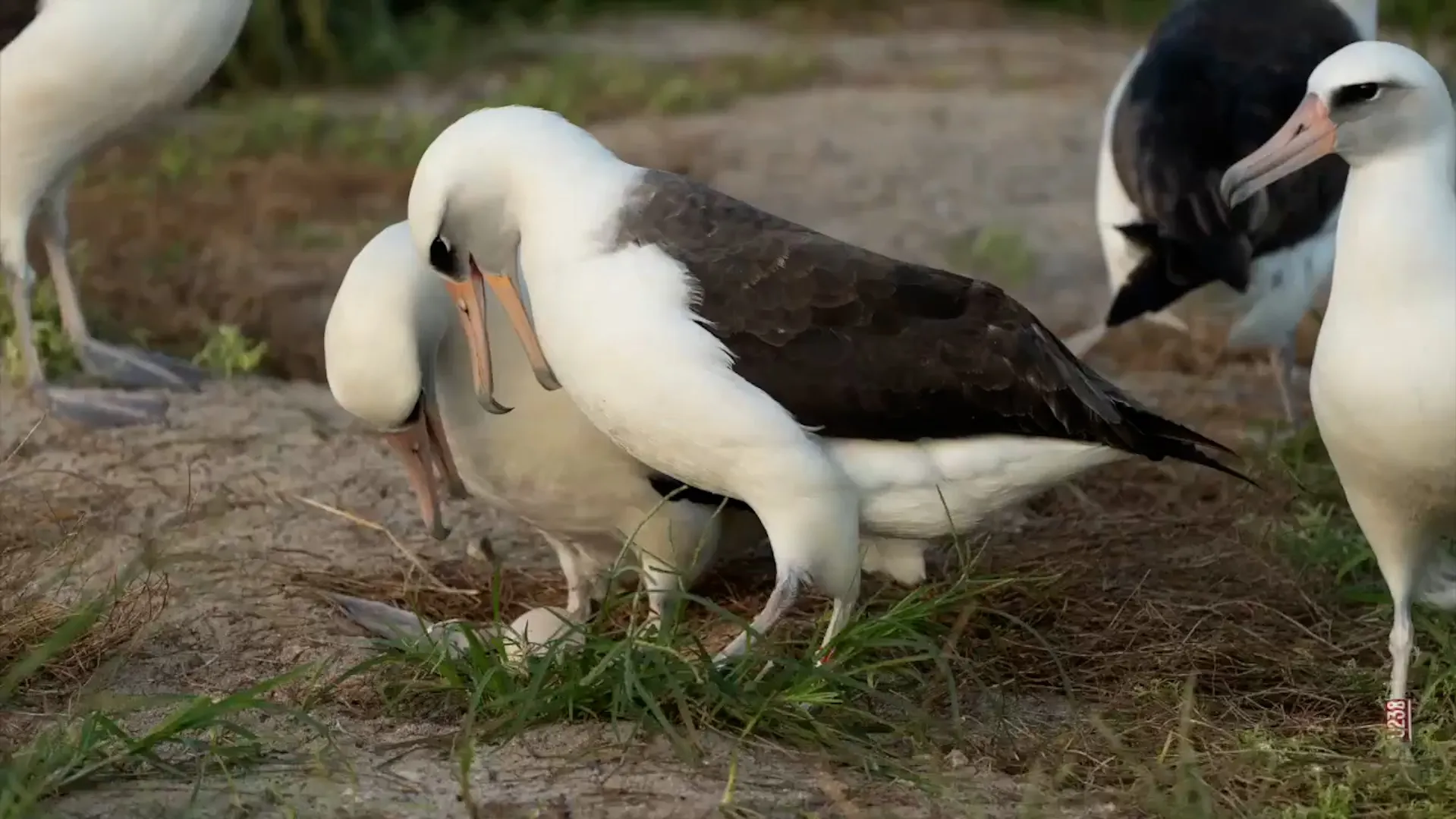
Wisdom, the world's oldest known bird at 74 years old, has laid an egg at the Midway Atoll National Wildlife Refuge, marking her first egg in four years. This Laysan albatross, first banded in 1956, has laid between 50 and 60 eggs in her lifetime and raised 30 chicks. The event is celebrated by researchers, who are hopeful for the egg's successful hatching.
A Palworld breeder has created an incredibly powerful and rare Lamball, dubbed the "Ball of God," as a gift for their wife, with maxed-out stats and overpowered passive skills. The breeder's decision to prioritize attack power over work speed has sparked discussion on the game's customization potential, especially with the upcoming multiplayer arena. The game's developer has also addressed a bug related to negative traits and players continue to find creative ways to excel in the game, such as running a gold farm for 900 hours.
Palworld developer Pocketpair has released a patch, v0.1.4.1 on Steam and v0.1.1.4 on Xbox, addressing issues such as Pals falling asleep and never waking up after breeding, game crashes, and save data corruption. The patch also includes countermeasures against cheats and exploits. The game has seen a successful early access launch with over two million concurrent players on Steam and the biggest third-party launch in Game Pass' history on Xbox. Pocketpair has also announced plans for future improvements, including PvP, end-game Raid Bosses, and new Pals.
In Palworld, Anubis is a powerful Pal and boss that can be obtained through breeding at lower levels by combining specific Pals such as Penking and Bushi. To start the breeding process, players need to reach Level 19, acquire an egg incubator, and use the Breeding Farm Cake. Maintaining optimal conditions for hatching is crucial. Other recommended breeding combinations include Quivern and Chillet, Ragnahawk and Tombat, Kitsun and Jormuntide, and Broncherry and Relaxaurus.
Palworld offers 35 different Pals that can be created through breeding combinations, with specific pairings guaranteeing certain results. Additionally, there are five Pals that can only be born from two parents of the same species. This breeding process is a key aspect of the game, providing players with the opportunity to obtain powerful and rare monsters, making it a fun and rewarding long-term endeavor.
Anubis, Pal number 100 in Palworld, is a sought-after catch with impressive attack stats and powerful techniques. To breed Anubis, specific Pal combinations are recommended, while finding and catching it in the wild involves a challenging fight against a level 47 alpha boss. Players should use Grass-type Pals and be well-prepared with healing items and Legendary Spheres. Defeating Anubis can yield valuable drops, making it a must-have for Pal trainers.
Palworld players are pushing the game's breeding system to its limits, creating Pals with extraordinary abilities such as one-shotting bosses, speeding across the map, and completing tasks at incredible speeds. Examples include a Jetragon with a 65% speed boost, a Lifmunk capable of defeating a boss in two seconds, a Pengullet that can one-shot a boss, and an Anubis that crafts 200 Pal Spheres in four seconds. Players are exploring various breeding combinations and skills to optimize their Pals, leading to a growing demand for ways to direct their Pals' actions.
In the game Palworld, players can breed Pals to create subspecies with inherited traits, resulting in almost 20,000 breeding combinations. Players are discussing potential improvements to the breeding system, including making it more challenging to breed certain Pals. However, some suggestions, such as breeding Pals with captured humans, are sparking controversy.
Breeding Bushi in Palworld doesn't necessarily require having a Bushi to start with. Understanding the game's breeding mechanics is key, as breeding two of the same Pal always produces the same offspring, while breeding two different Pals yields a random but consistent Pal. There are various combinations that can produce a Bushi, and the gender of the parents does not affect the offspring. Once the breeding is complete, a Large Scorching Egg will hatch into a Bushi.
A Palworld player has successfully bred a "zooming dragon," named Jetragon, which is currently the fastest creature in the game due to its combination of passive skills resulting in a +65% increase in base movement speed. The player achieved this by carefully breeding Jetragons with specific traits and skills, and the resulting creature can fly across the open world at an incredible speed, making it a remarkable achievement in the game.
In Palworld, breeding Pals involves placing a male and female Pal in a breeding farm with cake to produce eggs, potentially passing down passive skills. The breeding farm unlocks at level 19 and requires specific resources to build. Making cake involves using a mill and cooking pot, and there are numerous breeding combinations to create subspecies. A breeding calculator is available for detailed combinations, and additional guides cover various aspects of the game for both beginners and advanced players.
In the popular survival game Palworld, players can breed their Pals to unlock new skills, discover new Pals, and expand their labor force. To start breeding, players need to reach level 19, have a pair of sexually dimorphic Pals, a Breeding Farm, Cake, and an Egg Incubator. After following specific steps and using tools like the Egg Incubator and Kimpton’s Palworld Breeding calculator, players can produce new Pals and expand their in-game workforce.
A new study published in Nature Communications has produced a more complete genome sequence of Arabica coffee, revealing that historic hybridization with Robusta coffee is responsible for disease resistance in modern Arabica cultivars. The study found that Arabica coffee's large and complex genome, resulting from hybridization, poses challenges for breeding and genetic studies. The research also identified low genetic diversity within Arabica coffee, with diversity increasing in specific cultivars due to chromosomal abnormalities and genetic segments from a Robusta-Arabica hybrid. The findings may aid in developing new coffee varieties with desirable traits such as disease resistance or different flavor profiles.