

Tag

Brainaging

All articles tagged with #brainaging

Playing Instruments May Shield Brain from Aging

Originally Published 6 months ago — by The Independent

Featured image for Playing Instruments May Shield Brain from Aging
Source: The Independent

Research suggests that long-term musical training may help protect the aging brain by maintaining youthful brain connectivity and improving speech comprehension in noisy environments, supporting the idea that engaging in activities like playing an instrument can serve as a cognitive reserve against age-related decline.

Key Proteins Reveal Three Critical Stages of Brain Aging

Originally Published 1 year ago — by Medical Xpress

Featured image for Key Proteins Reveal Three Critical Stages of Brain Aging
Source: Medical Xpress

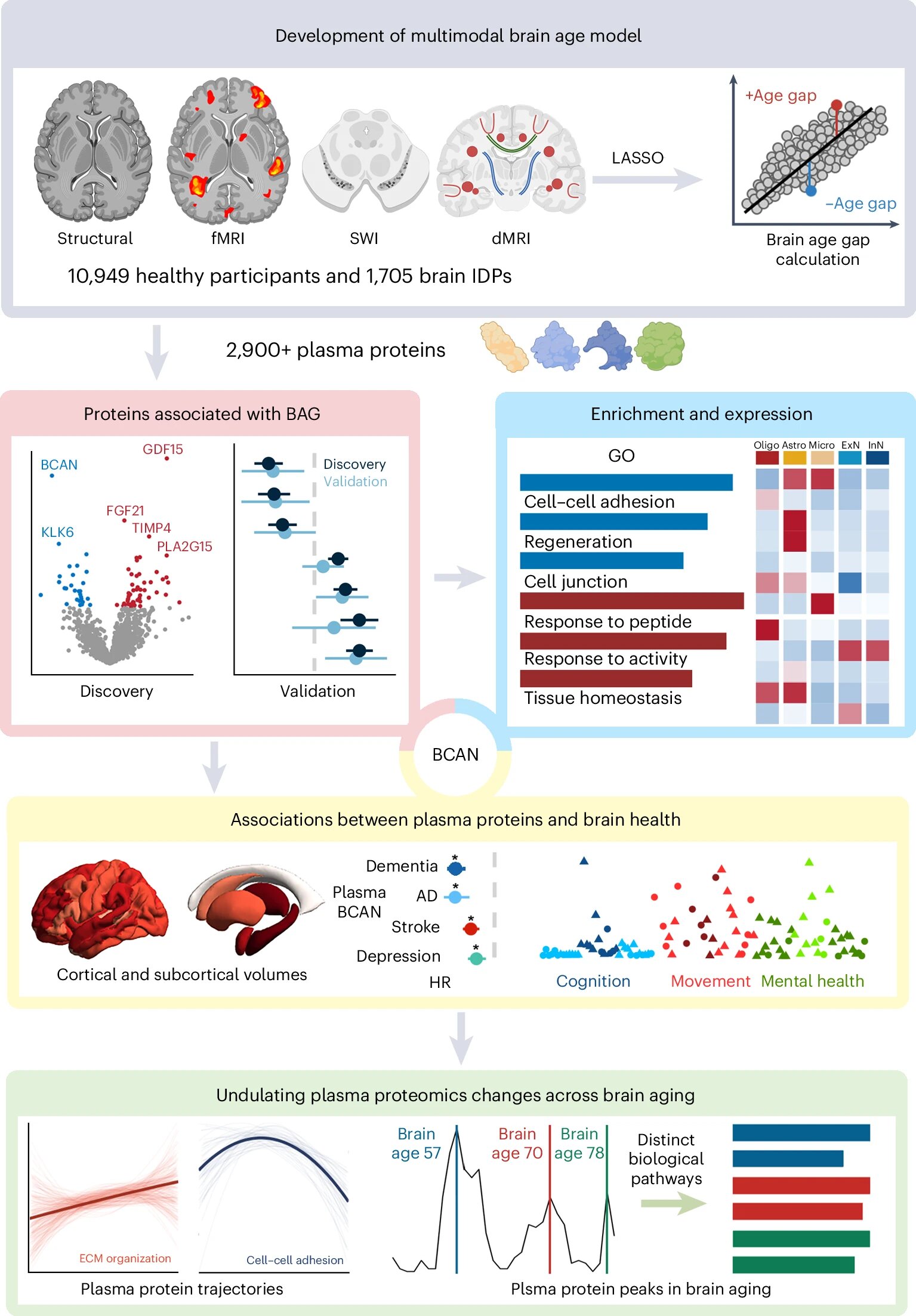
A study published in Nature Aging identifies 13 proteins in blood plasma that are strongly associated with brain aging, with significant changes in their concentrations observed at ages 57, 70, and 78. These proteins, including Brevican (BCAN) and GDF15, are linked to neurodegenerative disorders like dementia and stroke. The research, based on data from the UK Biobank, suggests that monitoring these proteins could aid in early intervention strategies for brain aging. The study emphasizes the need for further research across diverse ages and ethnicities.

Unlocking the Secrets to Lifelong Cognitive Vitality

Originally Published 1 year ago — by Neuroscience News

Featured image for Unlocking the Secrets to Lifelong Cognitive Vitality
Source: Neuroscience News

A 25-year study reveals that childhood cognitive ability significantly influences intelligence in older age, with nearly half of cognitive variance persisting across decades. The research highlights the role of genetics and early-life factors in brain aging, showing that higher childhood intelligence correlates with better longevity. Advanced imaging shows variability in brain health among similarly aged individuals, suggesting potential for lifestyle interventions to improve cognitive health. These findings challenge conventional views on cognitive aging and open new avenues for research on midlife interventions and environmental influences.