Tag

Brain Simulation

All articles tagged with #brain simulation

China Unveils World's Largest Brain-Like Supercomputer Mimicking Monkey Intelligence

Originally Published 5 months ago — by Interesting Engineering

Featured image for China Unveils World's Largest Brain-Like Supercomputer Mimicking Monkey Intelligence
Source: Interesting Engineering

Chinese engineers have developed Darwin Monkey, the world's largest brain-like computer with over 2 billion neurons and 100 billion synapses, capable of mimicking a macaque monkey's brain and supporting advanced functions like reasoning and learning, powered by 960 neuromorphic chips and representing a significant breakthrough in brain-inspired computing.


"World's First Human Brain-Simulating Supercomputer Set to Activate in 2024"

Originally Published 2 years ago — by Futurism

Featured image for "World's First Human Brain-Simulating Supercomputer Set to Activate in 2024"
Source: Futurism

Researchers at Western Sydney University, in collaboration with Intel and Dell, are developing a supercomputer called DeepSouth, designed to simulate neural networks at the scale of the human brain. Capable of emulating networks of spiking neurons at 228 trillion synaptic operations per second, DeepSouth aims to provide researchers with a better understanding of how the brain processes information. By using a neuromorphic system that mimics biological processes, the supercomputer is expected to be more efficient and less power-hungry. The project could have applications in various fields, including sensing, biomedical, robotics, space, and AI.

The Link Between Intelligence and Problem-Solving Speed

Originally Published 2 years ago — by PsyPost

Featured image for The Link Between Intelligence and Problem-Solving Speed
Source: PsyPost

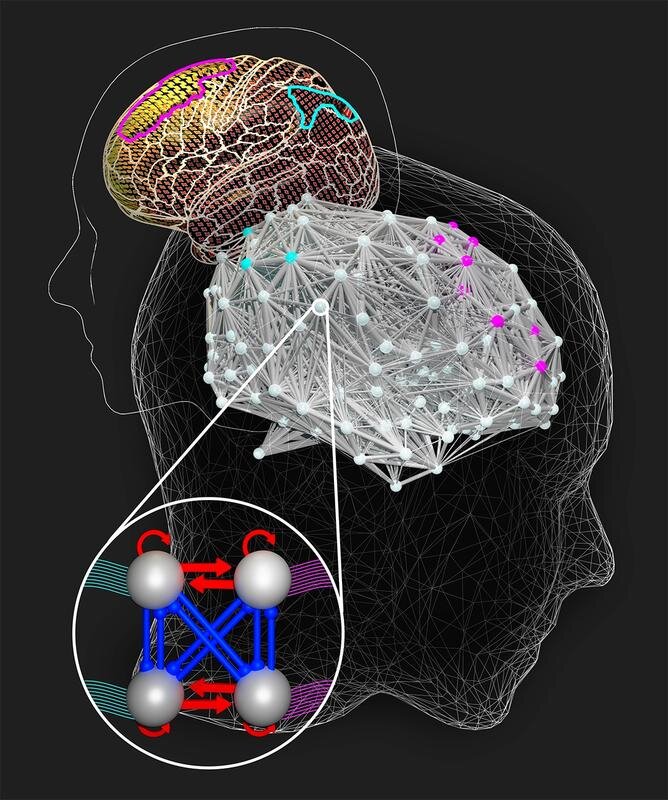
A recent study challenges the conventional belief that intelligent people think faster. The study discovered that people with higher fluid intelligence, which is a measure of problem-solving ability, actually took more time to solve difficult tasks compared to those with lower fluid intelligence. The researchers stumbled upon the finding while creating personalized brain network models based on data from the Human Connectome Project. The researchers proposed a trade-off between decision-making speed and accuracy, which aligns with theories from fields like economy and psychology on fast and slow thinking. The study provides valuable insights into the relationship between intelligence, decision-making speed, and brain network dynamics.

The correlation between intelligence and problem-solving speed

Originally Published 2 years ago — by Earth.com

Featured image for The correlation between intelligence and problem-solving speed
Source: Earth.com

Contrary to popular perception, intelligent individuals don’t necessarily think faster. In fact, those with higher intelligence scores were only quick at handling simple tasks, whereas they took more time in solving complex problems than subjects with lower IQ scores, according to a study by the Berlin Institute of Health and Charité – Universitätsmedizin Berlin. The study used personalized brain simulations and found that brains with less synchrony among various regions were prone to making hasty decisions without waiting for upstream brain regions to process the necessary information for solving the problem. The research could lead to enhanced personalized medical interventions, including the planning of surgical and drug treatments, and even therapeutic brain stimulation.

Smart Brains Take More Time to Solve Complex Problems, Simulation Study Finds

Originally Published 2 years ago — by Medical Xpress

Featured image for Smart Brains Take More Time to Solve Complex Problems, Simulation Study Finds
Source: Medical Xpress

A study by researchers at the Berlin Institute of Health and Charité—Universitätsmedizin Berlin found that participants with higher intelligence scores were only quicker when tackling simple tasks, while they took longer to solve difficult problems than subjects with lower IQ scores. In personalized brain simulations of the 650 participants, the researchers could determine that brains with reduced synchrony between brain areas literally "jump to conclusions" when making decisions, rather than waiting until upstream brain regions could complete the processing steps needed to solve the problem. The study sheds light on how the brain's decision-making processes work and why different people make different decisions.

Advancing Brain Simulation with Multi-Scale Approach.

Originally Published 2 years ago — by Human Brain Project

The Human Brain Project (HBP) is taking brain simulation to the next level by modelling multiple scales at the same time, allowing researchers to study the brain in unprecedented ways. The HBP's multi-scale approach has yielded novel insights into brain function and opened the door for novel clinical applications, including advances in the treatment of epilepsy and Parkinson's disease. Personalized brain modelling has become a new approach for understanding and treating debilitating neurological diseases, and the HBP's EBRAINS research infrastructure is being interlinked to enable multi-scale simulation with connected platforms.