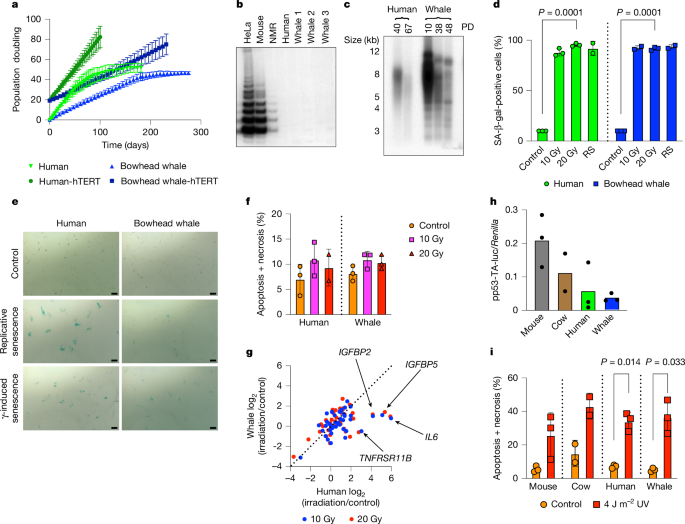
Research shows that bowhead whales have enhanced DNA repair mechanisms, particularly in double-strand break repair, and high levels of the protein CIRBP, which contribute to their exceptional lifespan and cancer resistance despite their large size and long life. These findings suggest that improved genome maintenance, rather than increased apoptosis, underpins their longevity and resistance to age-related diseases.
The bowhead whale can live over 200 years due to a highly effective DNA-repair protein, which could provide insights into extending human lifespan by enhancing genome stability and repair mechanisms.
Scientists studying bowhead whales, which can live over 200 years, have identified enhanced DNA repair mechanisms involving the protein CIRBP, which is triggered by cold exposure. These mechanisms may contribute to their exceptional longevity and low cancer rates. Experiments suggest boosting CIRBP in humans could improve DNA repair and potentially slow aging, with ongoing research exploring this possibility.