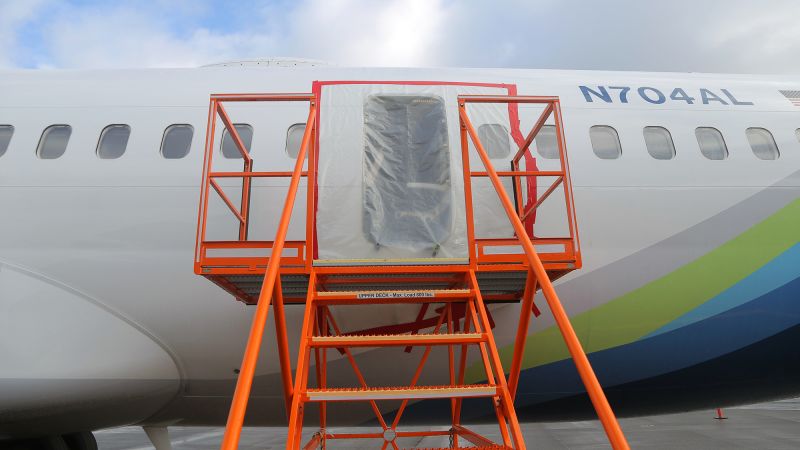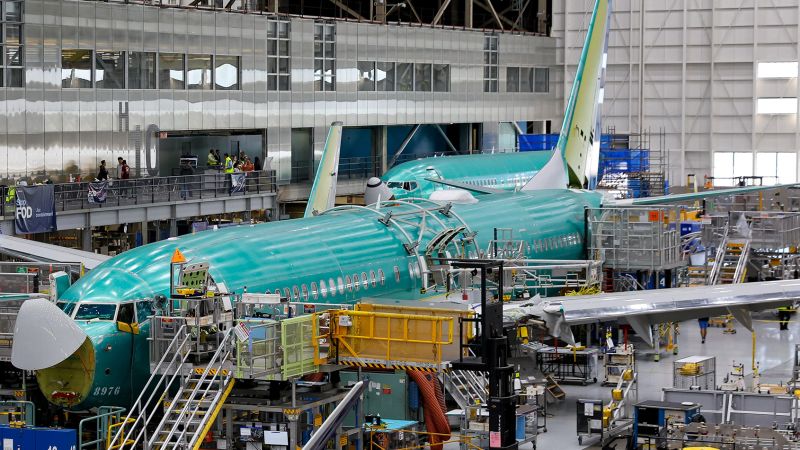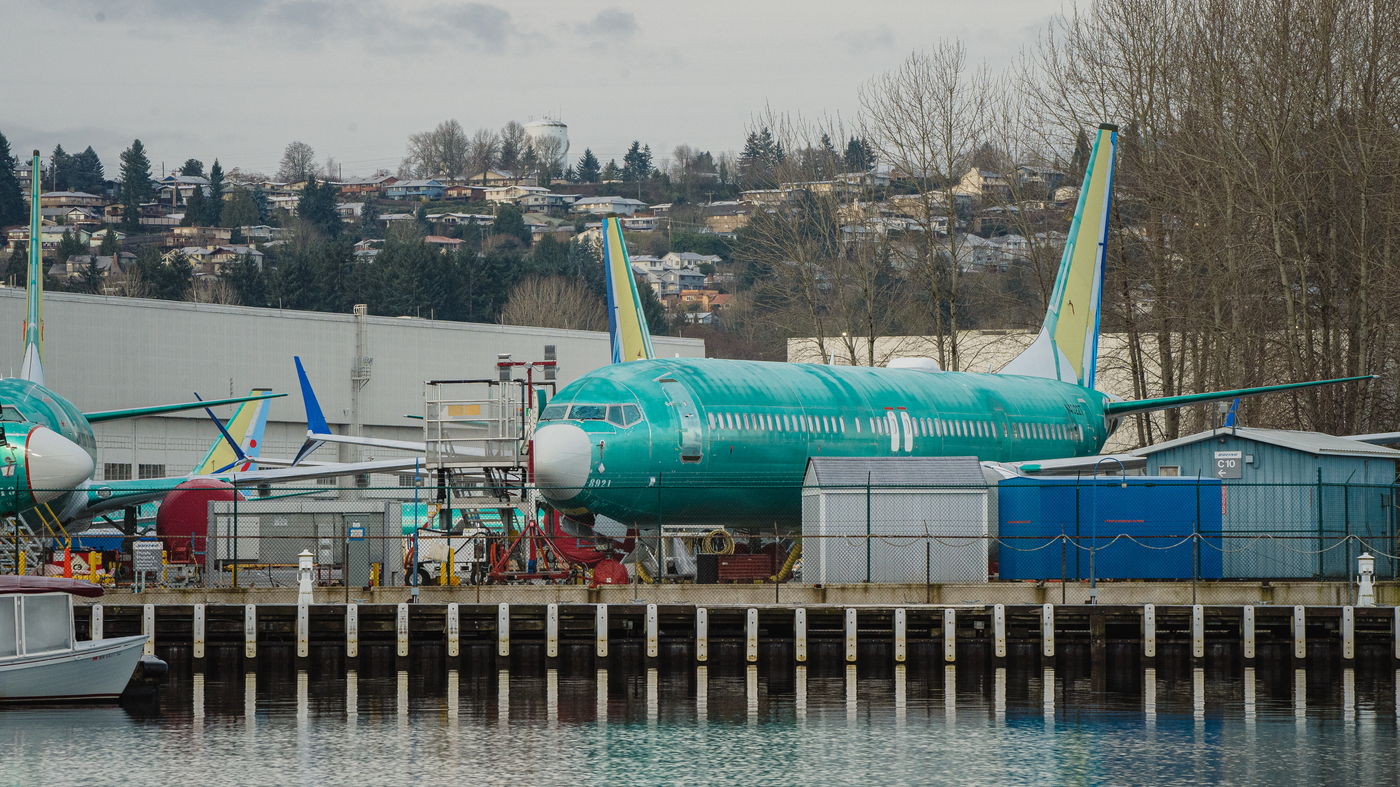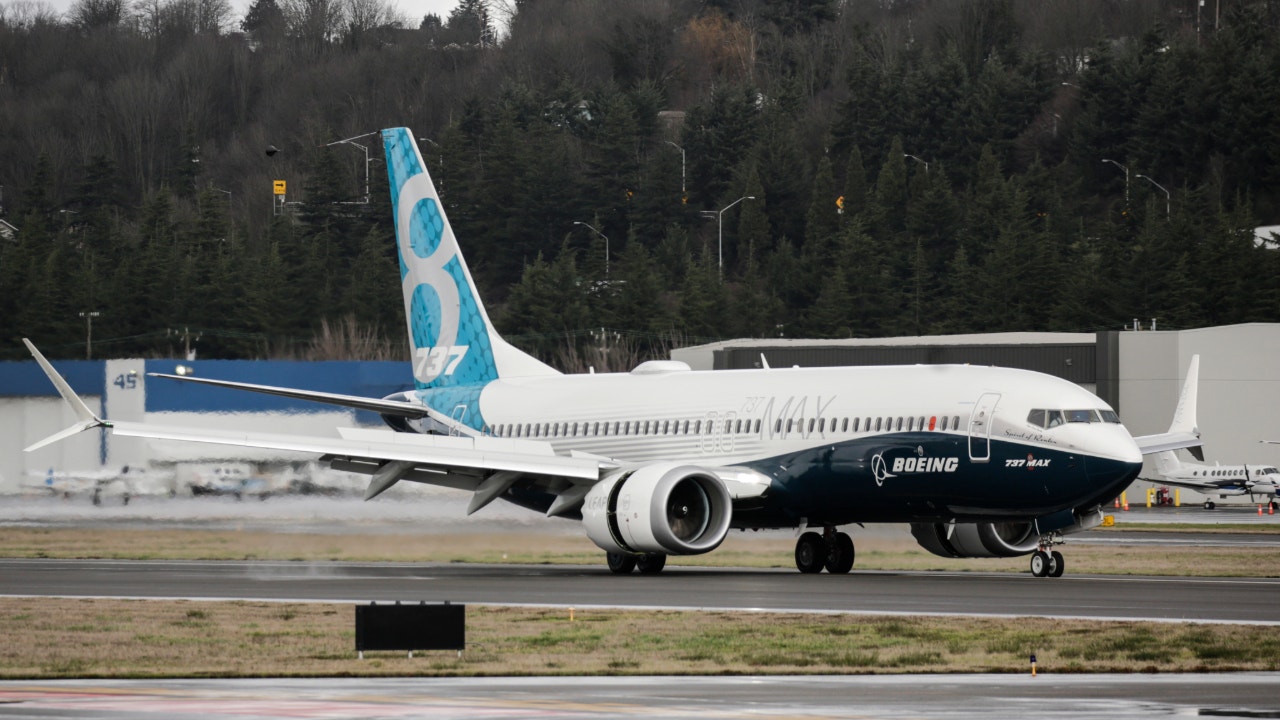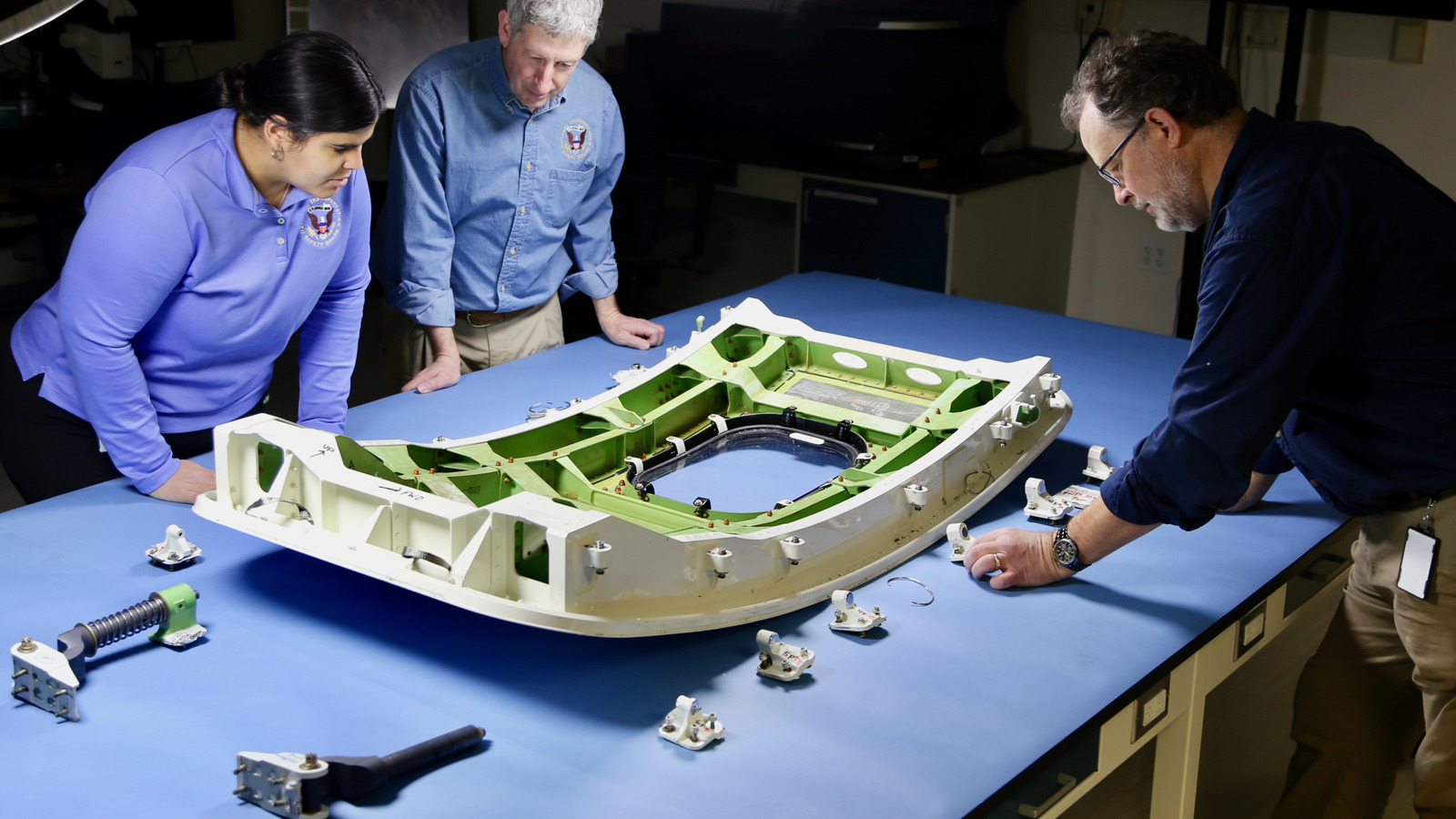
The NTSB report revealed that a Boeing 737 Max experienced a door plug blowout due to missing bolts, which were removed during manufacturing and never reinstalled, highlighting Boeing's failure in oversight and training. The incident, which occurred over Portland, resulted in no injuries but raised serious safety concerns and ongoing investigations into Boeing's manufacturing practices and other crashes.
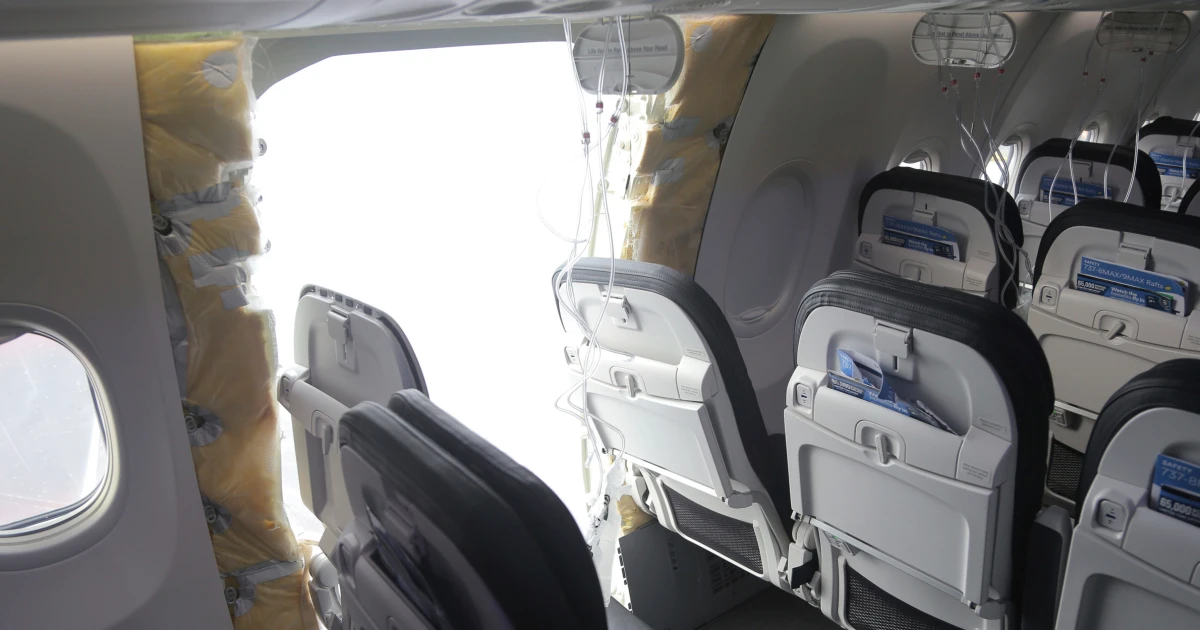
NTSB Chair Jennifer Homendy highlighted systemic failures in Boeing's manufacturing and safety oversight as the cause of a 2024 incident where a door plug flew off a Boeing 737 Max, leading to a rapid decompression and minor injuries. The investigation revealed that bolts securing the door panel were removed during repairs and not replaced, with broader issues in training, safety practices, and regulatory oversight contributing to the incident. The event underscores ongoing safety concerns with Boeing's 737 Max series and manufacturing processes.
The NTSB is set to determine the cause of a Boeing 737 Max door plug blowout that occurred at 16,000 feet, which was linked to missing bolts during manufacturing. The incident raises concerns about Boeing's safety practices amid ongoing scrutiny following previous crashes and recent aircraft issues. The final report will clarify responsibility and potentially impact Boeing's reputation and oversight.
The NTSB urges quick modifications to Boeing 737 Max engines to prevent smoke filling the cabin after bird strikes, due to a safety feature that can inadvertently release oil and cause smoke. The issue has prompted Boeing, CFM, and regulators to work on software updates and safety measures, following incidents involving Southwest Airlines planes. The problem highlights ongoing safety concerns with the 737 Max model, which has a history of issues including deadly crashes.
The NTSB issued a rare safety bulletin warning about potential issues with Boeing 737 Max engines, specifically CFM LEAP-1B engines, after incidents involving bird strikes that caused smoke to enter the cockpit, posing a serious hazard. The agency urges the FAA to ensure flight crews are informed and recommends software modifications, with Boeing and engine manufacturer GE Aerospace already working on updates.
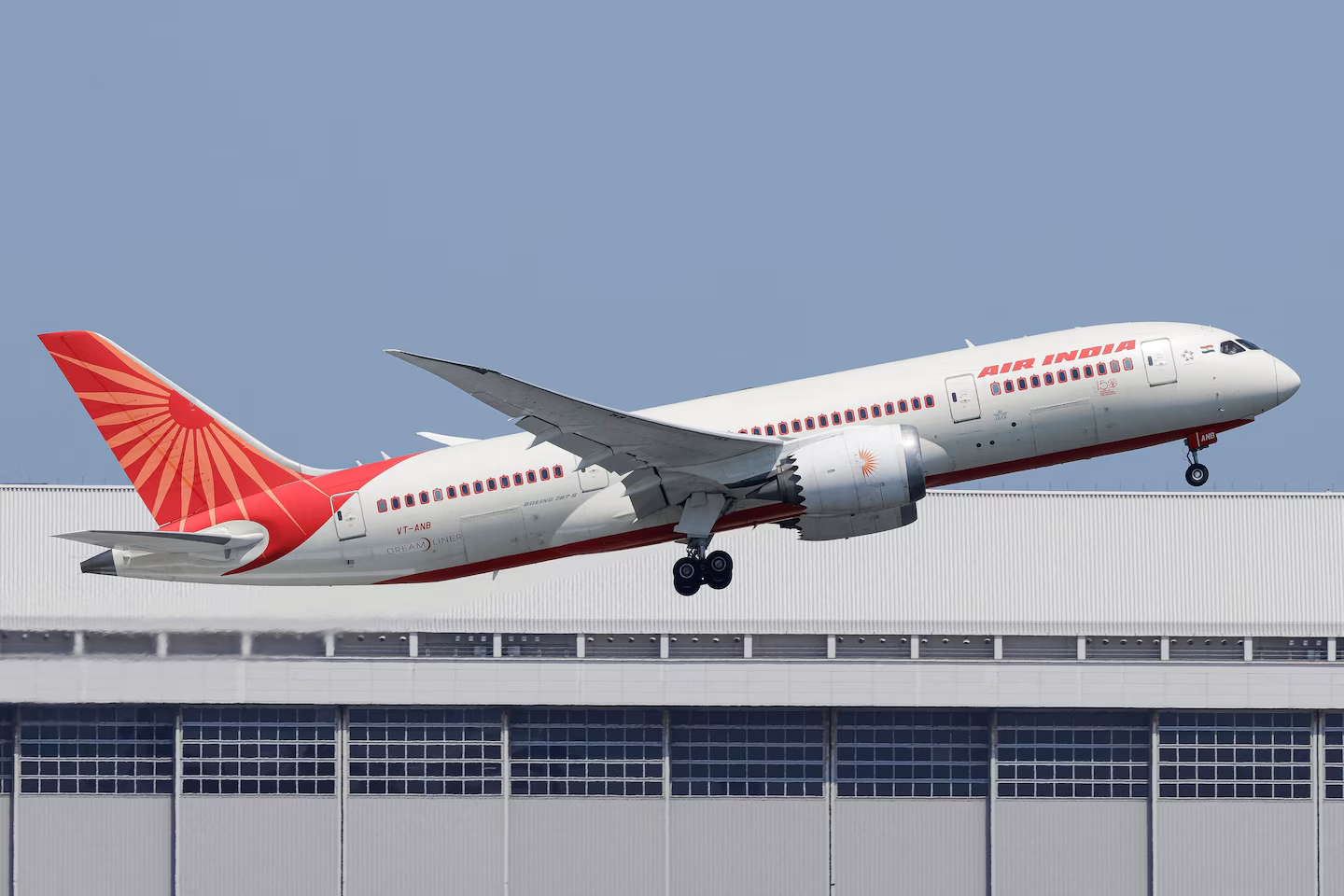
The first crash involving Boeing's 787 Dreamliner occurred in India when an Air India flight crashed shortly after takeoff, prompting an investigation into potential pilot, airline, maintenance, or Boeing-related issues, amidst Boeing's ongoing efforts to recover from past safety concerns linked to its 737 Max aircraft.
American Airlines flight attendants will continue to earn commissions on approved credit card applications under a new deal with Citibank. Meanwhile, Qatar Airways miles can now be converted to Marriott points, though it's not a favorable exchange. Air Canada will restrict basic economy fares from carrying full-sized bags starting next year, with exceptions for certain members. Dallas is considering major changes to Love Field airport, and a judge has rejected Boeing's 737 MAX plea deal due to DEI criteria for a compliance monitor.
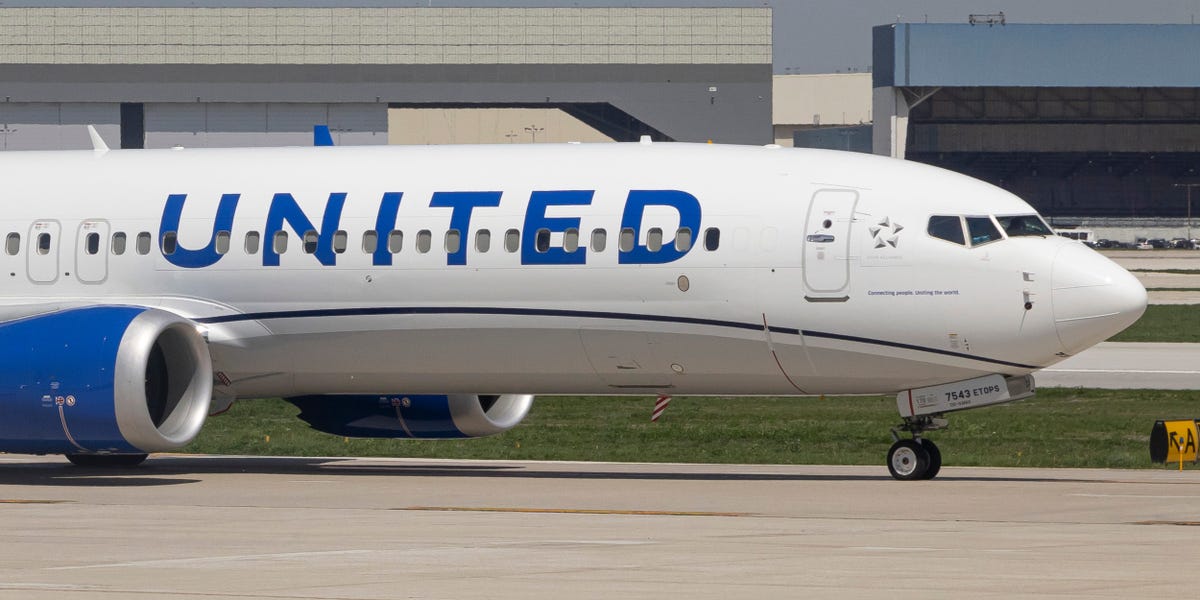
A United Airlines Boeing 737 Max was temporarily grounded after 30 passengers, many returning from a cruise, fell ill with flu-like symptoms. The airline coordinated with health authorities and conducted a deep cleaning of the plane. The specific cruise ship involved has not been confirmed, but Royal Caribbean's Radiance of the Seas was docked in Vancouver on the same day.
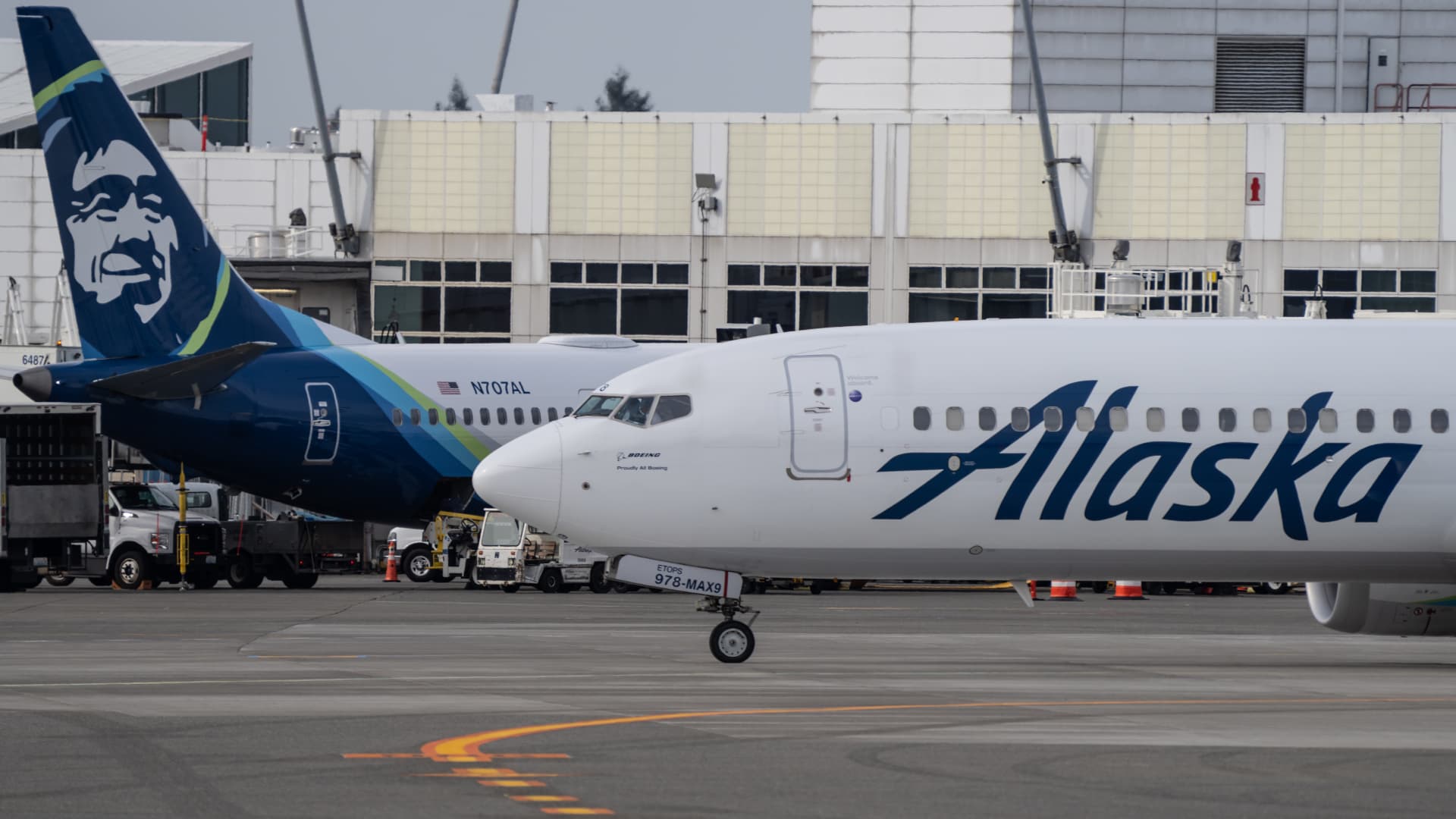
Despite a first-quarter loss due to a Boeing 737 Max 9 incident, Alaska Airlines forecasts strong second-quarter and full-year earnings, surpassing analyst estimates, driven by robust travel demand. The airline received $162 million from Boeing for the January incident and expects additional compensation. Alaska reported a net loss of $132 million for the first quarter but exceeded revenue estimates, with shares rising over 3% in premarket trading.
United Airlines reported a $200 million cost due to the emergency grounding of Boeing's 737 Max 9 jetliner, leading to a net loss of $124 million in the first quarter of 2024. The grounding resulted in widespread disruption, forcing the airline to cancel thousands of flights, reformulate schedules, and pause hiring. The FAA's deeper scrutiny of Boeing's manufacturing processes also delayed delivery times for carriers, including United. To cope with the delays, United adjusted its fleet strategy, reducing reliance on the Max 10 and converting some orders to Max 9s, while also signing letters of intent to lease new Airbus A321neos. The blowout incident and subsequent FAA audit revealed significant weaknesses in Boeing's quality control, prompting the company to launch new protocols for inspecting the manufacturing process.
United Airlines' stock soared after beating first-quarter earnings estimates, reporting a loss of 38 cents per share compared to 59 cents the year prior, with a $200 million hit attributed to the Boeing 737 Max 9 grounding. The airline expects adjusted earnings to range from $3.75 to $4.25 per share for the second quarter and maintained its full-year earnings outlook of $9 to $11 per share. The stock rally also boosted rival Delta Air Lines and American Airlines, with Delta reporting an 80% earnings increase and American Airlines set to report its first-quarter results on April 25.
Delta Air Lines reported strong earnings in the first quarter, with adjusted earnings up 75% from a year earlier and revenue reaching a record $12.6 billion despite a slip in average revenue per mile. The airline expects record revenue in the second quarter but predicts thinner profit margins due to flat to lower fares and rising costs. Delta has been less affected by Boeing's issues compared to its rivals, and CEO Ed Bastian highlighted strong demand for future travel despite rising safety concerns. The airline has not taken delivery of a Boeing jet since 2019 and remains uncertain about when it will receive the 737 Max 10 jets it ordered.
The Justice Department is conducting a criminal investigation into Boeing after a door plug blew off a jet in midair, sparking renewed scrutiny from crash victims' families. Many families are frustrated with the lack of accountability for the 2019 Boeing 737 Max crashes and are hopeful that the DOJ's new criminal investigation of the recent Alaska Airlines incident will lead to stricter scrutiny. Lawyers representing crash victims argue that Boeing has violated its previous settlement with the DOJ and are pushing for extended probation. The families seek accountability for Boeing's leaders and a commitment to making safe planes.
Passengers on Alaska Airlines Flight 1282 have filed a lawsuit against Boeing, Alaska Airlines, and Spirit Aerosystems for negligence and failing to protect them from harm after a door-sized panel of the Boeing 737 Max 9 jet's fuselage blew off mid-flight, causing physical and psychological trauma. The incident, which occurred on January 5, led to an emergency landing and a subsequent grounding of Max 9s in the U.S. The lawsuit alleges that the aircraft's bolts were either not installed or installed incorrectly, and a criminal investigation has been launched by the Justice Department.
American Airlines pilot Dennis Tajer, who flies the Boeing 737 Max, expresses concern about the aircraft's safety following recent incidents and a lack of trust in Boeing's efforts. The FAA is investigating Boeing and its supplier, Spirit AeroSystems, for manufacturing quality control issues. With fewer planes available due to certification and manufacturing delays, airline management is pushing the limits on aircraft checks and deferring repairs, raising safety concerns.