Former President Donald Trump delivered a high-energy speech at an airport hangar in Waterford Township, emphasizing the importance of winning Michigan for the upcoming primary and the general election. He highlighted his support for Pete Hoekstra as the new Michigan Republican Party chairman, criticized UAW President Shawn Fain, defended himself against legal actions, and expressed pride in facing legal challenges as a sacrifice for his supporters.
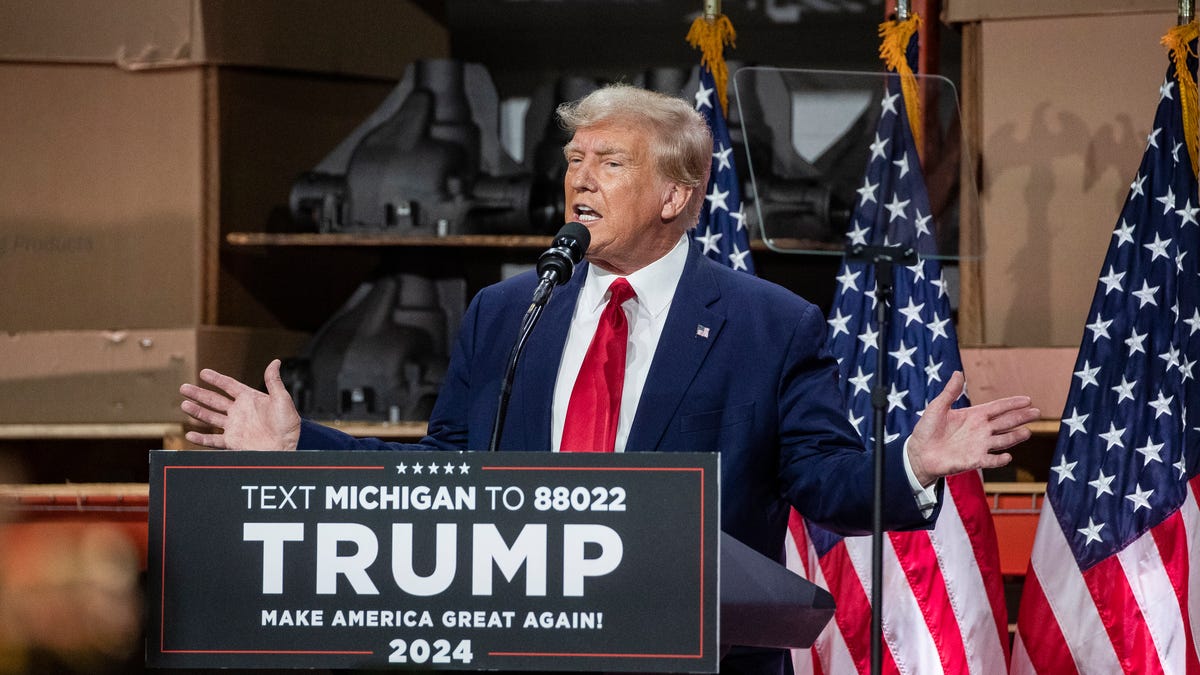
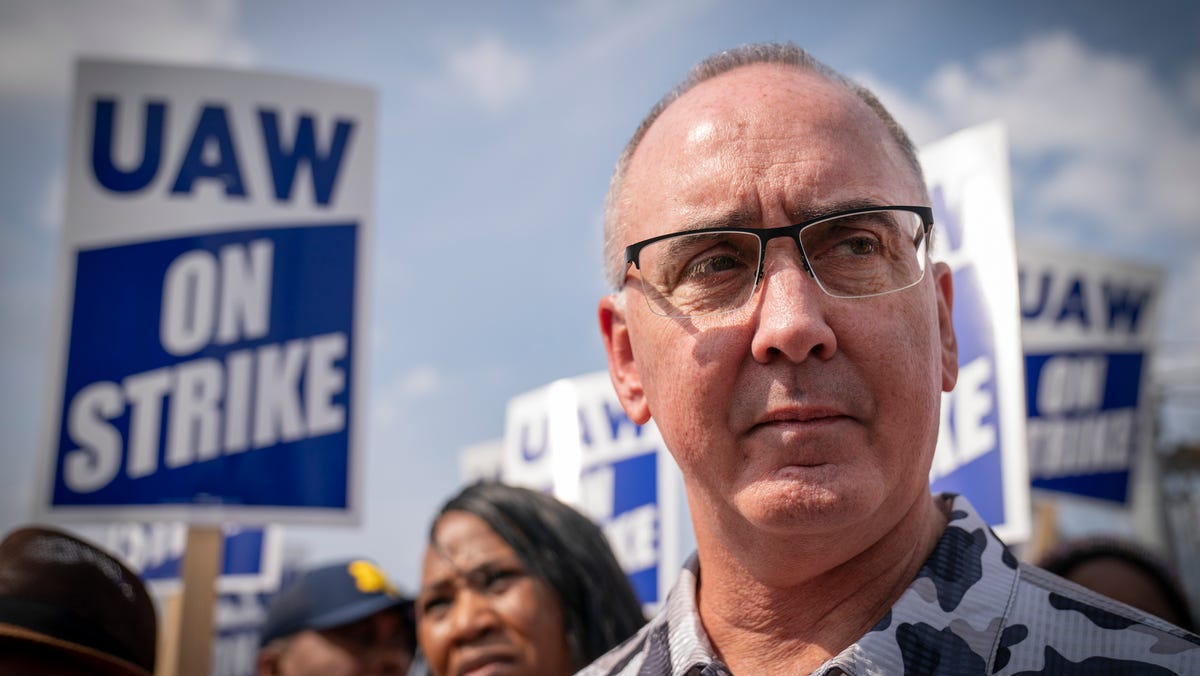
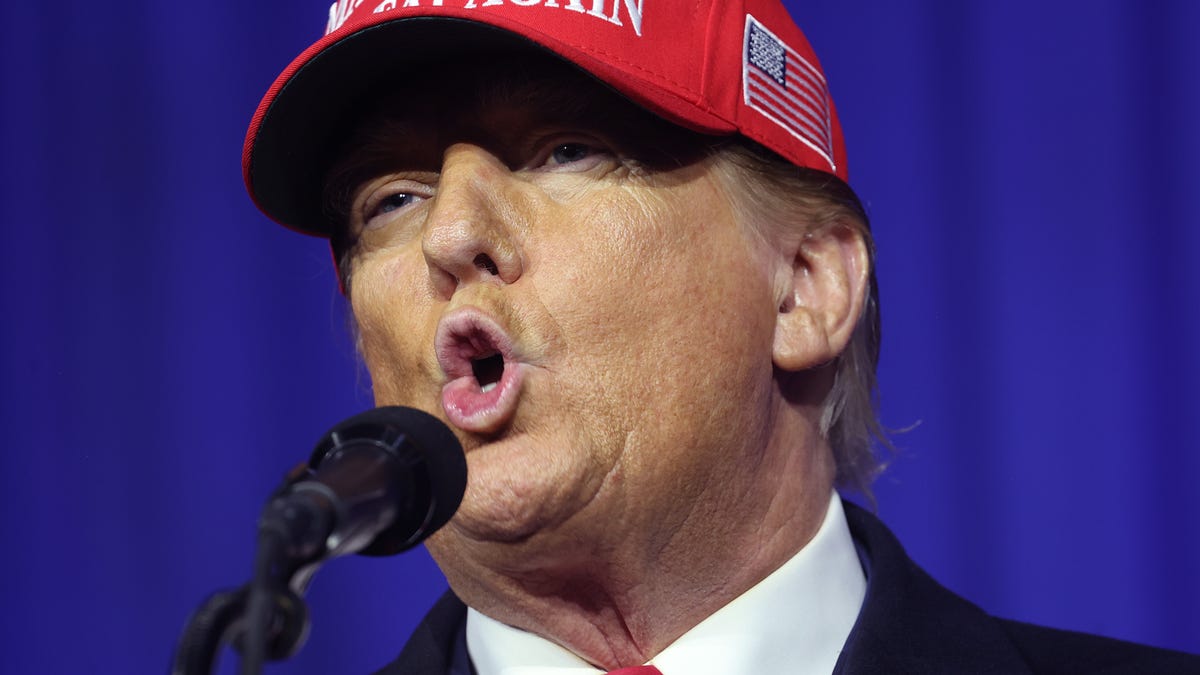
Former President Donald Trump criticized United Auto Workers President Shawn Fain, calling him a "weapon of mass destruction" for autoworkers after the UAW endorsed President Joe Biden for reelection. Fain had previously stated that Trump stands against the interests of the union and its members. Trump responded on social media, urging autoworkers to vote for him and accusing Fain of potentially being under contract to China. The UAW declined to comment on Trump's remarks.
The United Auto Workers (UAW) is launching an unprecedented public organizing campaign to unionize non-union automakers in the United States. Workers at over a dozen non-union automakers have announced simultaneous campaigns to join the UAW, with the organizing drive expected to cover nearly 150,000 autoworkers across thirteen automakers. The UAW's strategy involves workers signing union cards, holding public rallies, and demanding recognition from the companies. The union aims to secure better wages, benefits, and job security for non-union autoworkers, following the successful labor contracts recently negotiated with the Detroit Three car companies.
Israeli forces continue to search Gaza hospitals for evidence of Hamas presence, expanding their hunt to multiple medical facilities; autoworkers union approves a 4½-year contract with Detroit's Big Three, granting workers a 25% pay increase and reinstating cost-of-living adjustments; Dex Carvey, son of comedian Dana Carvey, dies of an accidental drug overdose at 32; family seeks justice after Border Patrol shooting, but Supreme Court ruling makes individual agent lawsuits unlikely; independent pathologist finds wallet with ID of Dexter Wade, who was killed by a police car and buried without his mother's knowledge; Biden signs stopgap funding bill, averting government shutdown; and other news updates.
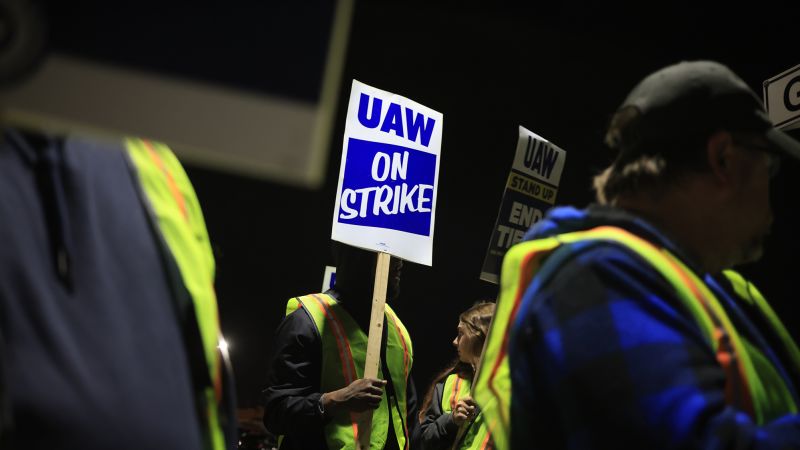
The United Auto Workers (UAW) deal to end the General Motors (GM) strike may be in trouble as a growing number of rank-and-file autoworkers are voting against the deals with Ford and GM, despite significant pay increases. Recent votes at GM plants in Michigan and Tennessee, as well as at a Ford plant in Kentucky, have shown opposition to the deals. While the majority of members still support the deals, the votes are not large enough to ensure passage, and a "no" vote could lead to a resumption of the strike. The UAW members at Mack Truck have already voted down a tentative agreement and are currently on strike.
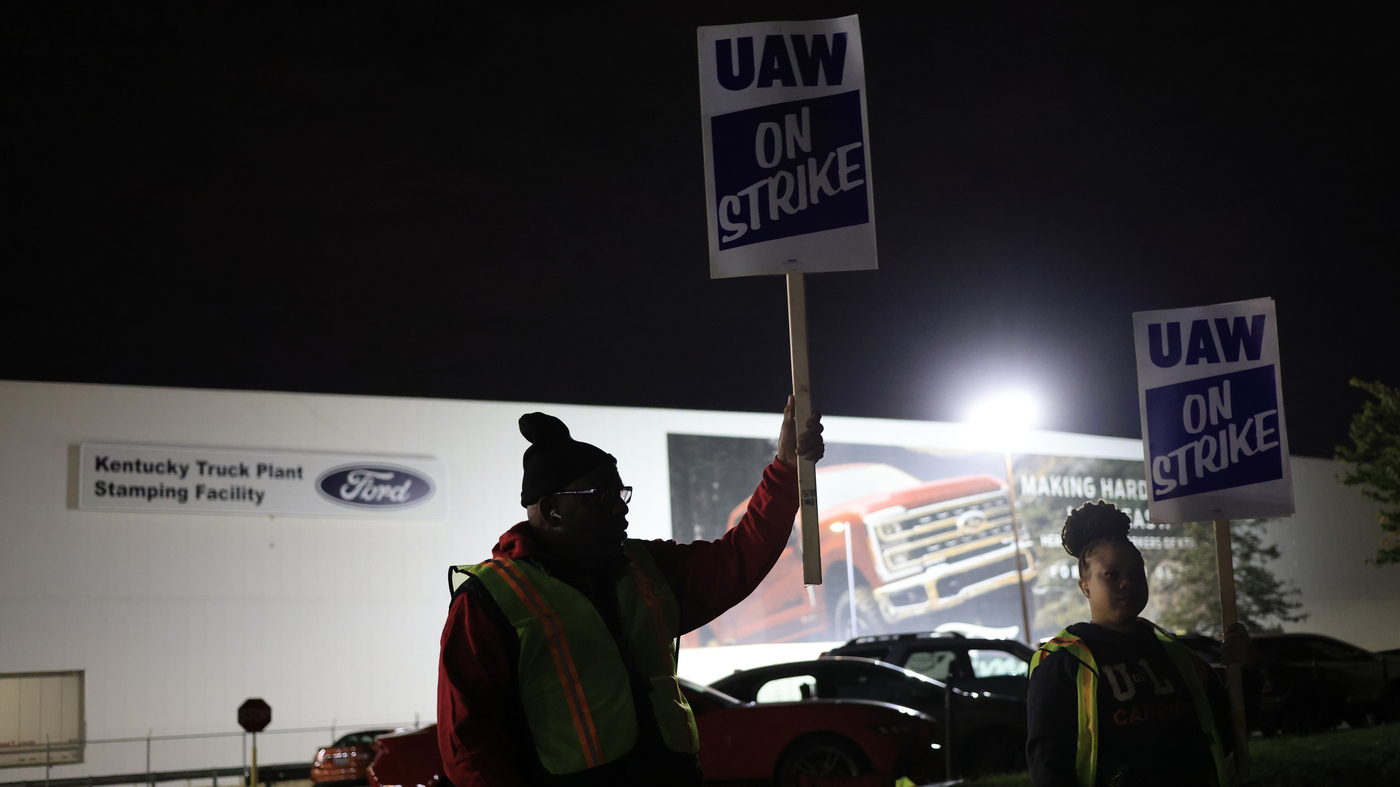
Workers at Ford's Kentucky Truck Plant and General Motors' Flint Assembly plant have voted against the contract agreements reached by the United Auto Workers union. The majority of workers at both plants rejected the deals, indicating potential challenges for the UAW despite record agreements with major automakers. The contracts offer significant wage increases and improved benefits, but some workers feel that certain demands, such as retiree health care, were not met. The final tallies at the Big 3 automakers are expected in the coming weeks.
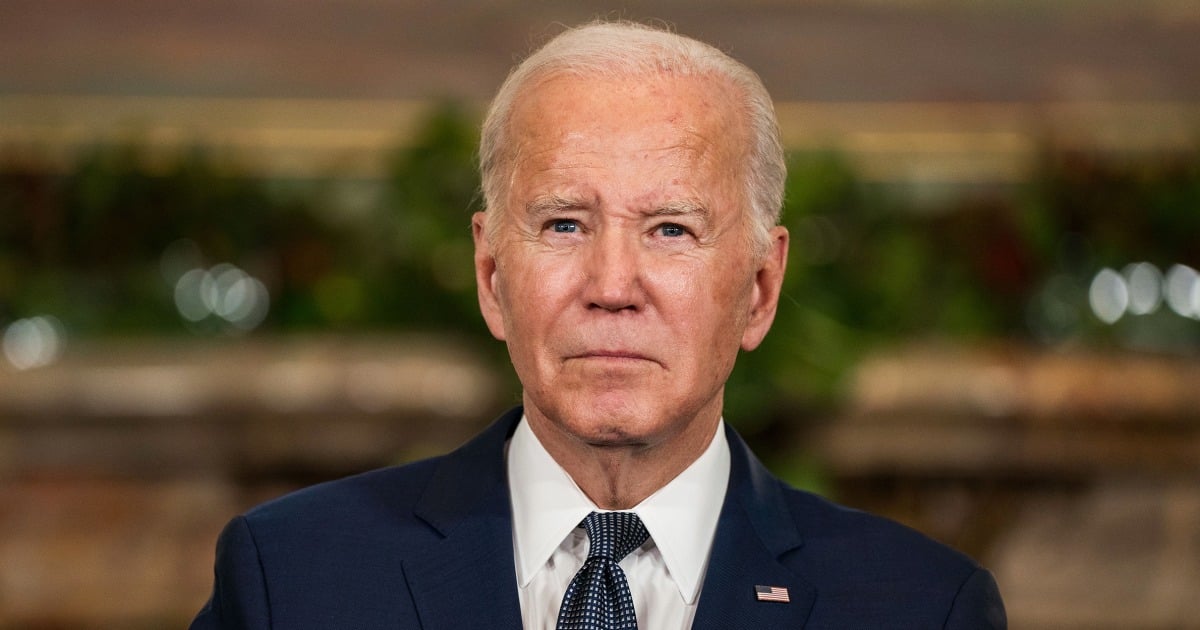
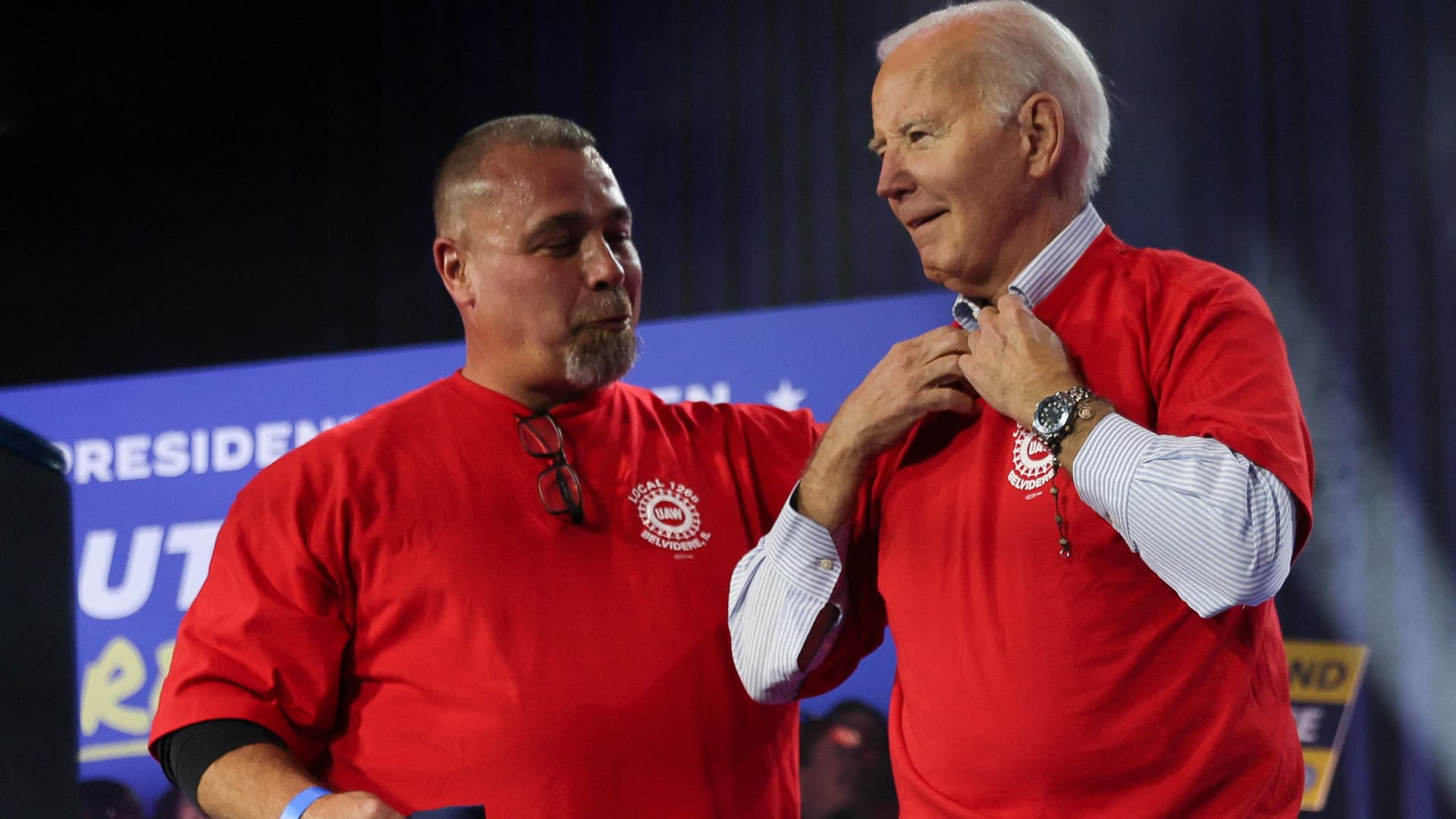
President Joe Biden expressed his support for autoworkers, stating that they deserve contracts similar to those recently won by the United Auto Workers (UAW) from major automakers. These contracts include significant wage increases, cost-of-living adjustments, additional retiree contributions, and substantial investments. Biden also emphasized his commitment to prioritize the reopening of a Stellantis plant in Belvidere, Illinois, during a visit with UAW President Shawn Fain. The UAW plans to use these successful negotiations as a stepping stone to organize non-union auto plants, aiming to build on their recent strike victory and create a positive example for future organizing efforts.
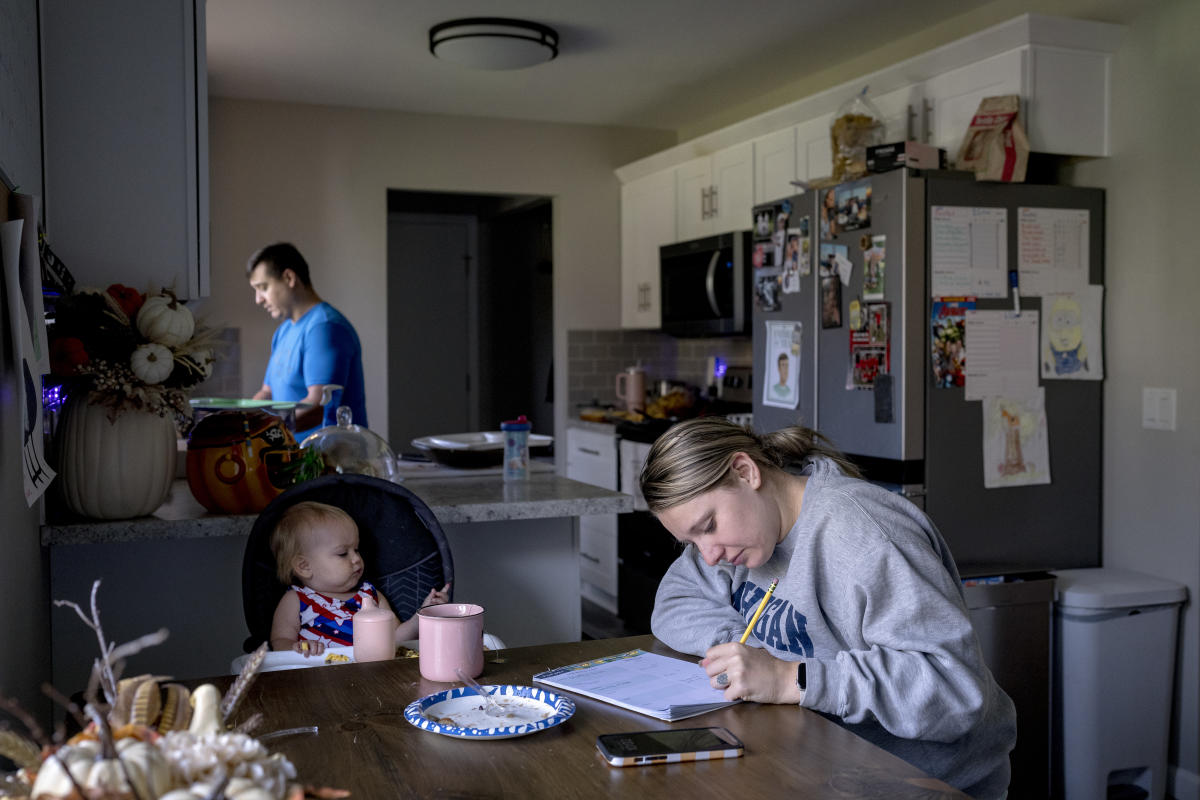
Ford autoworkers, including Dave and Bailey Hodge, are hopeful for a better future after a tentative agreement was reached between Ford and the United Auto Workers (UAW) union. The agreement, which is being voted on by workers, includes significant wage increases and more time off. The Hodges, who were working long hours to make ends meet, are relieved by the potential changes and the opportunity to spend more time with their family. The UAW negotiated similar contracts with General Motors and Stellantis, and experts predict that a majority of workers will vote in favor of the deals.
A couple who work at a Ford factory in Michigan, which was on strike for 41 days, expressed optimism about the transformative impact of a new tentative contract agreement. The agreement, if ratified, would provide significant gains for autoworkers, including higher wages and more time off. The couple, who were previously working 12-hour shifts, seven days a week, are hopeful that the new contract will allow them to work fewer hours and have a better work-life balance, enabling them to spend more time with their family and pursue their financial goals.
Nonunion workers at automakers such as Toyota, Mercedes-Benz, and Tesla are playing a significant role in the ongoing autoworkers' strike in the United States. Executives at Ford, General Motors, and Stellantis argue that nonunion automakers, particularly in the South, pose a competitive threat that prevents them from meeting the demands of striking workers. The United Automobile Workers (UAW) union sees the strike as a step towards better pay for both union and nonunion workers, aiming to recruit nonunion workers in the future. The pay gap between union and nonunion factories has been a contentious issue, with some industry executives blaming high union wages for past financial crises. Union leaders and lawmakers argue that the growth of nonunion manufacturing has contributed to the erosion of the middle class. The debate over auto industry wages has become more urgent as automakers invest in electric vehicle factories, many of which are located in Southern states with weaker union presence.
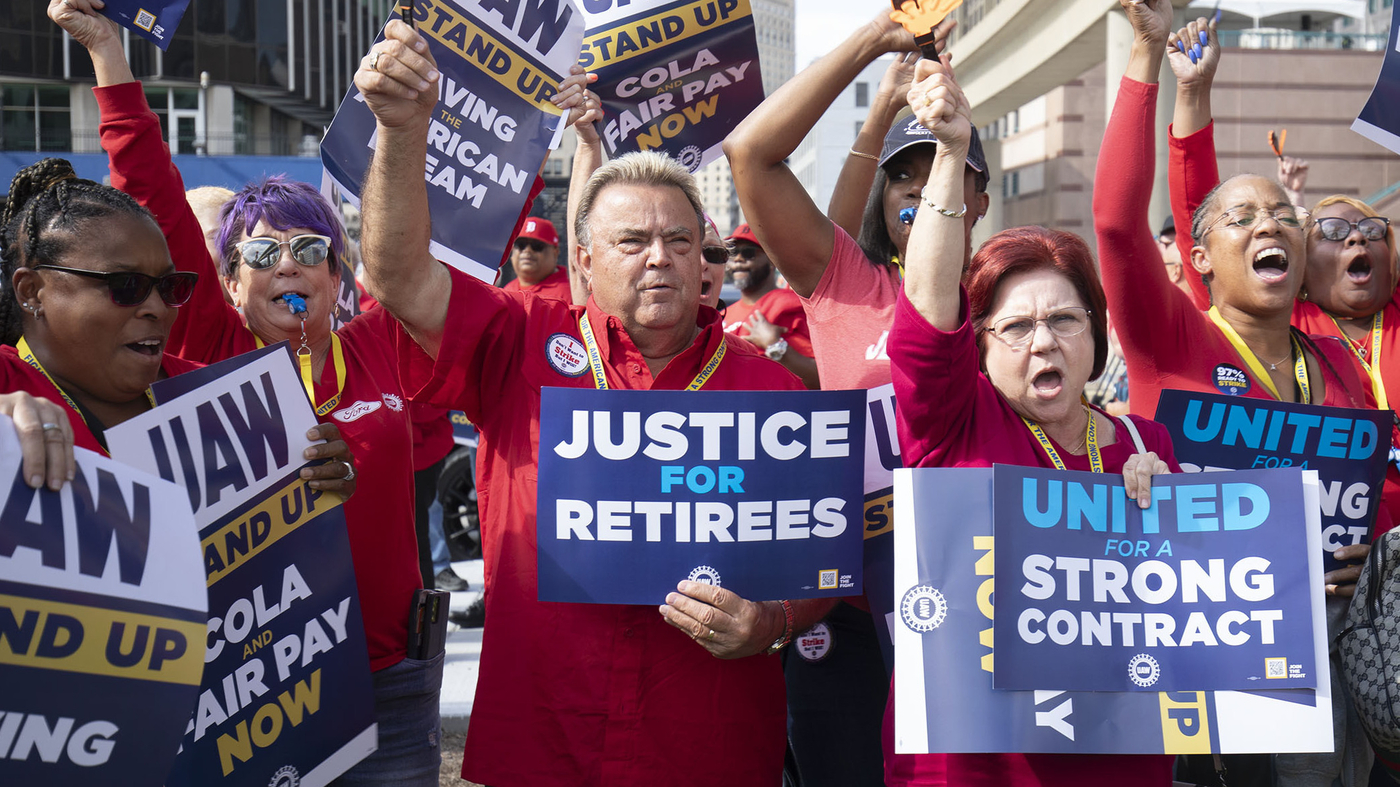
Autoworkers, currently on strike, are demanding the return of lifelong health care coverage and guaranteed monthly income until death, benefits they enjoyed in the past. Retirement security is a key issue in ongoing negotiations between the United Auto Workers union and the Big 3 automakers. The physical strain of factory jobs makes health care benefits crucial for autoworkers, who often require knee or hip replacements. The union argues that the automakers, which have seen record profits, should share their success with workers. While the car companies have offered improvements to retirement benefits, a return to the high costs of lifelong retirement packages seems unlikely due to the financial strain it would place on the companies.
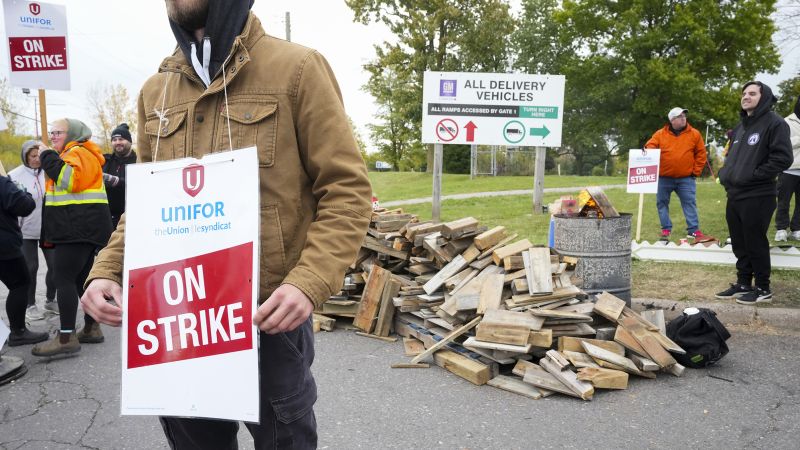
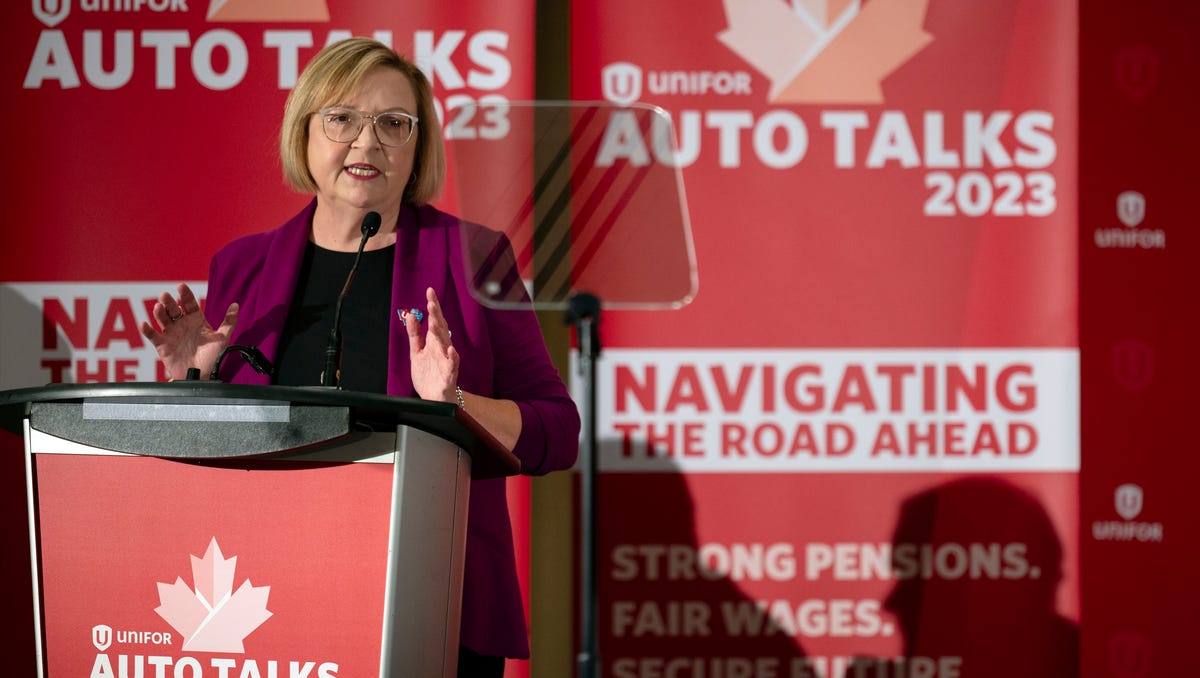
Autoworkers in Canada, represented by the union Unifor, have ratified a new labor contract with General Motors, avoiding a resumption of a strike that lasted for about 13 hours. The deal includes base-wage increases of nearly 20% and improved pensions. The strike had the potential to disrupt operations at GM's US plants that rely on engines and transmissions from Canadian facilities. Unifor will now focus on securing a similar contract for its members at Stellantis. Meanwhile, the United Auto Workers union in the US continues its strike against GM, Ford, and Stellantis, with negotiations showing no signs of an imminent resolution.
Unifor, the union representing autoworkers in Canada, has released the details of its tentative agreement with General Motors (GM). The agreement includes the conversion of full-time temporary workers to permanent positions, pay raises for production workers and skilled trades, a reduction in the time it takes to reach top pay, and the reactivation of a cost-of-living adjustment. If ratified, the agreement will cover 4,300 members at three GM facilities in Canada. Ratification meetings and voting are taking place, with results expected to be released on Sunday.
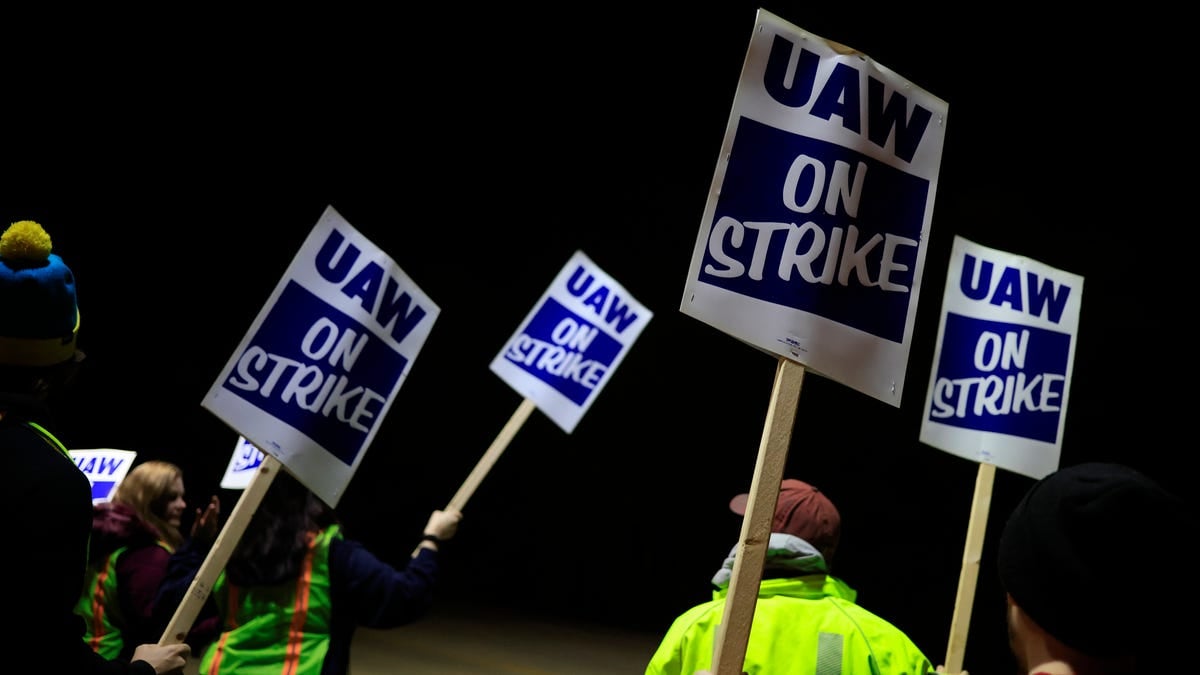
Thousands of United Auto Workers (UAW) members are entering their fifth week of striking against the Detroit Three automakers, demanding better pay and a fair contract. Autoworkers make an average of $28 per hour, with top-tier workers earning around $33 per hour. The strike has resulted in layoffs of approximately 4,800 autoworkers at non-striking factories. UAW is also calling for the elimination of wage tiers, a 40% wage increase, restoration of cost-of-living adjustments, defined benefit pensions for all workers, the right to strike over plant closures, a reduced work week, and increased benefits for current retirees. Meanwhile, CEO compensation at the car companies has increased, with GM's Mary Barra earning $29 million, Ford's Jim Farley earning $21 million, and Stellantis earning $24.8 million in 2022.
Shawn Fain, the president of the United Auto Workers (UAW) labor union leading the ongoing strike against major U.S. automakers, earned a salary of $347,389 last year, placing him in the top 5% of earners in his home state of Indiana. Fain has been a vocal advocate for autoworkers and has criticized corporate greed and income disparity. While striking UAW members receive $500 a week in substitute pay, it is unclear if Fain has taken a pay cut. Some workers have called for an increase in strike pay and for union leaders to accept a pay cut. The strike has expanded to Ford's profitable truck plant in Kentucky, and negotiations with the automakers continue.