
The Impact of Nonunion Workers on the UAW Strike and the Economy
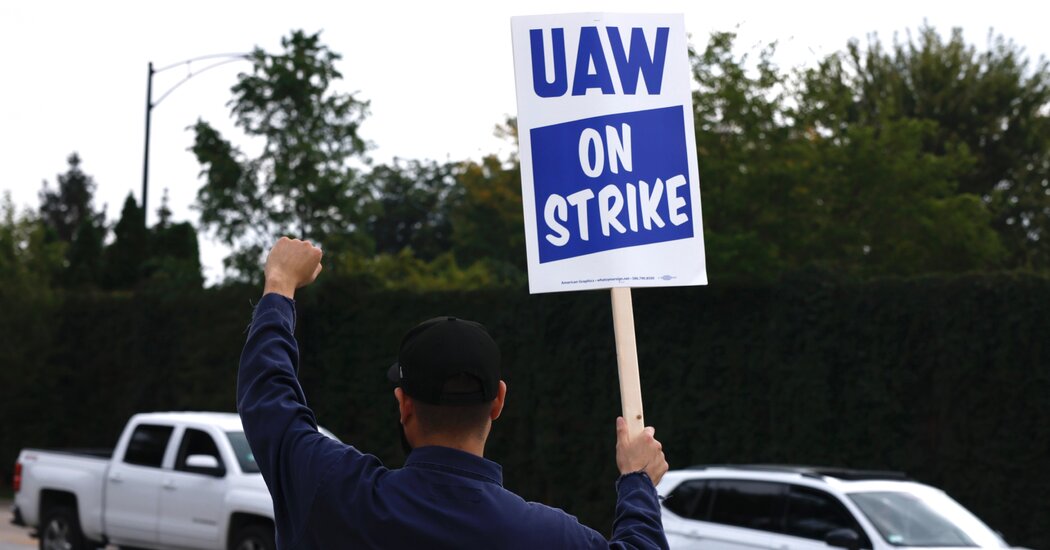
Nonunion workers at automakers such as Toyota, Mercedes-Benz, and Tesla are playing a significant role in the ongoing autoworkers' strike in the United States. Executives at Ford, General Motors, and Stellantis argue that nonunion automakers, particularly in the South, pose a competitive threat that prevents them from meeting the demands of striking workers. The United Automobile Workers (UAW) union sees the strike as a step towards better pay for both union and nonunion workers, aiming to recruit nonunion workers in the future. The pay gap between union and nonunion factories has been a contentious issue, with some industry executives blaming high union wages for past financial crises. Union leaders and lawmakers argue that the growth of nonunion manufacturing has contributed to the erosion of the middle class. The debate over auto industry wages has become more urgent as automakers invest in electric vehicle factories, many of which are located in Southern states with weaker union presence.
- Nonunion Workers Are Playing a Big Role in the Autoworkers' Strike The New York Times
- Career socialist activists 'are pulling the strings' on UAW strike that's cost the economy $7.7bn and claimed Daily Mail
- Expert: Maintaining UAW strike becoming more difficult as workers fatigue WXYZ 7 Action News Detroit
- In the wake of the UAW strike, automakers and workers should move to a state that values them Washington Examiner
- The UAW strike continues to hit suppliers; the most popular siding colors; adding up Fakuma's impact Plastics News
Reading Insights
0
1
7 min
vs 8 min read
90%
1,590 → 156 words
Want the full story? Read the original article
Read on The New York Times