Super Micro Computer (SMCI) has seen a significant stock surge following an internal investigation that found no misconduct, but concerns remain about its internal controls and financial reporting. Top investor Henrik Alex advises selling the stock, citing risks from the company's operational challenges and the potential for differing conclusions from its new auditor, BDO. Despite a Hold consensus from Wall Street analysts, Alex's downgrade to 'Sell' reflects his skepticism about SMCI's future performance and financial stability.

Super Micro Computer's stock plummeted over 20% after the company's earnings and sales forecasts fell short of Wall Street expectations, and it failed to file its 10-K annual report. The resignation of auditor Ernst & Young, citing unwillingness to associate with the company's financial statements, has added to the uncertainty. An independent investigation found no evidence of fraud, but recommended governance improvements. The stock, previously buoyed by AI prospects, has dropped over 60% in six months amid allegations of accounting issues by Hindenburg Research.
Deloitte, the auditing firm, certified that Nigerian company Tingo Group had $462 million in the bank, but the SEC found it was only $50, leading to charges of "massive fraud." This case highlights the recurring issue of auditors failing to detect fraud, with only 4% of frauds being uncovered by auditors. The setup where auditors are paid by the companies they examine can lead to playing it safe and avoiding hard-hitting questions. The discrepancy in Tingo's case raises questions about Deloitte's oversight, especially as the auditing was done by Deloitte's Israeli branch, not in Nigeria where Tingo operated. This failure could have repercussions for Deloitte's other client companies in the stock market.
Deloitte resigned as the auditor of Indian edtech giant Byju's, citing delays in financial reporting, and three board members have also resigned. Byju's denied the board members' resignations and called Deloitte's resignation a "planned transition." The startup has appointed BDO as its new auditor. Byju's has faced scrutiny over its financial reporting and recently refused to make a $40 million payment to lenders, leading to a counter-suit. The company is also cutting 1,000 jobs and saw its valuation cut by nearly two-thirds by BlackRock.
Deloitte has resigned as the auditor of Indian edtech start-up Byju's, citing concerns over the company's lack of transparency and corporate governance. Byju's, which is valued at $16.5bn, has faced scrutiny over its accounting practices and financial disclosures in recent months. The company has said it will appoint a new auditor soon.
Ernst & Young's effort to split the firm's auditing and consulting operations, known as Project Everest, is dead for the next few years, according to internal webcasts and sources. Leaders of EY's dominant U.S. and U.K. operations are now focused on repairing the damage caused by the 18-month effort to split the firm.
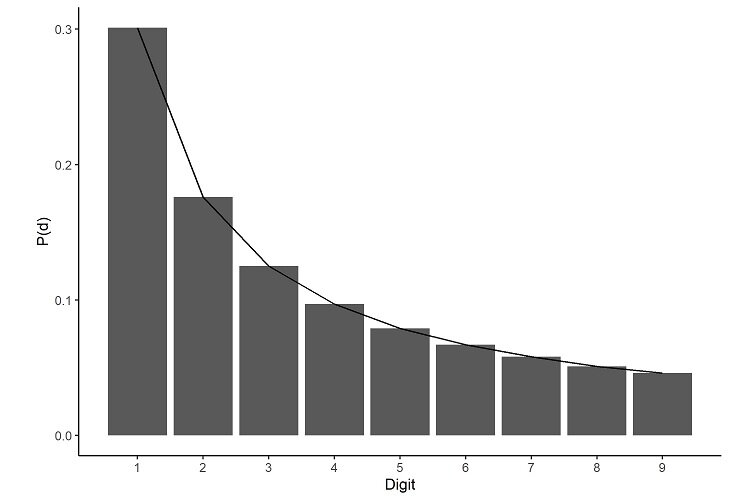
Researchers from the University of St Andrews suggest that auditing practices from the finance industry can be adapted to identify academic fraud. The paper looks at Benford's Law as a means of examining the relative frequency distribution for leading digits of numbers in datasets, which is used in the practice of professional auditing. The authors hope this paper will serve as an introduction to such tools for anyone wishing to challenge the integrity of a dataset, not just in financial data, but in any field that generates lots of data.
EY has been banned from auditing companies of public interest in Germany for two years and fined €500,000 ($544,000) over its failures as the auditor of Wirecard in the years before the digital payments company’s collapse. Germany’s auditor supervisory authority APAS imposed sanctions on the auditor of Wirecard over “breaches of professional duty” between 2016 and 2018. Wirecard filed for insolvency in 2020 following the discovery of a $2 billion accounting fraud that regulators, the company’s supervisory board and its longtime auditor failed to spot.
Germany's accounting watchdog has fined and banned EY, the 2016-2018 auditor of Wirecard, from taking on new audits for companies of public interest for two years and imposed a €500,000 fine. Wirecard filed for insolvency in June 2020, owing creditors almost $4 billion, after disclosing a €1.9 billion hole in its accounts that EY said was the result of a sophisticated global fraud. The ban forbids the auditor from participating in tenders for audits of certain companies for two years, including all listed companies and the majority of the financial sector consisting of banks and insurance companies.