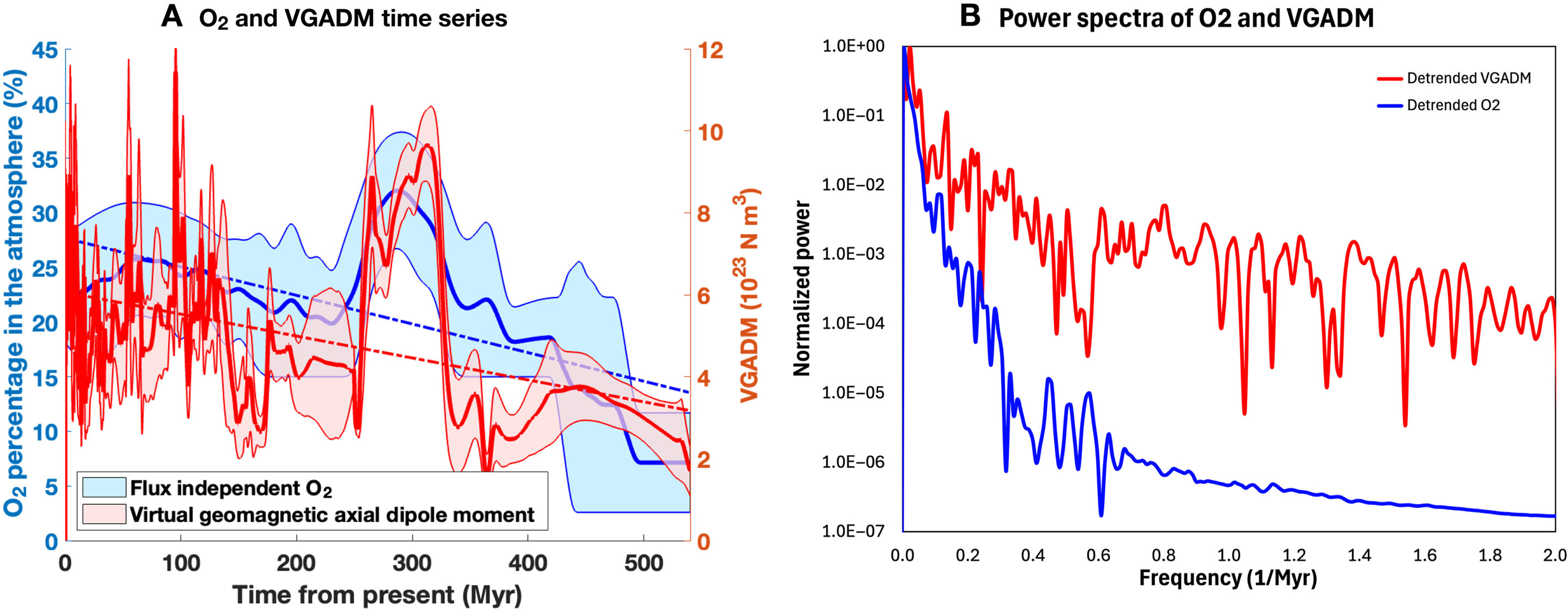
A study finds a strong, statistically significant correlation between Earth's magnetic field strength and atmospheric oxygen levels over the past 540 million years, suggesting a deep connection between Earth's interior processes and surface environment that supports life.
A study has revealed a crucial link between Earth's deep mantle chemistry and its early atmosphere, shedding light on the evolution of life on our planet and the surge of atmospheric oxygen. By examining magmas formed in ancient subduction zones, the researchers found a transition from reduced to more oxidized magmas after the Great Oxidation Event (GOE) around 2.1 to 2.4 billion years ago. This shift was due to the deep subduction of oxidized sediments, enabling the atmosphere to access the mantle. The findings have implications for understanding the composition of the continental crust, ore formation, and the conditions that set the stage for life on Earth.