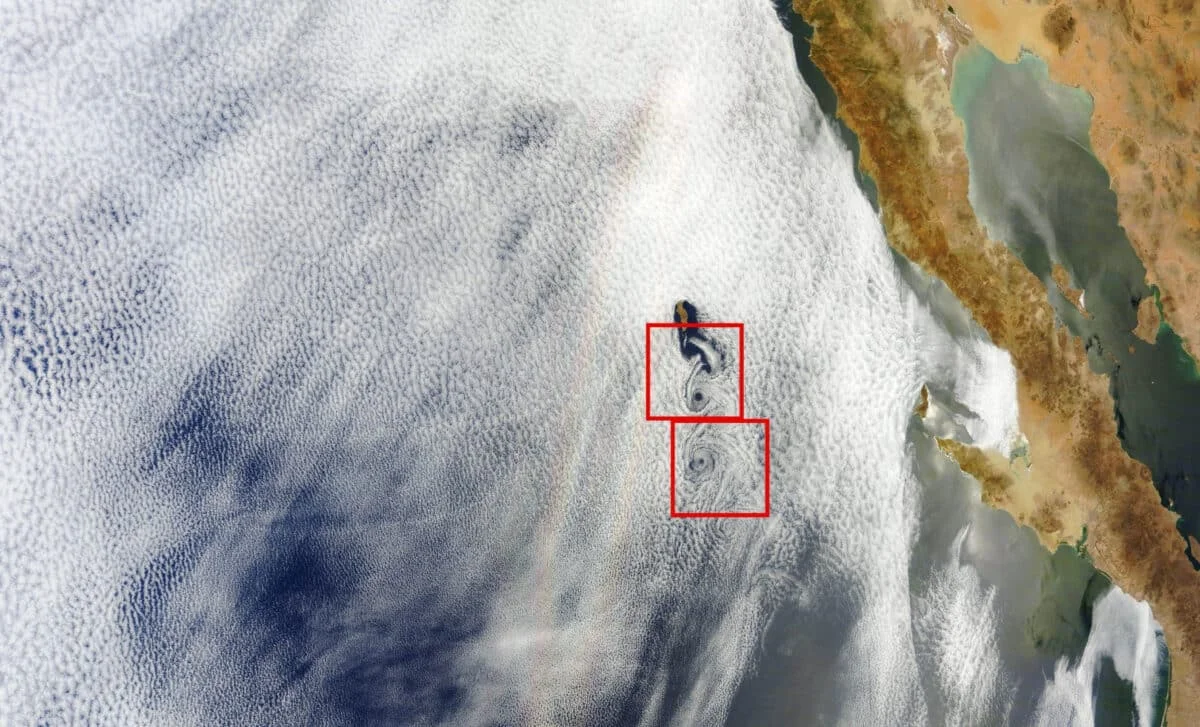
NASA Photo Reveals a 'Double Glory' and Von Kármán Vortices Over the Pacific
A 2012 NASA Terra satellite image over the Pacific captures a rare optical display called a glory that appears as two parallel rainbow-like streaks due to the satellite's swath-scanning, alongside a line of Von Kármán vortices shed by Guadalupe Island’s volcanic ridge; the two phenomena are unrelated but coincident in the frame, illustrating unusual atmospheric physics. The piece also notes a recent report of a possible extrasolar glory on exoplanet WASP-76 b.