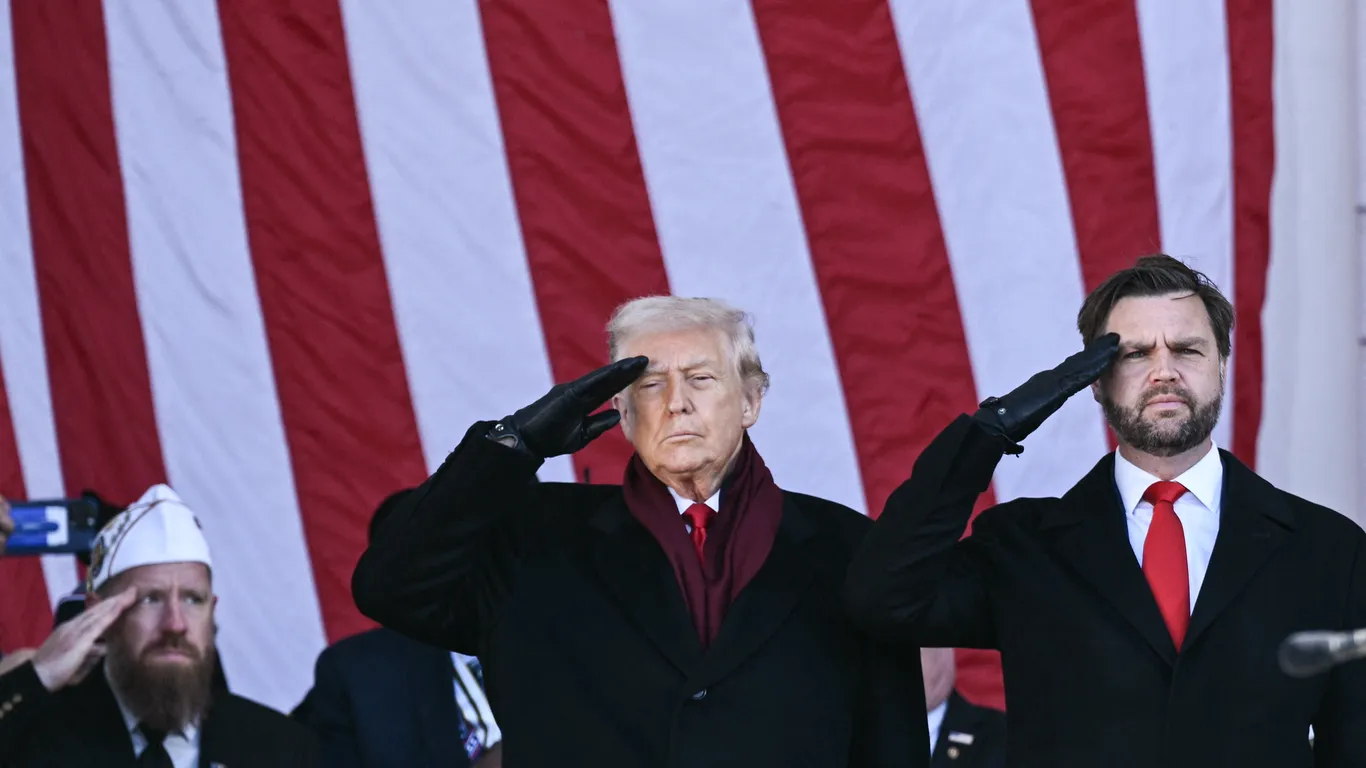
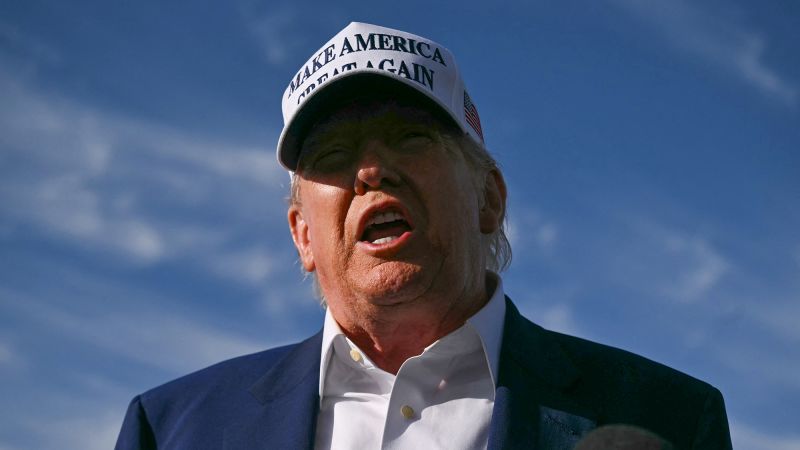
President Trump criticized political correctness and emphasized American military strength during his Veterans Day speech at Arlington, reaffirming his commitment to a strong, victorious military and proposing to rename Veterans Day to 'Victory Day for World War I,' while also addressing ongoing military campaigns and political issues.
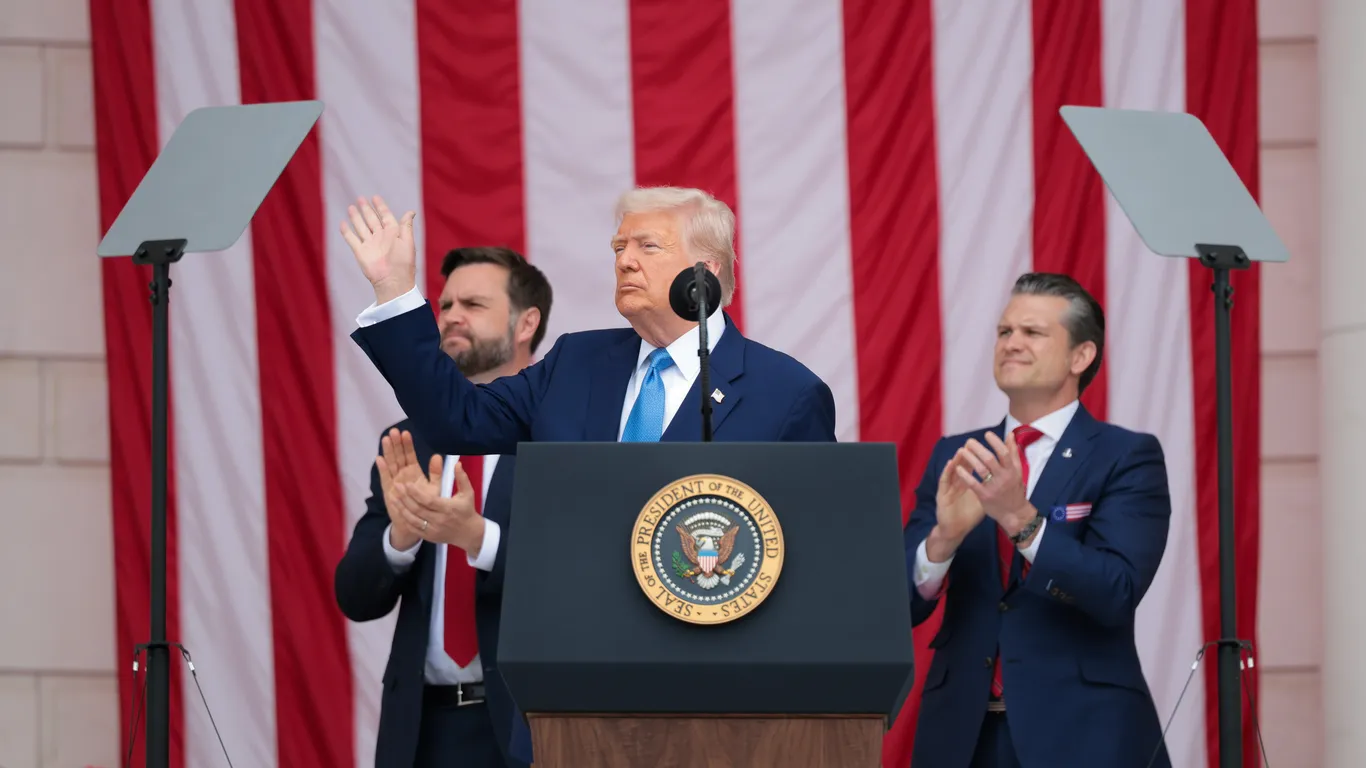
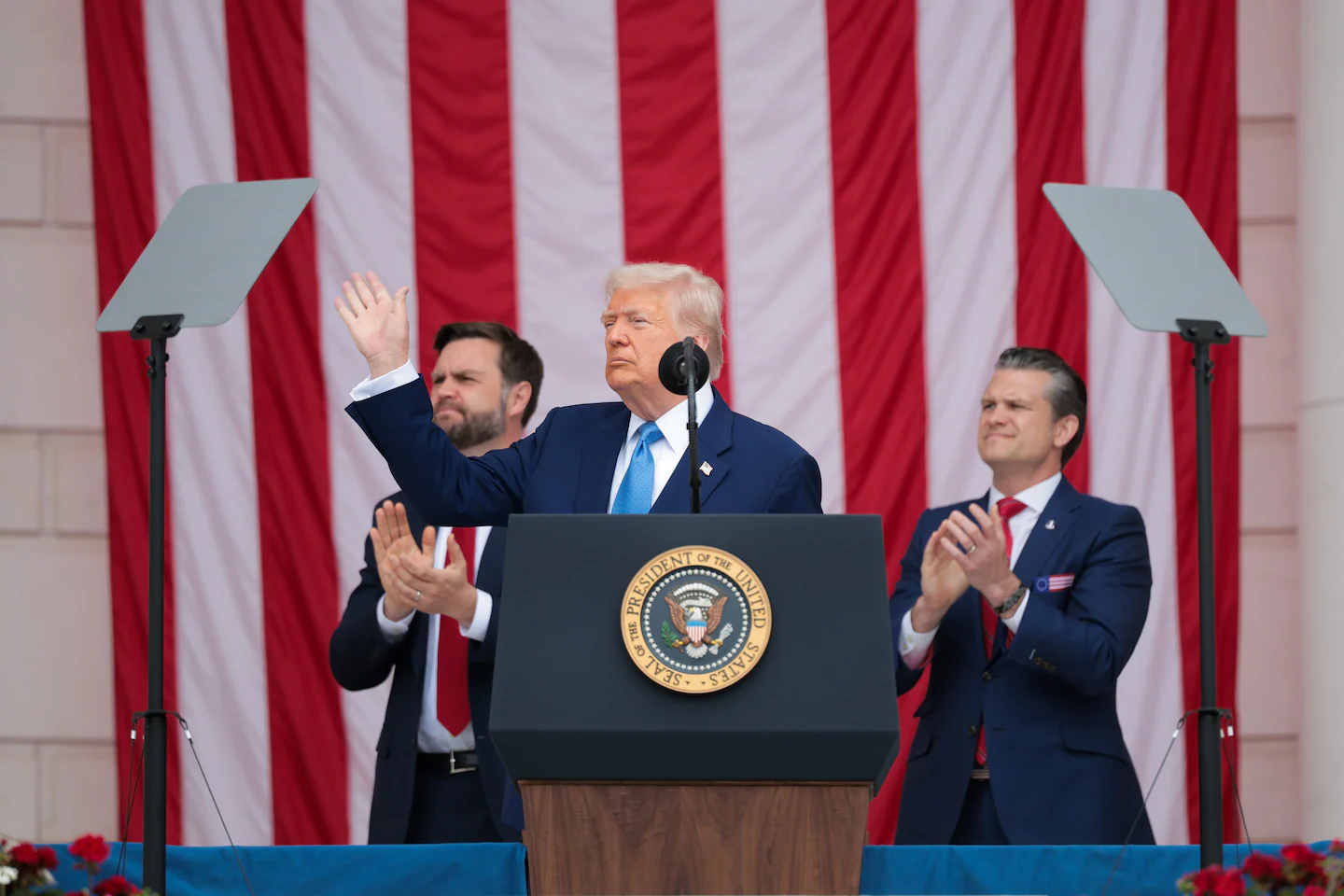
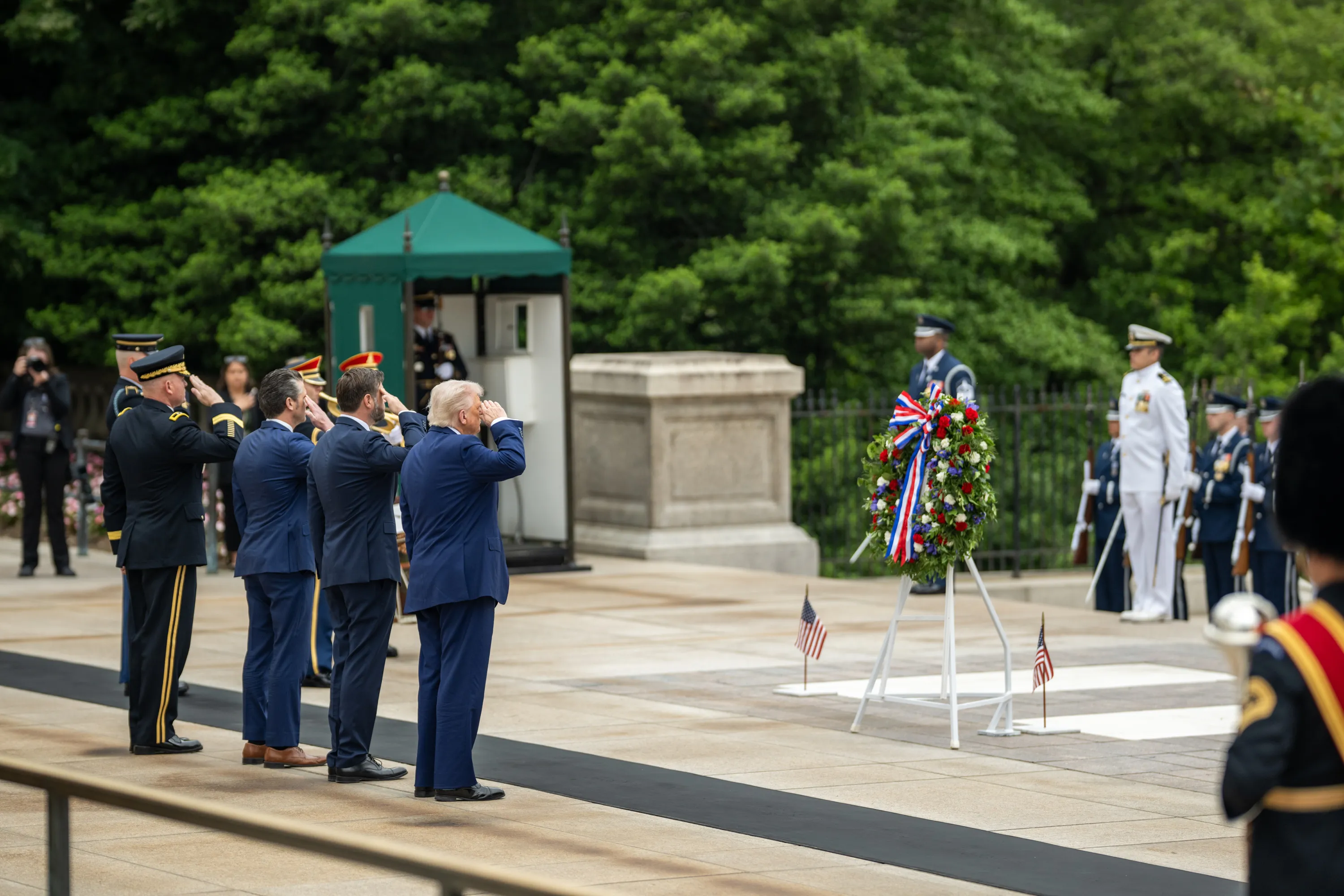
President Trump delivered a Memorial Day speech at Arlington National Cemetery that combined traditional solemn tributes to fallen soldiers with political attacks and personal boasts, contrasting with previous presidents' more solemn addresses and highlighting his ongoing political rhetoric during national holidays.
President Donald Trump commemorated Memorial Day with a speech at Arlington National Cemetery, honoring fallen soldiers and Gold Star families, while also reflecting on his past four years in office and mentioning border issues.
On Memorial Day, President Trump paid tribute to fallen heroes at Arlington National Cemetery, emphasizing their sacrifice for freedom and the ongoing debt owed to them by the nation, with speeches highlighting their bravery and the importance of honoring their memory.
President Trump paid tribute to fallen soldiers at Arlington on Memorial Day, while also making controversial political remarks on social media criticizing opponents, immigration, and judiciary, and diverging from traditional solemnity with personal and political comments during his speech.
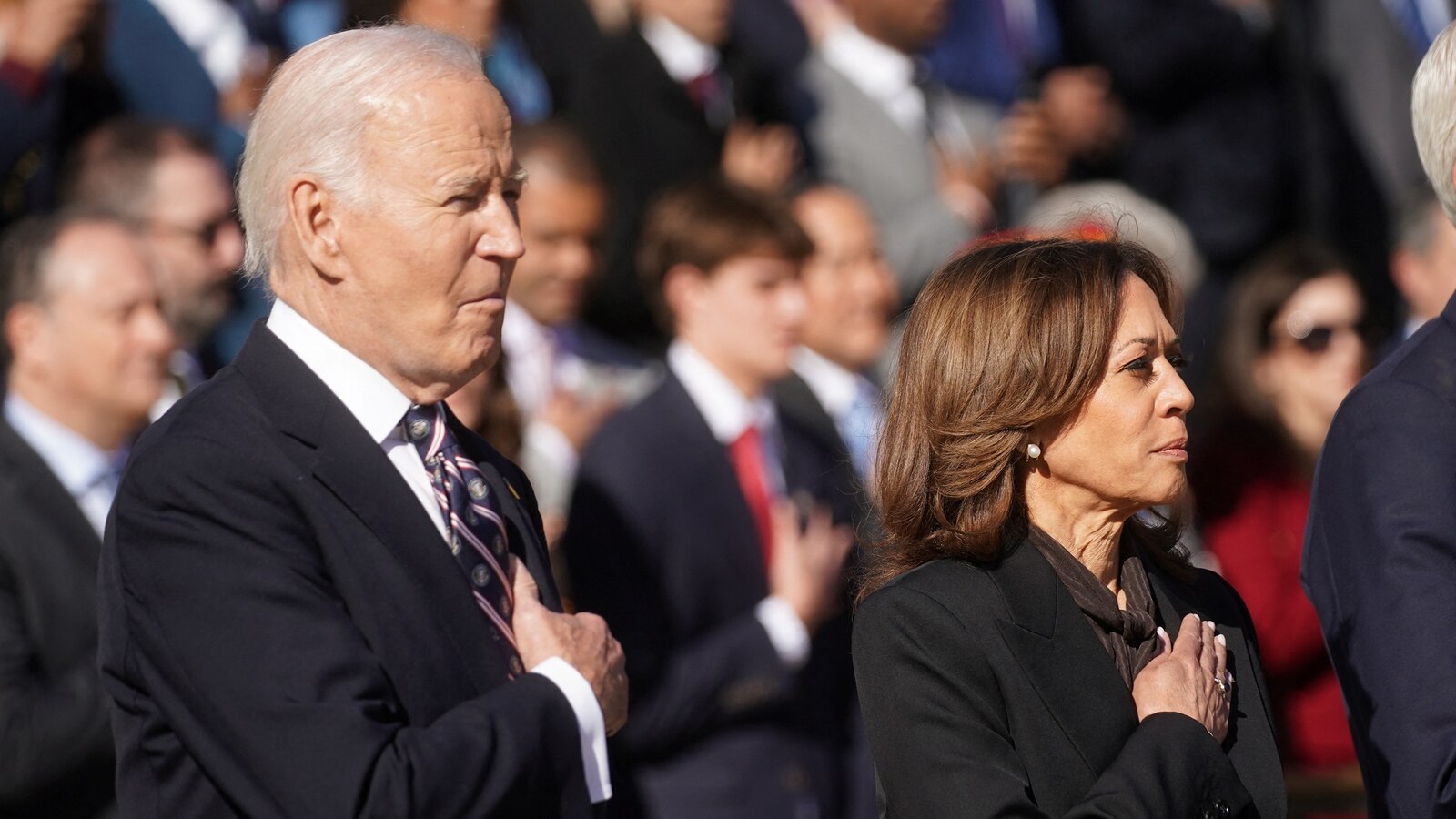
President Joe Biden and Vice President Kamala Harris observed Veterans Day at Arlington National Cemetery, marking Biden's last appearance there as commander in chief. Biden emphasized national unity and highlighted his administration's efforts on veterans' issues, including addressing toxic exposures. The event followed Harris's concession in the presidential race to Donald Trump, who is projected to win the election. Biden praised Harris's campaign and called for lowering political tensions. Biden and Trump are scheduled to meet at the White House, reviving a tradition Trump skipped after the 2020 election.
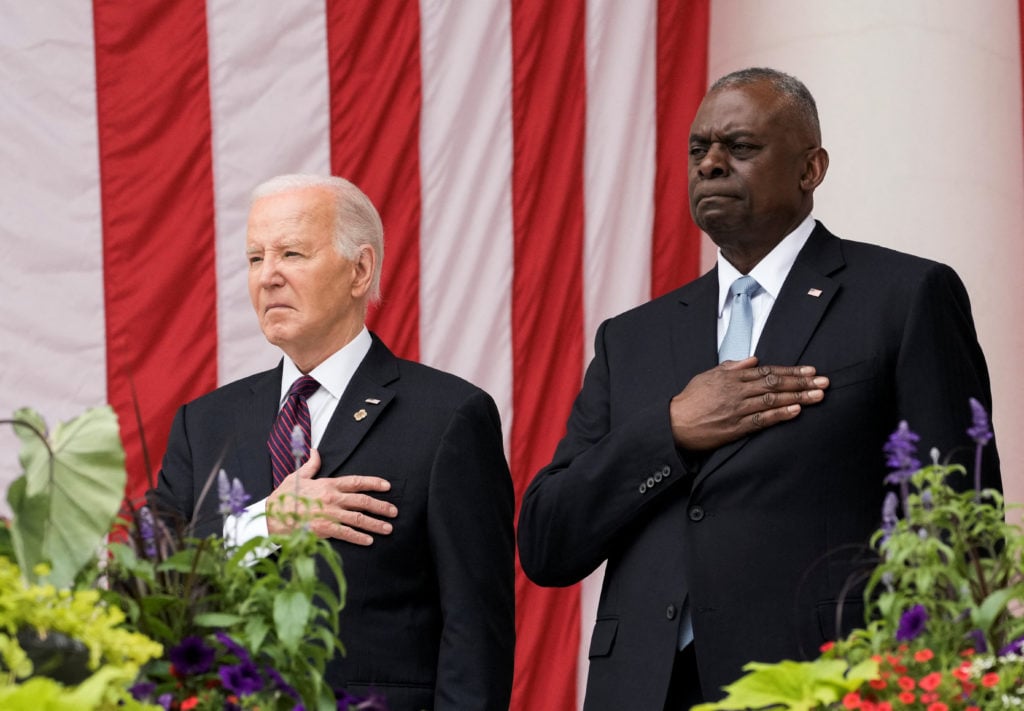
In a Memorial Day address at Arlington National Cemetery, President Joe Biden emphasized that each generation must earn and defend freedom, honoring the sacrifices of fallen service members. He highlighted the importance of continuing their work towards a more perfect union and acknowledged the struggles of veterans, citing the PACT Act's role in improving their benefits. Biden also commemorated his late son Beau's service and the impact of military-related health issues.
Bestselling author and former Navy SEAL Jack Carr reflects on the significance of Memorial Day, citing General Order No. 11 issued by John A. Logan in 1868. The order emphasizes the importance of honoring fallen U.S. armed forces members by decorating their graves and maintaining their resting places with "sacred vigilance." Carr underscores the need to remember and cherish the sacrifices made by these heroes to preserve the nation's freedom.
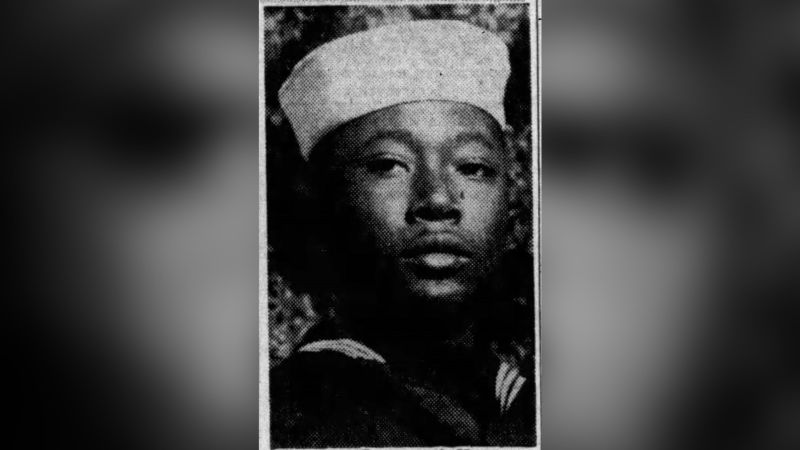
After more than 80 years, DNA analysis has helped identify the remains of 19-year-old sailor David Walker, who was killed in the Pearl Harbor attack while serving on the USS California. His body was exhumed in 2018 and identified using anthropological, dental analysis, and mitochondrial DNA analysis. Walker, a former student at I.C. Norcom High School in Virginia, will be buried at Arlington National Cemetery in September, and a rosette will be placed next to his name at the National Memorial Cemetery of the Pacific.
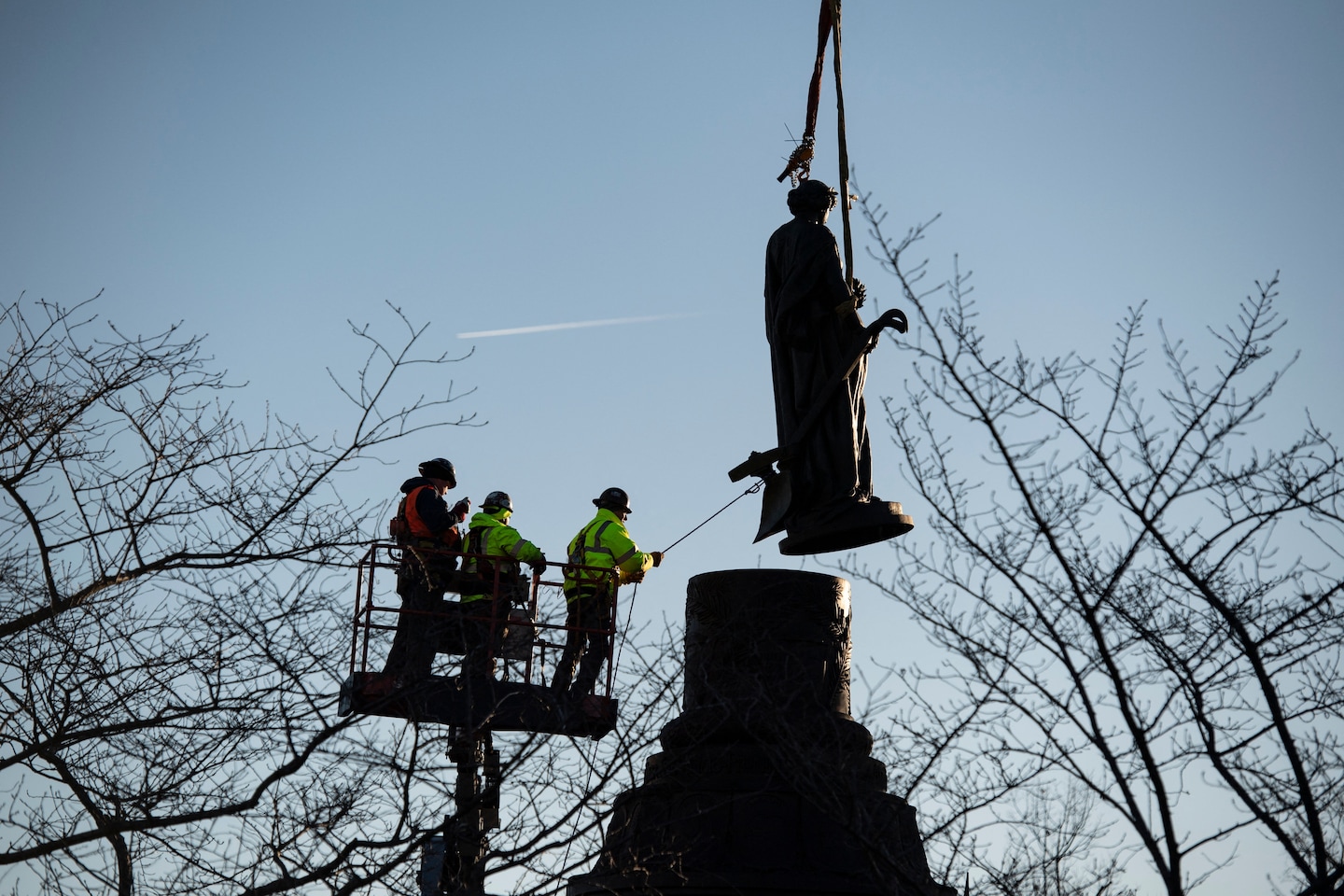
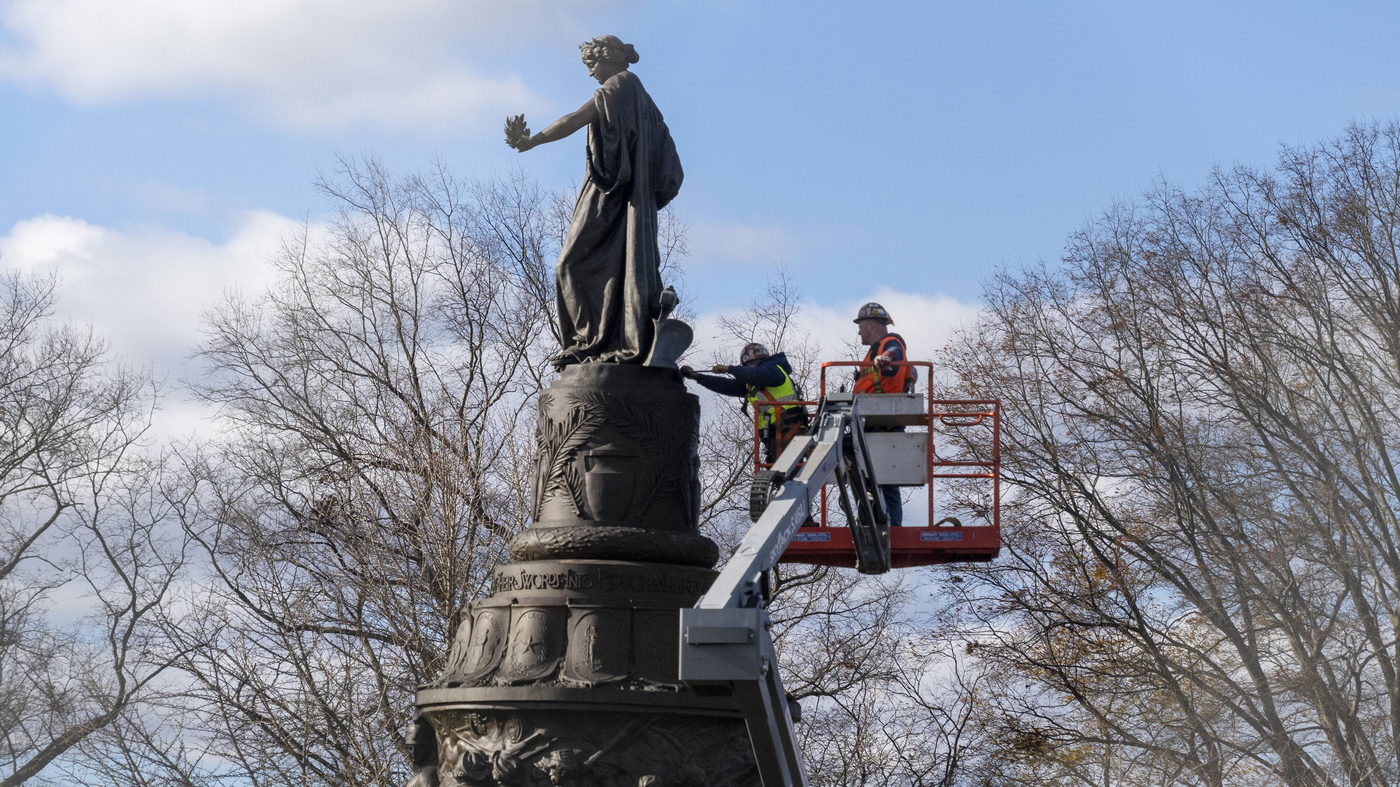
The process to remove a century-old Confederate memorial at Arlington National Cemetery has resumed after a federal judge lifted a temporary injunction. The group Defend Arlington had filed a lawsuit seeking to halt the removal, but the judge ruled that their allegations were unfounded. The monument's removal is part of a national effort to remove or rename Confederate monuments and memorials. The movement has faced pushback from some Republican lawmakers. The removal process is expected to be completed by the end of the week, with surrounding graves and headstones being carefully protected during the process.
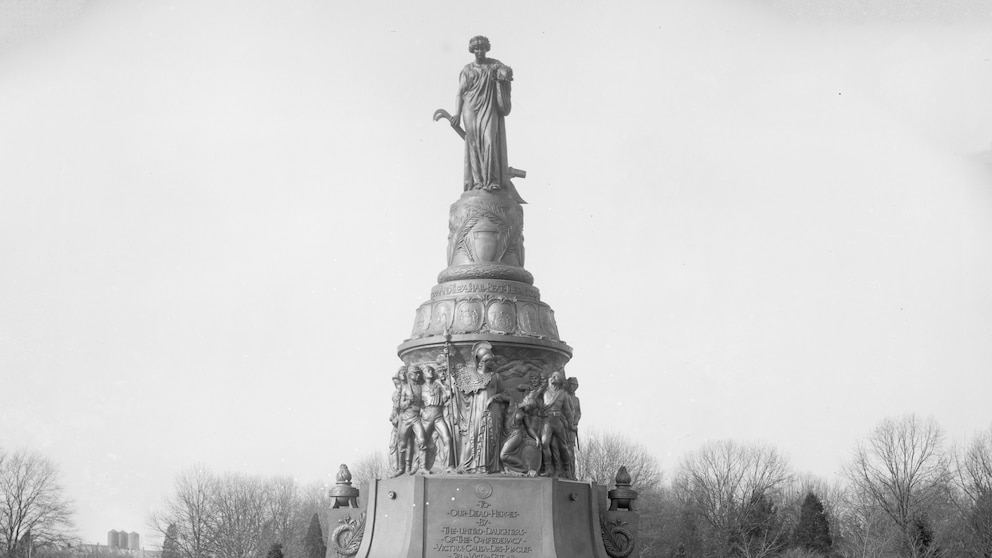
A controversial Confederate statue at Arlington National Cemetery has been taken down after a federal judge ruled against efforts to halt its removal. The 32-foot bronze statue, commissioned by the United Daughters of the Confederacy and unveiled in 1914, was ordered to be removed as part of a broader effort by Congress to eliminate Confederate names and legacies from military assets. The statue's removal marks the culmination of a year-long process initiated by the bipartisan Naming Commission, which identified various military bases, ships, buildings, and memorials for name changes. The statue's supporters argue it promoted reconciliation, while critics say it glossed over slavery. The statue's future placement remains uncertain.
A federal judge has ruled to allow the removal of a Confederate memorial at Arlington National Cemetery in Virginia, after it was temporarily halted due to a restraining order filed by protesting groups. The removal is mandated by Congress to be completed by January 1, 2024. The memorial, known as the Reconciliation Monument, has been criticized for its nostalgic and sanitized depiction of the Confederacy, including slavery. Proponents argue that removing such monuments is an ineffective gesture against racism, while opponents claim that the removal will desecrate the memorial and impede its historical significance. The Department of Defense has not commented on the litigation, and the monument was initially expected to be fully removed by December 22.
A federal judge in Alexandria, Virginia, has allowed the Arlington National Cemetery to proceed with the removal of a century-old Confederate memorial after initially blocking the removal due to concerns of grave desecration. The judge toured the site and found no evidence of desecration, leading to the lifting of the injunction. The memorial, recommended for removal by an independent commission, features controversial depictions of enslaved individuals. A group called Defend Arlington has filed lawsuits to keep the memorial in place, arguing that its removal undermines reconciliation efforts. Virginia Governor Glenn Youngkin has arranged for the memorial to be relocated to a historical park owned by the Virginia Military Institute.
A federal judge in Virginia has reversed his earlier decision and allowed the Arlington National Cemetery to proceed with the removal of a century-old Confederate memorial. The judge had initially issued a temporary injunction after receiving reports of gravesites being disturbed during the removal process. However, after personally inspecting the site, he determined that the allegations of grave desecration were unfounded. The cemetery officials, who are required by law to complete the removal by the end of the year, will now resume the process while ensuring the protection of surrounding graves and headstones. The memorial, which features controversial depictions of enslaved individuals, has faced legal challenges from heritage groups arguing for its preservation as a symbol of reconciliation. Virginia Governor Glenn Youngkin has arranged for the memorial to be relocated to a historical park owned by the Virginia Military Institute.
A federal judge has ruled that the removal of a Confederate Memorial at Arlington National Cemetery in Virginia may proceed, stating that the groups attempting to halt the removal failed to prove that keeping the monument was in the public's best interest. The judge granted a temporary restraining order initially, but later determined that the plaintiffs did not establish that a preliminary injunction was in the public interest. The statue's removal is part of a broader effort to remove Confederate symbols from US military facilities, as directed by the Department of Defense. The monument, which includes controversial depictions of Black figures, was set to be completely removed by Friday.