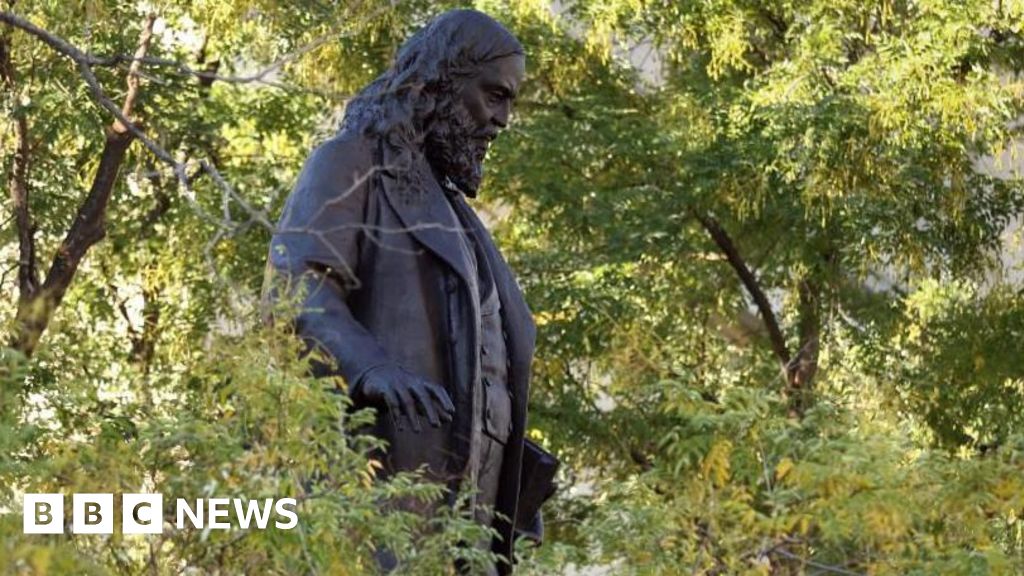
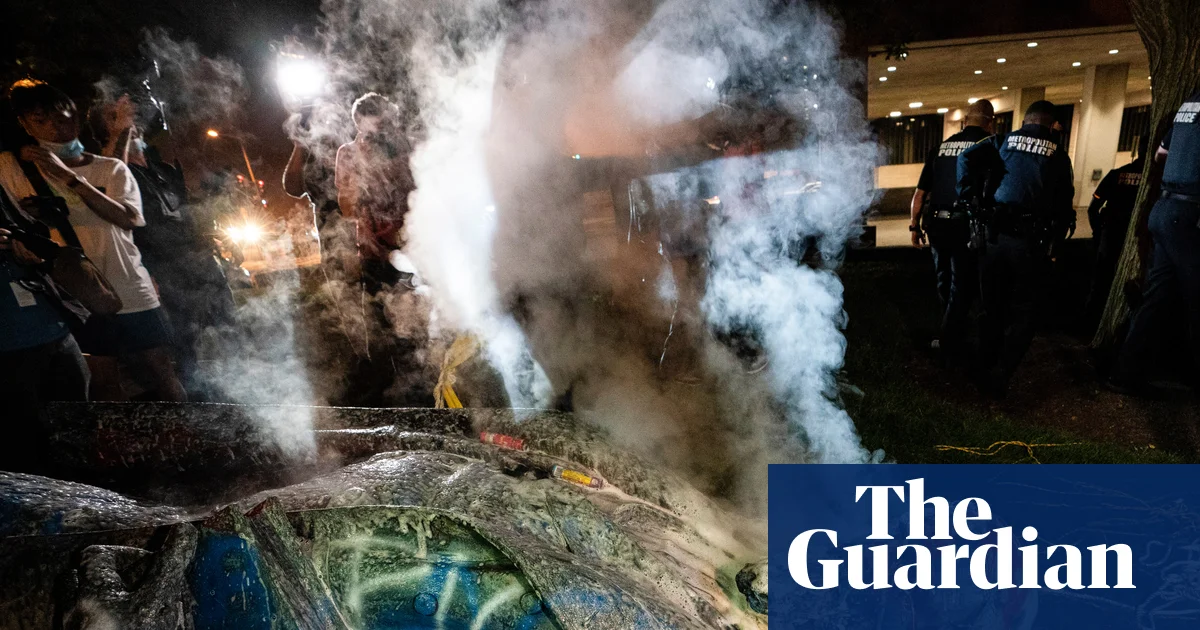
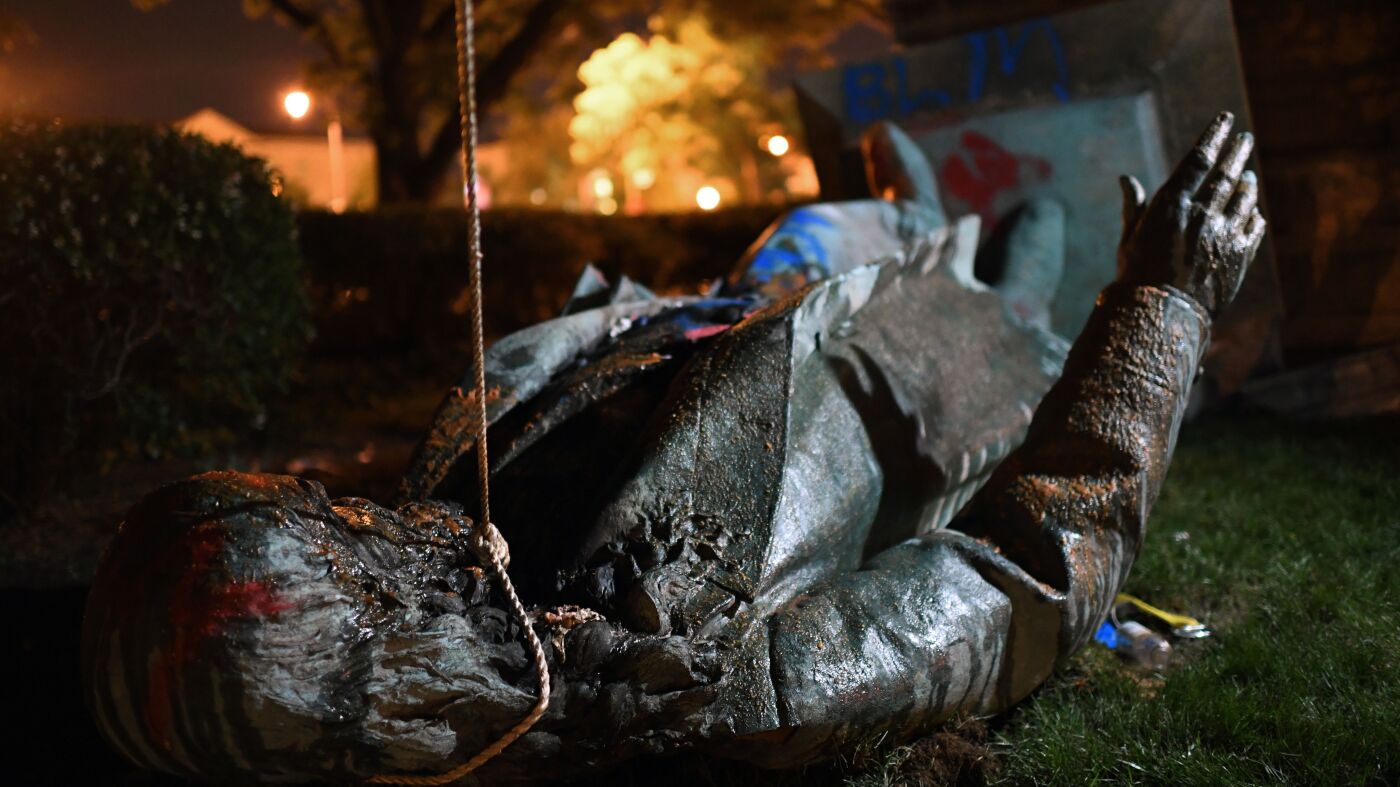
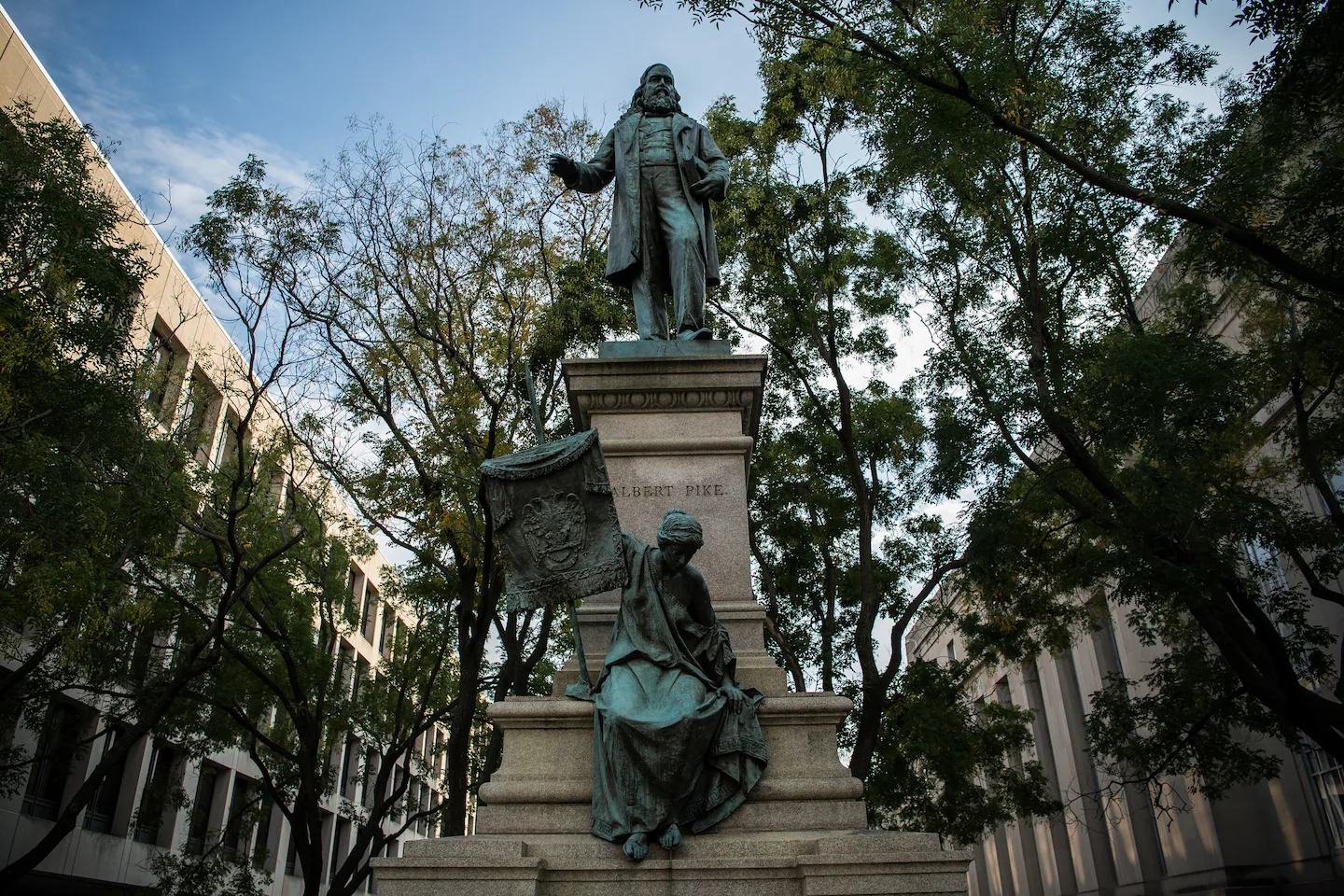
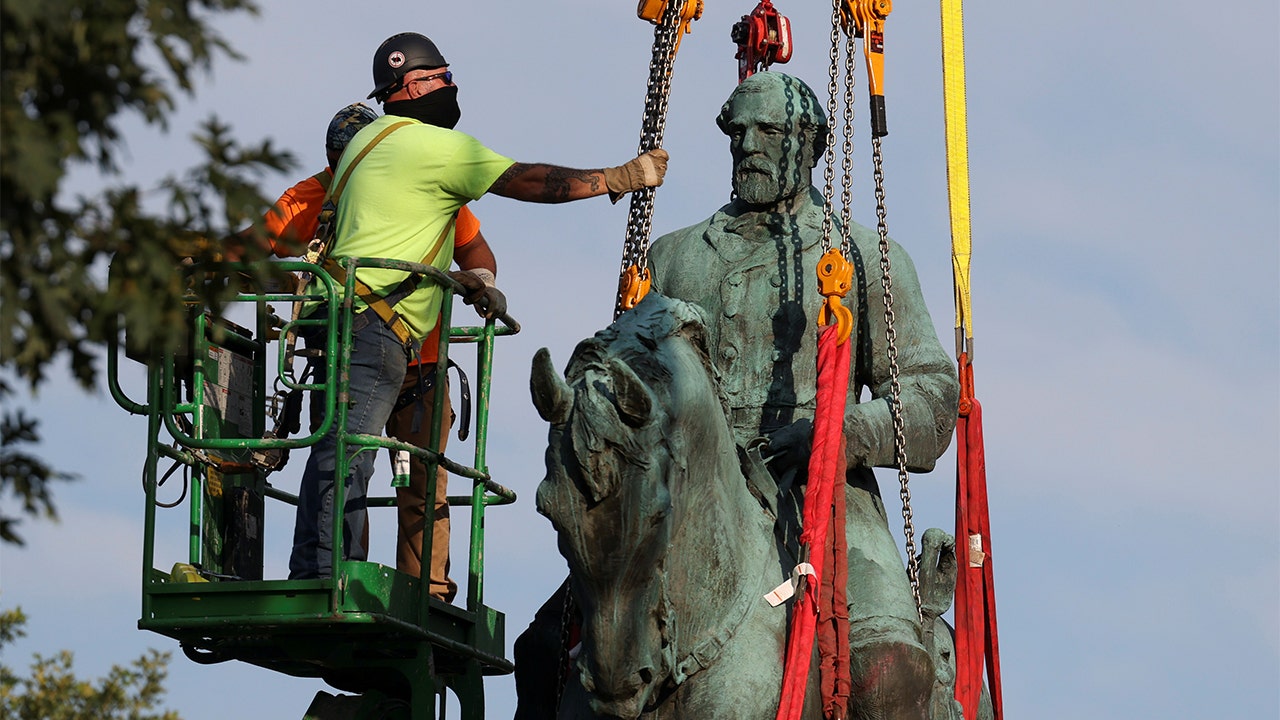
A statue of Confederate general Albert Pike, torn down during 2020 protests and later restored in Washington under President Trump's orders, has reignited controversy, with critics calling it offensive and advocating for its removal from public spaces.
The Trump administration's National Park Service plans to restore and reinstall a Confederate general statue of Albert Pike in Washington DC, despite ongoing controversy and protests calling for its removal, reflecting broader debates over Confederate monuments and historical memory.
The National Park Service plans to restore and reinstall the statue of Confederate general Albert Pike in Washington D.C., despite ongoing controversy and calls for its permanent removal, following its toppling during Black Lives Matter protests in June 2020.
A Confederate statue of Albert Pike in D.C., which was toppled and vandalized in 2020, is being repaired and is scheduled to be reinstalled near the White House in October, despite past calls for its removal.
The Confederate statue of Albert Pike, toppled in 2020, is set to be restored and reinstalled in Washington D.C., despite ongoing debates about its appropriateness and calls for its removal to a museum. The statue is being repaired at a Maryland facility, and the decision aligns with federal preservation laws, though critics argue it dishonors history.
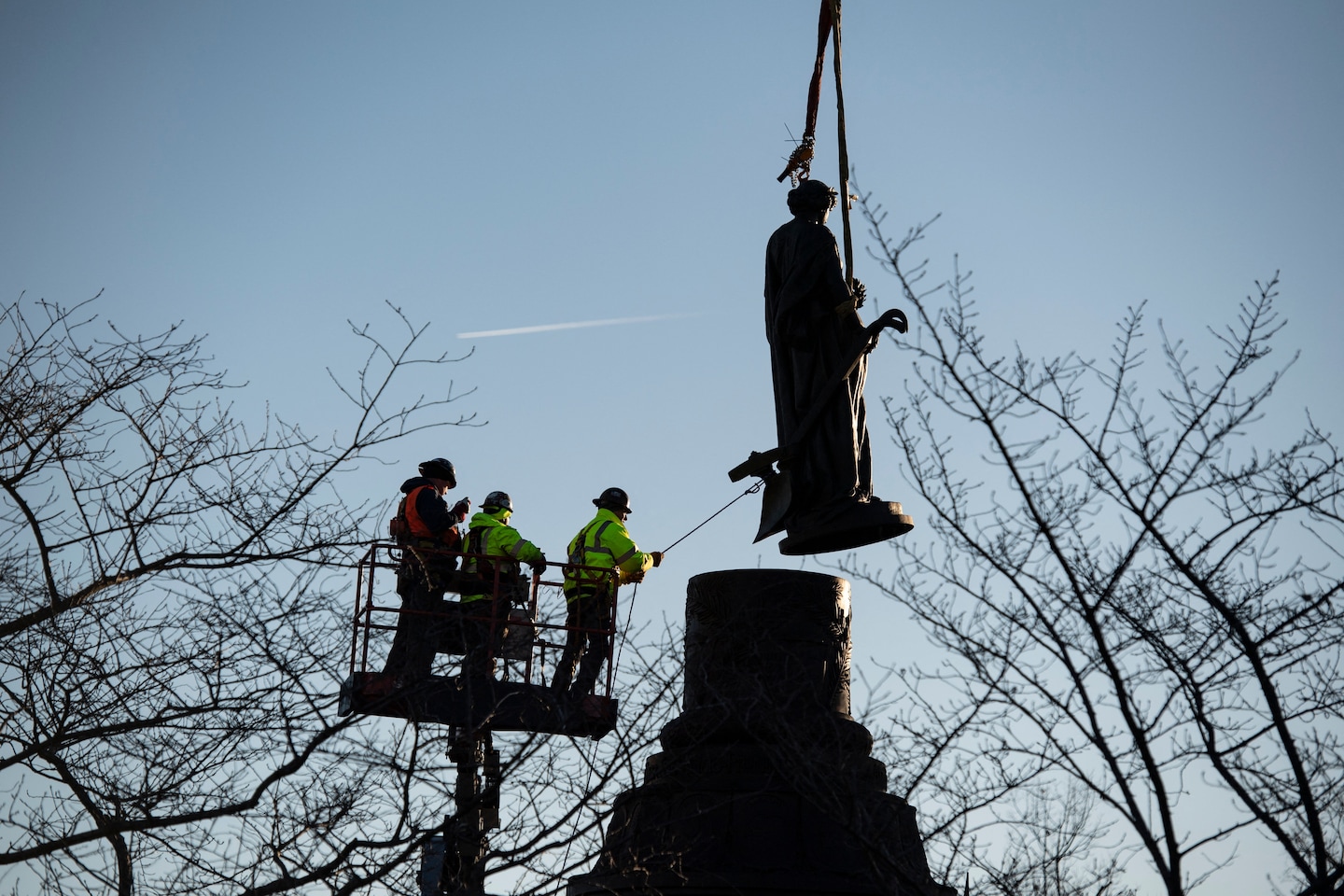
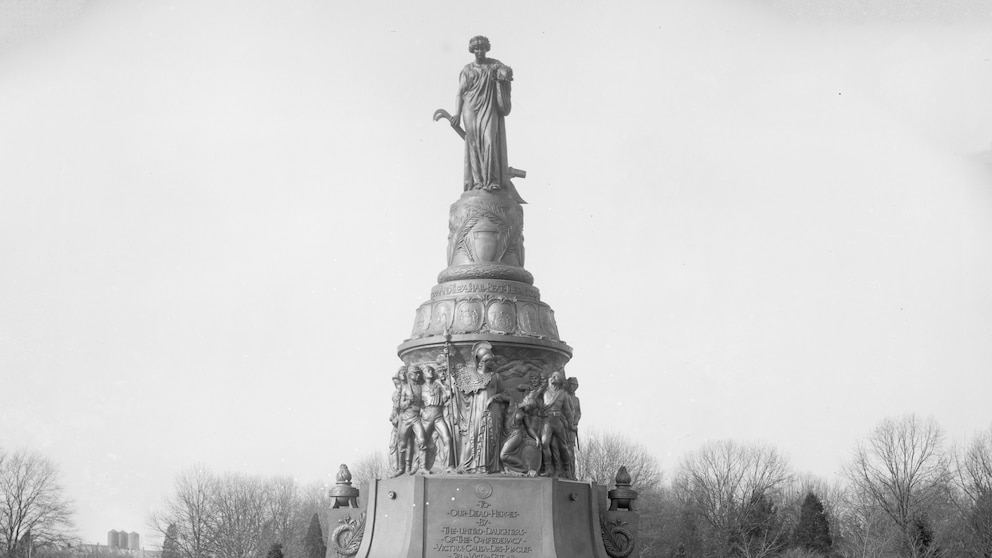
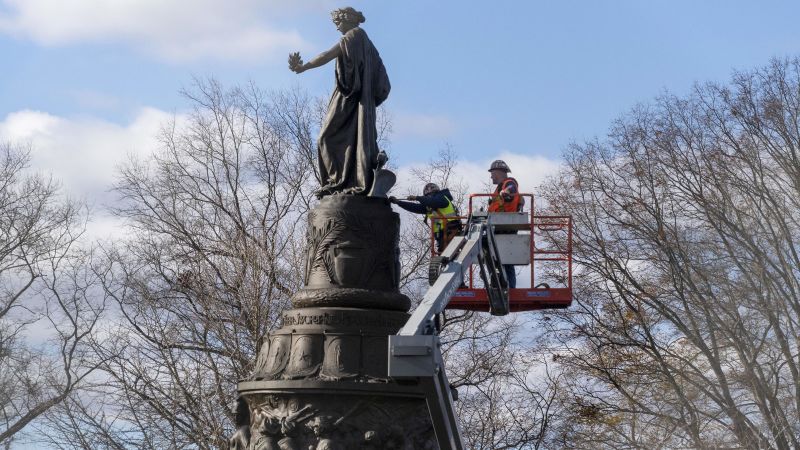
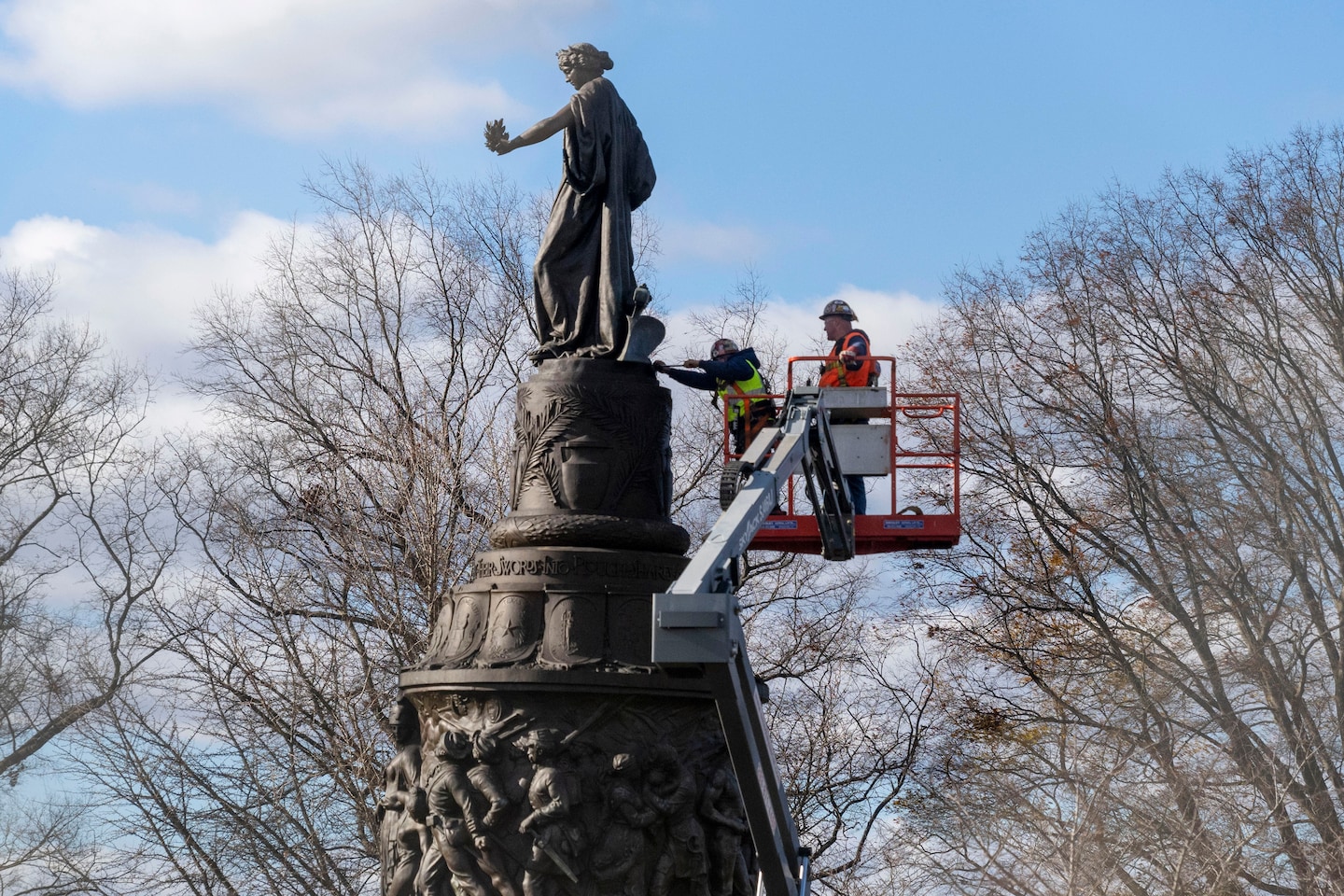
A controversial Confederate statue at Arlington National Cemetery has been taken down after a federal judge ruled against efforts to halt its removal. The 32-foot bronze statue, commissioned by the United Daughters of the Confederacy and unveiled in 1914, was ordered to be removed as part of a broader effort by Congress to eliminate Confederate names and legacies from military assets. The statue's removal marks the culmination of a year-long process initiated by the bipartisan Naming Commission, which identified various military bases, ships, buildings, and memorials for name changes. The statue's supporters argue it promoted reconciliation, while critics say it glossed over slavery. The statue's future placement remains uncertain.
A federal judge has ruled to allow the removal of a Confederate memorial at Arlington National Cemetery in Virginia, after it was temporarily halted due to a restraining order filed by protesting groups. The removal is mandated by Congress to be completed by January 1, 2024. The memorial, known as the Reconciliation Monument, has been criticized for its nostalgic and sanitized depiction of the Confederacy, including slavery. Proponents argue that removing such monuments is an ineffective gesture against racism, while opponents claim that the removal will desecrate the memorial and impede its historical significance. The Department of Defense has not commented on the litigation, and the monument was initially expected to be fully removed by December 22.
A federal judge has ruled that the removal of a Confederate Memorial at Arlington National Cemetery in Virginia may proceed, stating that the groups attempting to halt the removal failed to prove that keeping the monument was in the public's best interest. The judge granted a temporary restraining order initially, but later determined that the plaintiffs did not establish that a preliminary injunction was in the public interest. The statue's removal is part of a broader effort to remove Confederate symbols from US military facilities, as directed by the Department of Defense. The monument, which includes controversial depictions of Black figures, was set to be completely removed by Friday.
A federal judge in Virginia has ruled that the removal of a Confederate memorial at Arlington National Cemetery can proceed, denying a request from a group called Defend Arlington to keep the memorial in place. The judge found that the group had not shown it was in the public interest to leave the memorial undisturbed and that adjacent graves were not being disturbed. The Army had previously directed the dismantling of the divisive statue, which depicts a Black woman holding the baby of a White Confederate officer and an enslaved man accompanying his enslaver into battle. The removal will now proceed, with surrounding graves and headstones carefully protected during the process.
House Republicans, led by Rep. Andrew Clyde, are urging the Department of Defense (DOD) to halt the removal of a Confederate statue, known as the Reconciliation Monument, from Arlington National Cemetery. More than 40 GOP lawmakers argue that the monument's removal does not align with the original intent of Congress and could undermine the separation of powers. The statue, which has stood in the cemetery for over a century, has faced criticism for glorifying the Confederacy and perpetuating racist narratives. The push to rename and remove Confederate memorials gained momentum following protests against systemic racism in 2020. The DOD's Naming Commission has recommended the removal of the statue as part of efforts to rename military installations associated with the Confederacy.
The statue of Confederate General Robert E. Lee in Charlottesville, Virginia, was secretly melted down in a symbolic ceremony to create a new piece of inclusive public art. The project, called "Swords Into Plowshares," led by a professor and the executive director of Charlottesville's Black history museum, aims to transform the controversial statue into a sculpture that the community can be proud of. Due to past threats and legal concerns, the project was kept secret until now. The destruction of the statue was compared to putting down a rabid dog, and the act of melting it down was seen as a way to remove the trauma associated with Confederate symbols.