
Tag

Anglerfish

All articles tagged with #anglerfish

science1 year ago

Sexual Parasitism Key to Anglerfish Deep-Sea Dominance

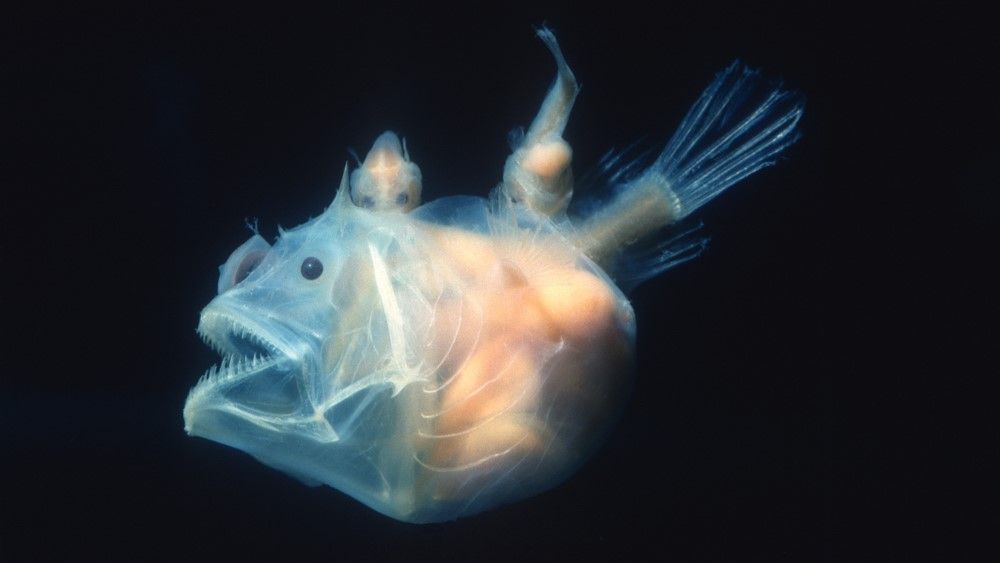
Scientists at Yale University have discovered that anglerfish diversified and thrived in the deep ocean around 50 million years ago due to a unique reproductive strategy where tiny males would clamp onto larger females, sometimes permanently fusing and becoming organs for sperm production. This adaptation allowed them to successfully reproduce in the vast, dark depths of the ocean, leading to the existence of over 300 species of anglerfish today.
science1 year ago

"Evolution of Anglerfish as Sexual Parasites in the Midnight Zone"

Anglerfish colonized the ocean's midnight zone 55 million years ago during a period of extreme global warming and adapted to thrive by becoming sexual parasites, merging with females' bodies due to immune system deficiencies. This unique reproductive strategy allowed them to diversify into the array of creatures that stalk the midnight zone today.

biology2 years ago

"Extreme Solutions: Unveiling the Bizarre Sex Lives of Deep Sea Creatures"

Deep-sea creatures have evolved extreme solutions to overcome the challenges of finding a mate in the sparse and food-scarce environment of the deep sea. Some species of squids and octopuses attempt to mate with any potential partner they encounter, regardless of sex or species. Other animals, like the sea cucumber Paroriza pallens, form long-term partnerships to ensure fertilization. However, some deep-sea animals, such as wood-eating clams, bone-eating worms, and certain species of anglerfish, have developed even more extreme solutions. These species have tiny males that attach themselves to females, acting as standby "accessory males" to fertilize the female's eggs when needed. In some cases, the male fuses his mouth onto the female's body, becoming a parasitic provider of sperm on-tap. These deep-sea anglerfish have adapted to avoid immune rejection by lacking certain genes in their adaptive immune system, but this may make them more susceptible to infections.