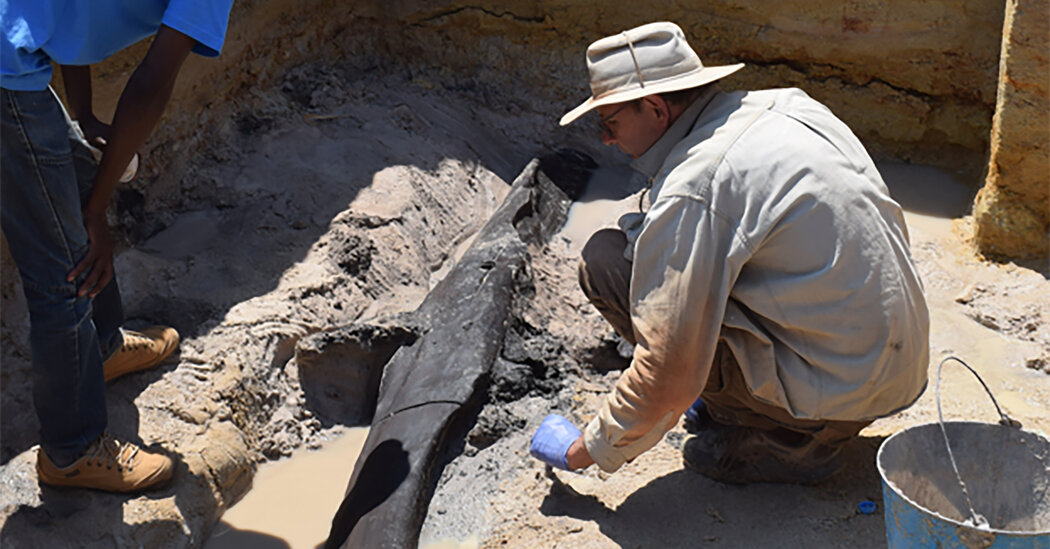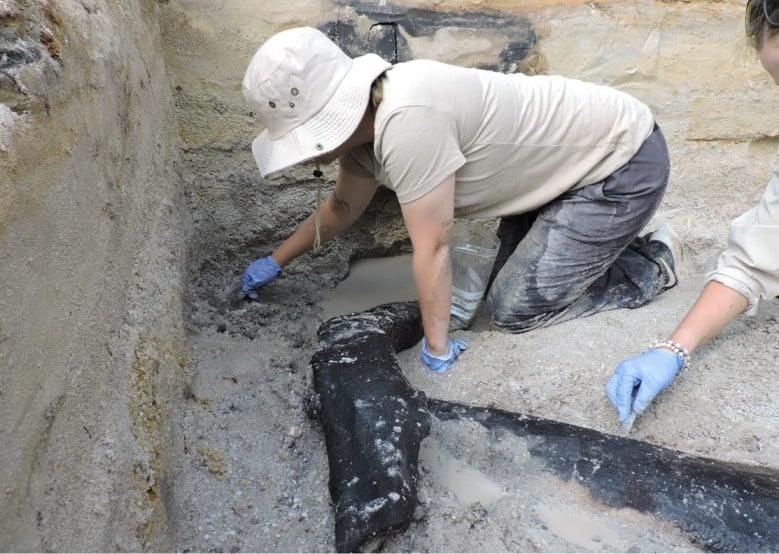
Archaeologists have discovered a half a million-year-old wooden structure at the archaeological site of Kalambo Falls in Zambia, predating the evolution of Homo sapiens. Stone tool cut marks on the wood indicate that early humans shaped and joined two logs to create a structure, challenging the belief that Stone Age humans were nomadic. The finding provides evidence of early humans using wood for more than just fire, sticks, and spears, and suggests they had the intelligence and skills to create something new. The wood was dated using luminescence dating, and the researchers hope to uncover more discoveries in the area in the future.
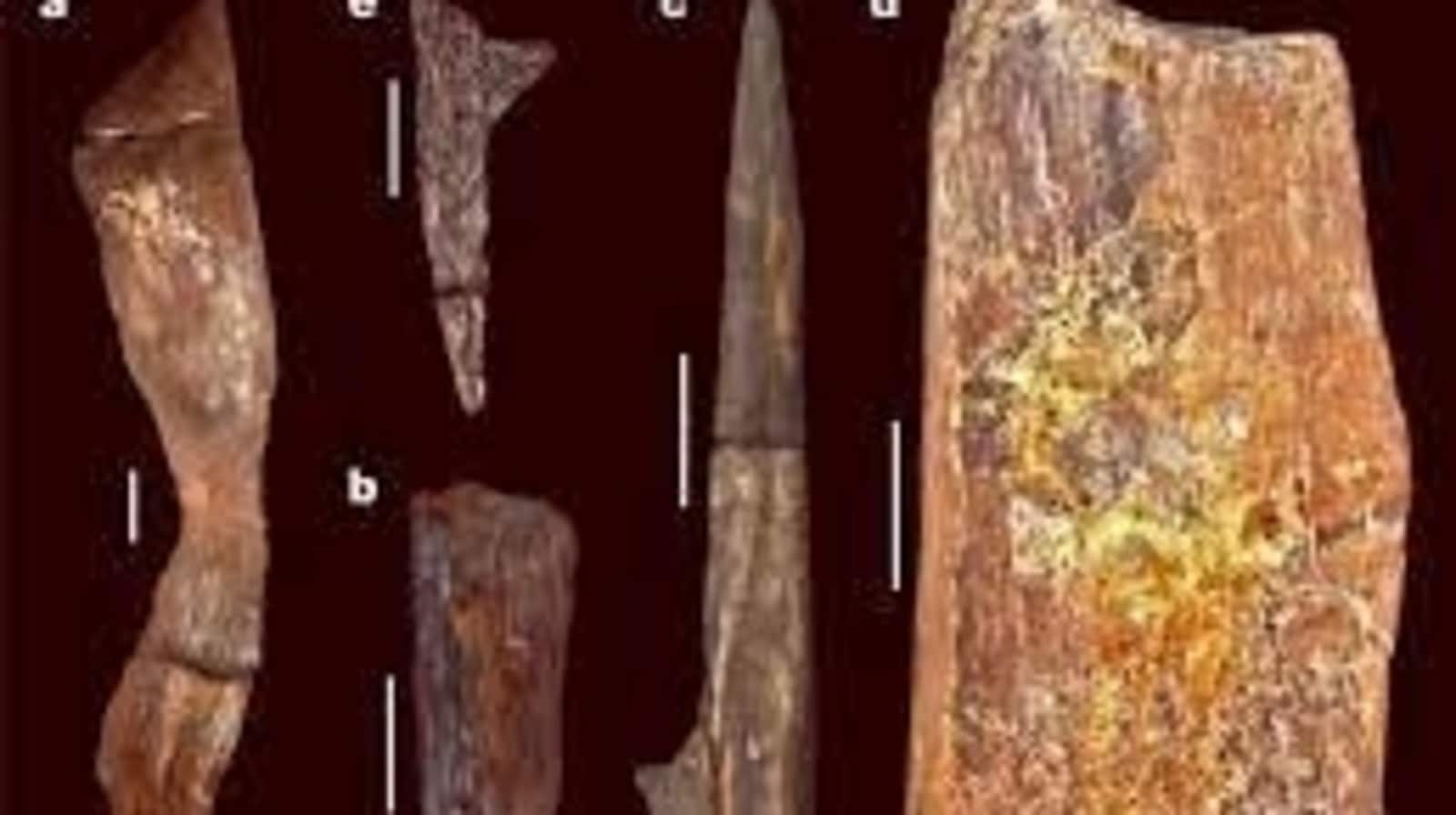
Archaeologists have discovered 500,000-year-old wooden structures and tools at the Kalambo Falls in Zambia, dating back over 476,000 years. These findings, with no known parallels, challenge previous understanding of early human capabilities. The structures demonstrate the use of wooden tools and the construction of platforms and constructions from massive tree trunks. The wet conditions at the falls contributed to the preservation of the wooden materials. The discovery predates the earliest Homo sapien fossils, leading to confusion about which ancient human species created these structures.
Researchers have discovered nearly half a million-year-old logs in Zambia, Africa, providing evidence of early human woodworking. The logs, found near the Kalambo Falls, show signs of deliberate shaping and were likely used in the construction of large structures. This discovery pushes back the historical record of structural woodworking and suggests that early humans used wood for more ambitious creations beyond spears and digging sticks. The age of the logs was determined using a new dating technique based on quartz and feldspar grains.
A lost Maya city called Ocomtún has been discovered in the jungles of Campeche, Mexico, using aerial archaeological survey techniques. Researchers used LiDAR technology to see through dense vegetation and found structures resembling pyramids, pottery, and engravings dating back to between 600 and 900. The city's unique features may take years to excavate. In other news, an analysis of a sandstone slab from the Oc Eo site in Vietnam revealed it was once used to grind spices for curry over 2,000 years ago, showing the dish's deep roots. The Nancy Grace Roman Space Telescope, set to launch in 2026-2027, may detect trillions of rogue planets in the Milky Way. A new study warns that the Atlantic Meridional Overturning Circulation, which regulates global weather patterns, could collapse by 2025 if greenhouse gas emissions aren't reduced. NASA is working on aviation projects to revolutionize air travel and reduce fuel consumption. The Webb telescope captured energetic outbursts from young stars and astronomers discovered a glowing dead star with two different faces.
Engravings found in Jordan and Saudi Arabia have shed light on the purpose of mysterious 8,000-year-old desert traps, known as "desert kites," which were constructed to systematically kill large numbers of migrating animals. The engravings, estimated to be 7,000 and 8,000 years old, respectively, depict the structures and were likely used as blueprints for collective construction efforts. The traps, which could cover distances of more than 30 miles, were not for worship or ritual purposes, but rather for hunting. The engravings are the oldest known plans to scale in human history.