The stock market saw modest gains despite negative jobs data, with a notable surge in an AI stock, Nebius Group, following a major deal with Microsoft. Apple declined ahead of its product launch, while other stocks like UnitedHealth and Nvidia performed well. Economic indicators showed a slight improvement in small business optimism, and key tech stocks experienced mixed movements amid ongoing market developments.
Wall Street analysts are beginning to speculate about which AI stock will replace Nvidia as the industry standard, signaling a potential shift in sentiment towards the company. Despite the reluctance to publicly acknowledge this trend, there is a growing sense that Nvidia's position as the favorite AI stock may be waning.
An AI stock with ties to Nvidia has surged nearly 170% in 2024, drawing attention from investors seeking exposure to the rapidly growing artificial intelligence market. The company's strong performance is attributed to its innovative technology and strategic partnership with Nvidia, making it an attractive investment opportunity in the AI sector.
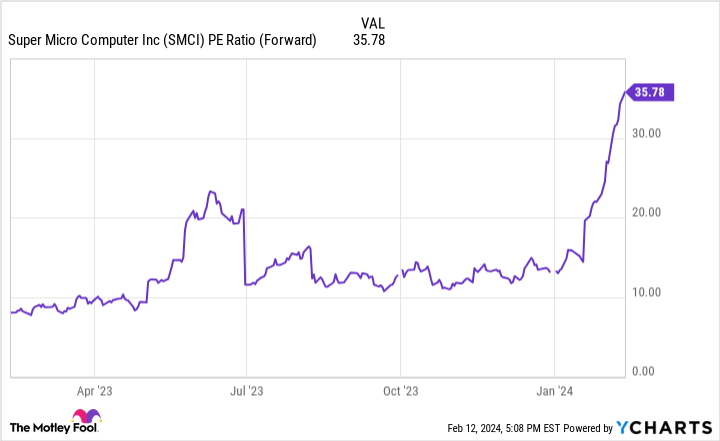
Super Micro Computer's stock surged 4.4% and received a bullish update from Northland Capital Markets, with a raised price target. The company's revenue doubled in the second quarter, driven by the demand for its high-performance servers in the AI sector. While the stock's valuation has become more growth-dependent, it still holds promise for risk-tolerant investors seeking long-term growth in the AI space. However, it's important to consider potential cyclical swings in the AI trend and the company's high earnings multiples before investing.
The Motley Fool contributor compares Nvidia and Super Micro Computer to determine the better AI stock to buy, with Nvidia not making the list of the 10 best stocks identified by The Motley Fool Stock Advisor analyst team. The Stock Advisor service has significantly outperformed the S&P 500 since 2002, and while the contributor has no position in the stocks mentioned, The Motley Fool has positions in and recommends Nvidia, and recommends Super Micro Computer.
C3.ai, an enterprise AI software provider, reported mixed results for its fiscal Q2, with a smaller-than-expected adjusted loss but weaker revenue growth that missed Wall Street targets. The company's revenue guidance for the current quarter also fell below expectations. As a result, AI stock fell around 8% in after-hours trading. C3.ai has adjusted its goal of achieving profitability by the fourth quarter of this fiscal year due to increased investments in artificial intelligence. The company aims to accelerate revenue growth as more AI pilot projects transition into commercial production.
C3.ai's revenue outlook for fiscal year 2024 missed analyst estimates, with predicted revenue in a range of $295 million to $320 million. The company expects revenue growth to reaccelerate as more pilot projects ramp up production. C3.ai helps companies build artificial intelligence applications and targets the energy, financial services, and defense markets. The company's stock plunged by 18% in extended trading after the announcement.
Wolfe Research analyst Joshua Tilton downgraded C3.ai due to concerns about the company's transition to a consumption-based pricing model, which could negatively impact sales growth. Additionally, a newly restructured agreement with Baker Hughes means C3.ai will have to increase its other revenue sources to meet fiscal year 2024 expectations. Tilton calls for just 11% growth in sales, while the company's initial outlook implies 30% revenue growth. The downgrade sent AI stock down 11%.
Dow Jones futures rose slightly, along with S&P 500 futures and Nasdaq futures. Johnson & Johnson proposed paying $8.9 billion to settle claims that talc products caused cancer. The stock market rally lost ground on Tuesday as recession fears mounted, with job openings falling to a 21-month low. AI stock plummeted on a short-seller's latest move vs. C3.ai. Market breadth was weak, with many groups suffering sharp losses on economic fears. Gold and gold stocks had a strong day, as recession fears and weaker dollar sent investors scurrying into safe havens.