Tag

Ai Language Model

All articles tagged with #ai language model

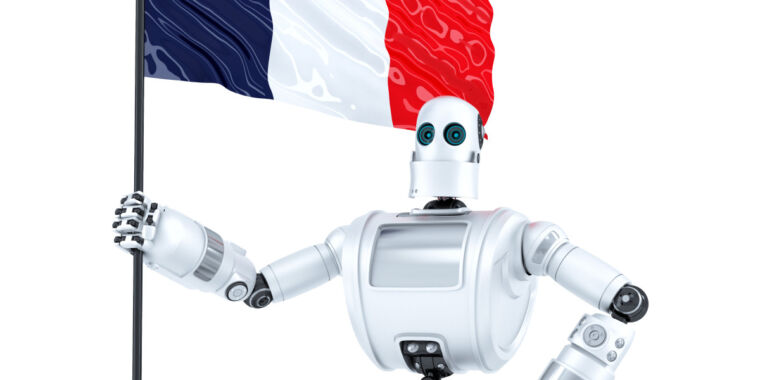
Mistral AI: The Rising French Challenger to OpenAI with a $2 Billion Valuation

Originally Published 2 years ago — by Ars Technica

Featured image for Mistral AI: The Rising French Challenger to OpenAI with a $2 Billion Valuation
Source: Ars Technica

French AI company Mistral AI has announced Mixtral 8x7B, an AI language model that reportedly matches the performance of OpenAI's GPT-3.5. Mixtral 8x7B is a "mixture of experts" (MoE) model with open weights, allowing it to run locally on devices with fewer restrictions. The model can process a 32K token context window and works in multiple languages. Mistral claims that Mixtral 8x7B outperforms larger models and matches or exceeds GPT-3.5 on certain benchmarks. The rise of open-weights AI models catching up with closed models has surprised many, and the availability of Mixtral 8x7B is seen as a significant development in the AI space.

Elon Musk's Controversial AI Chatbot 'Grok' Takes on the Competition

Originally Published 2 years ago — by Ars Technica

Featured image for Elon Musk's Controversial AI Chatbot 'Grok' Takes on the Competition
Source: Ars Technica

Elon Musk's new AI language model, Grok, developed by xAI, is designed to respond to user queries with a mix of information and humor. Grok integrates real-time data access from X and is willing to tackle inquiries that might be declined by other AI systems due to content filters. The model showcases its humor by sarcastically responding to a user's question about making cocaine, emphasizing the need for a chemistry degree and DEA license while discouraging any actual attempts. Grok-1, a 33 billion parameter large language model, is inspired by The Hitchhiker's Guide to the Galaxy and aims to provide witty responses. The AI model also features branching conversations, UI features, and real-time access to information via the X platform.

"Cutting-Edge Neuro-Insights Unveiled in Neuroscience News' Latest Update"

Originally Published 2 years ago — by Neuroscience News

Featured image for "Cutting-Edge Neuro-Insights Unveiled in Neuroscience News' Latest Update"
Source: Neuroscience News

This week in neuroscience, researchers found that lonely "Game of Thrones" fans neurologically perceive their favorite characters as real friends; a common brain circuit has been identified in various substance disorders, suggesting potential therapeutic avenues; the hippocampus has been highlighted as a central player in memory variations; a study reveals how the brain's dopamine reward system balances needs and wants; ChatGPT-4, an AI language model, demonstrates proficiency in crafting personal narratives, potentially strengthening the bond between therapists and clients.

Unmasking Academic Deception: ChatGPT's Role in Faulty Scientific Papers

Originally Published 2 years ago — by Nature.com

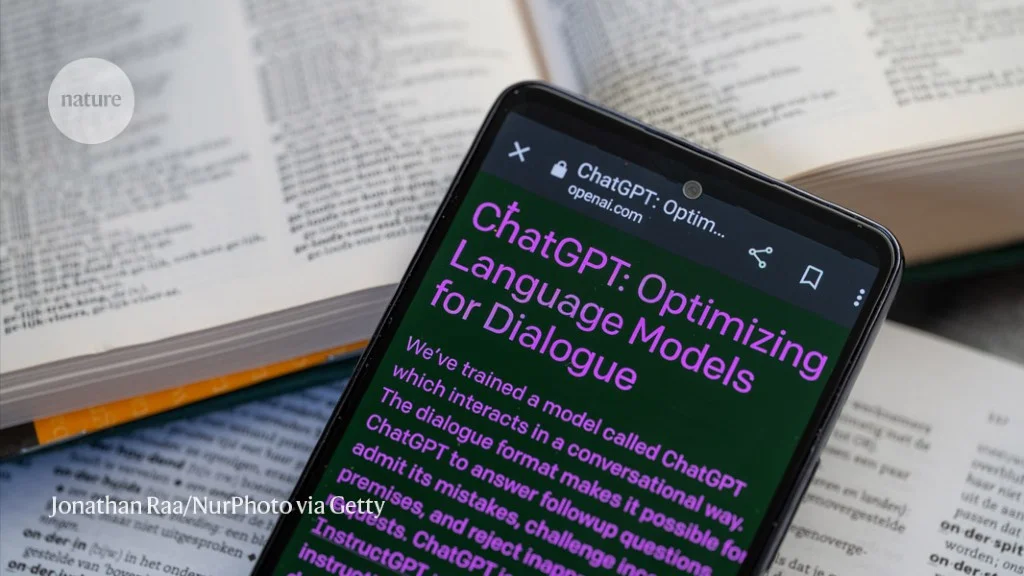
Featured image for Unmasking Academic Deception: ChatGPT's Role in Faulty Scientific Papers
Source: Nature.com

Researchers have been using the AI chatbot ChatGPT to write papers without disclosing its use, leading to undisclosed ChatGPT-assisted manuscripts being published in peer-reviewed journals. The telltale signs of ChatGPT, such as phrases like 'Regenerate response' or 'As an AI language model, I...', have been identified in several papers, prompting concerns about the integrity of scientific research. While some publishers allow the use of ChatGPT as long as it is declared, many cases of undisclosed usage have been detected. The issue highlights the challenges faced by peer reviewers in thoroughly examining manuscripts and the potential for the rise of paper mills that create and sell fake manuscripts.

The Limitations of ChatGPT: Typo Mishap Sparks Debate.

Originally Published 2 years ago — by The Verge

Featured image for The Limitations of ChatGPT: Typo Mishap Sparks Debate.
Source: The Verge

OpenAI's AI chatbot, ChatGPT, has been generating false information, leading to serious consequences. While chatbots are being presented as a new type of technology, people use them as search engines. OpenAI needs to recognize this and warn users in advance. Although chatbots are useful, they need to be more factually grounded. OpenAI could help by cautioning users to check sources and recognize when it's being asked to generate factual citations. A disclaimer like "May occasionally generate incorrect information" is not enough to override the priming of chatbots.

ChatGPT Takes on New Forms for Communication

Originally Published 2 years ago — by Lifehacker

Featured image for ChatGPT Takes on New Forms for Communication
Source: Lifehacker

A third-party developer has created "Call Annie" service that allows users to chat with a ChatGPT-based bot named Samantha over the phone. The bot responds instantly to voice-generated questions and comments, making it possible to conduct mock interviews or learn new things. The service also offers online and video call options, but the latter collects a lot of user data and has no reviews.

Microsoft and Epic team up to integrate GPT-4 AI technology into healthcare records.

Originally Published 2 years ago — by Ars Technica

Featured image for Microsoft and Epic team up to integrate GPT-4 AI technology into healthcare records.
Source: Ars Technica

Microsoft and Epic Systems are bringing OpenAI's GPT-4 AI language model into healthcare for use in drafting message responses from healthcare workers to patients and for analyzing medical records while looking for trends. GPT-4 will allow doctors and healthcare workers to automatically draft message responses to patients and bring natural language queries and "data analysis" to SlicerDicer, which is Epic's data-exploration tool that allows searches across large numbers of patients to identify trends that could be useful for making new discoveries or for financial reasons.

OpenAI CEO confirms no plans for GPT-5 development

Originally Published 2 years ago — by The Economic Times

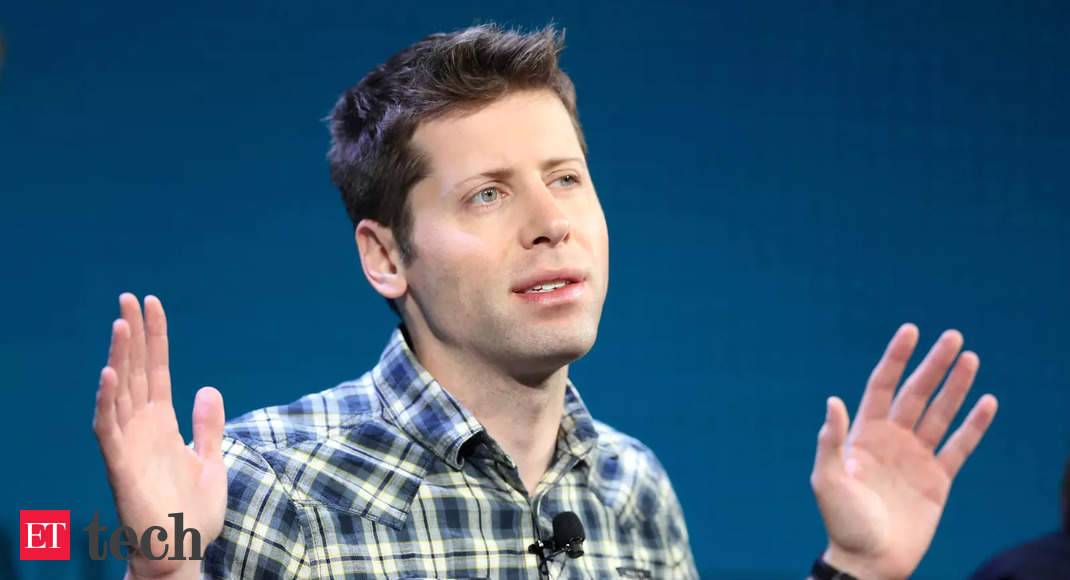
Featured image for OpenAI CEO confirms no plans for GPT-5 development
Source: The Economic Times

OpenAI's CEO Sam Altman has confirmed that the company is not currently training GPT-5, the successor to its AI language model GPT-4, and won't be doing so for some time. Altman also mentioned that the company is working on upgrades and updates to GPT-4. He addressed an open letter signed by tech leaders requesting companies such as OpenAI pause development of AI systems more powerful than GPT-4, saying it lacked technical nuance. OpenAI's generative chatbot, ChatGPT, has gained over 100 million monthly active users, but has faced privacy concerns and regulatory scrutiny in Italy and Spain.

OpenAI CEO confirms no plans for GPT-5 development

Originally Published 2 years ago — by Economic Times

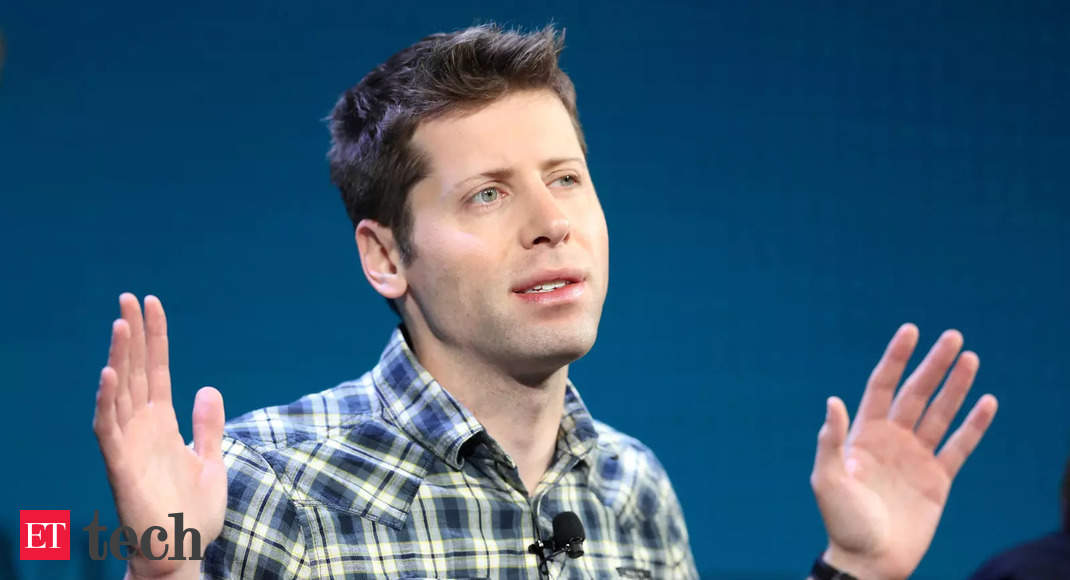
Featured image for OpenAI CEO confirms no plans for GPT-5 development
Source: Economic Times

OpenAI's CEO Sam Altman has confirmed that the company is not currently training GPT-5, the successor to its AI language model GPT-4, and won't be doing so for some time. Altman also mentioned that the company is working on upgrades and updates to GPT-4. He addressed an open letter signed by tech leaders requesting companies such as OpenAI pause development of AI systems more powerful than GPT-4, saying it lacked technical nuance. OpenAI's generative chatbot, ChatGPT, has gained over 100 million monthly active users, but has faced privacy concerns and regulatory scrutiny in Italy and Spain.

The Incredible Capabilities of OpenAI's GPT-4.

Originally Published 2 years ago — by IGN

Featured image for The Incredible Capabilities of OpenAI's GPT-4.
Source: IGN

OpenAI's latest AI language model, GPT-4, has been put to the test by users, with one claiming that it created a fully playable version of Pong in under a minute. The model suggested how to create the game using JavaScript with an HTML5 Canvas API, and the user shared a link for others to play. GPT-4 is also powering platforms such as Microsoft's Bing chatbot and is part of a recent wave of AI innovation that has sparked controversy.