CoreWeave exceeded Q3 revenue estimates with $1.36 billion, driven by surging demand for AI infrastructure, securing major deals with Meta and OpenAI, and experiencing significant growth despite some strategic setbacks. The company's stock has more than doubled since its IPO, reflecting investor confidence in its expansion.
Core Scientific shareholders rejected a $9 billion all-stock merger with AI computing company CoreWeave, ending the potential deal. The rejection caused CoreWeave's shares to dip and Core Scientific's shares to rise. The deal involved providing CoreScientific with advanced mining chips from Block, but investors believed it undervalued the miner amid challenging profitability conditions in Bitcoin mining and the shift towards AI data centers.
Anthropic, an AI startup, is expanding its use of Google’s tensor processing units (TPUs) in a deal worth tens of billions of dollars, primarily benefiting Google and Broadcom, while potentially impacting Amazon's cloud business and chip design partnerships. Despite the new deal, Anthropic continues to work with Amazon and Nvidia, highlighting a complex landscape of AI hardware and cloud service collaborations.
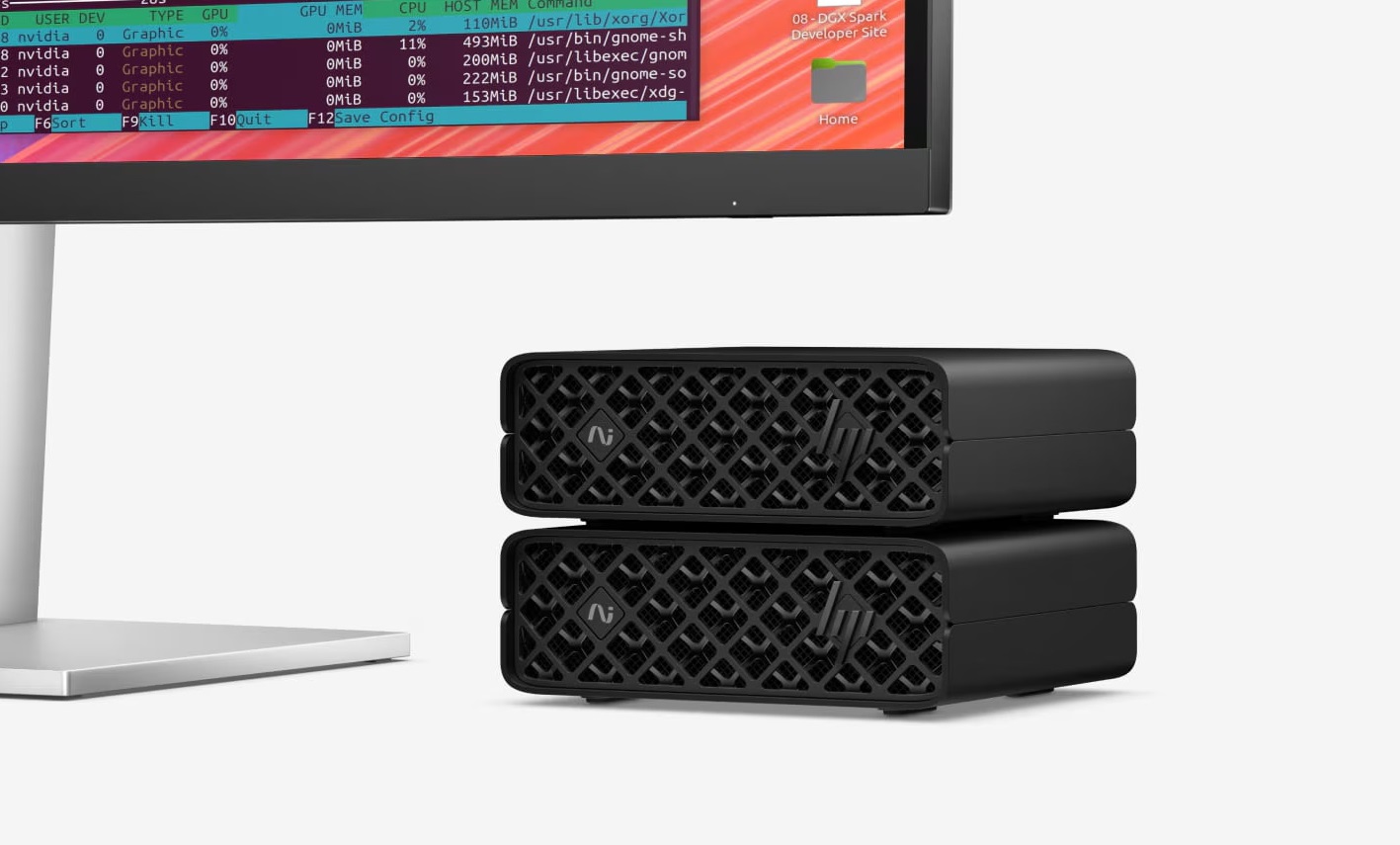
HP has introduced the ZGX Nano G1n, a compact AI workstation powered by NVIDIA's Blackwell GB10 superchip, offering high AI performance with 1000 TOPS, unified 128 GB memory, and advanced connectivity features, set to launch this autumn.
CoreWeave, a provider of AI computing services, is gaining favor on Wall Street after securing major deals with companies like Meta and OpenAI, which alleviates previous concerns about its reliance on Microsoft and its profitability prospects. Its stock has surged 33% in September, reflecting growing confidence in its growth potential amid rising AI demand, despite ongoing debates about its profitability and valuation.
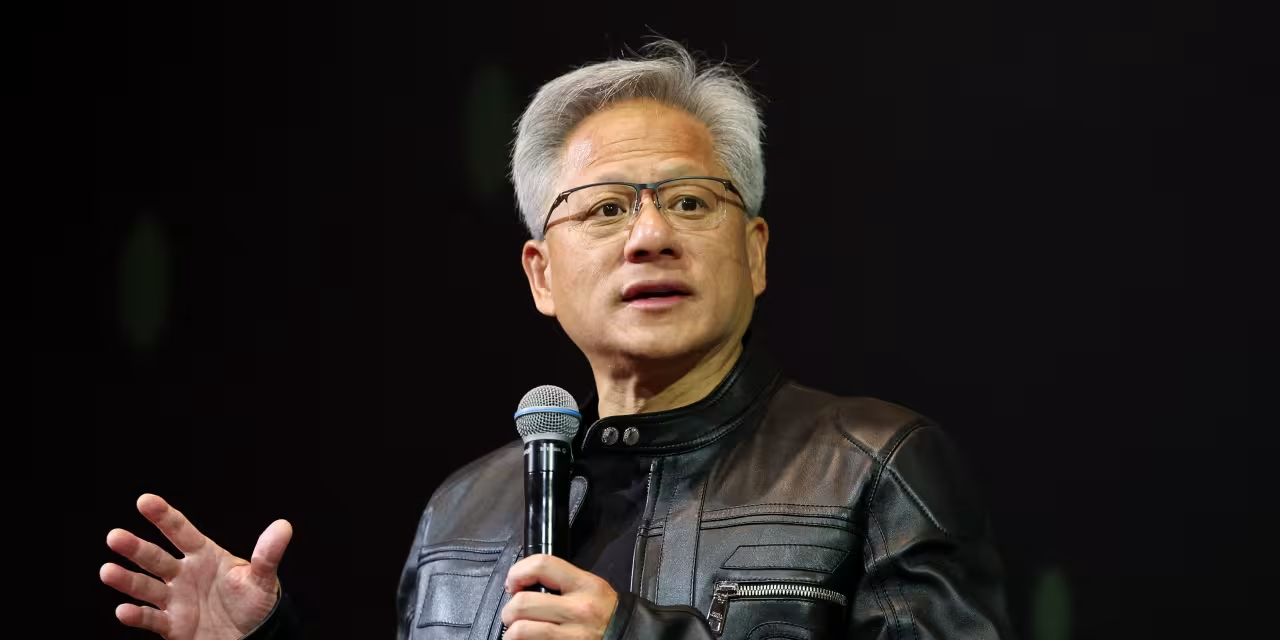
Nvidia CEO Jensen Huang predicts a tenfold increase in Europe's AI computing capacity over the next two years, with plans for over 20 large AI factories, aiming to address infrastructure gaps and boost AI development across the continent.
Nvidia's stock increased in after-hours trading despite a $10 billion revenue loss from China's H20 chip ban, with CEO Jensen Huang expressing strong optimism about the growth of AI computing and its global importance.
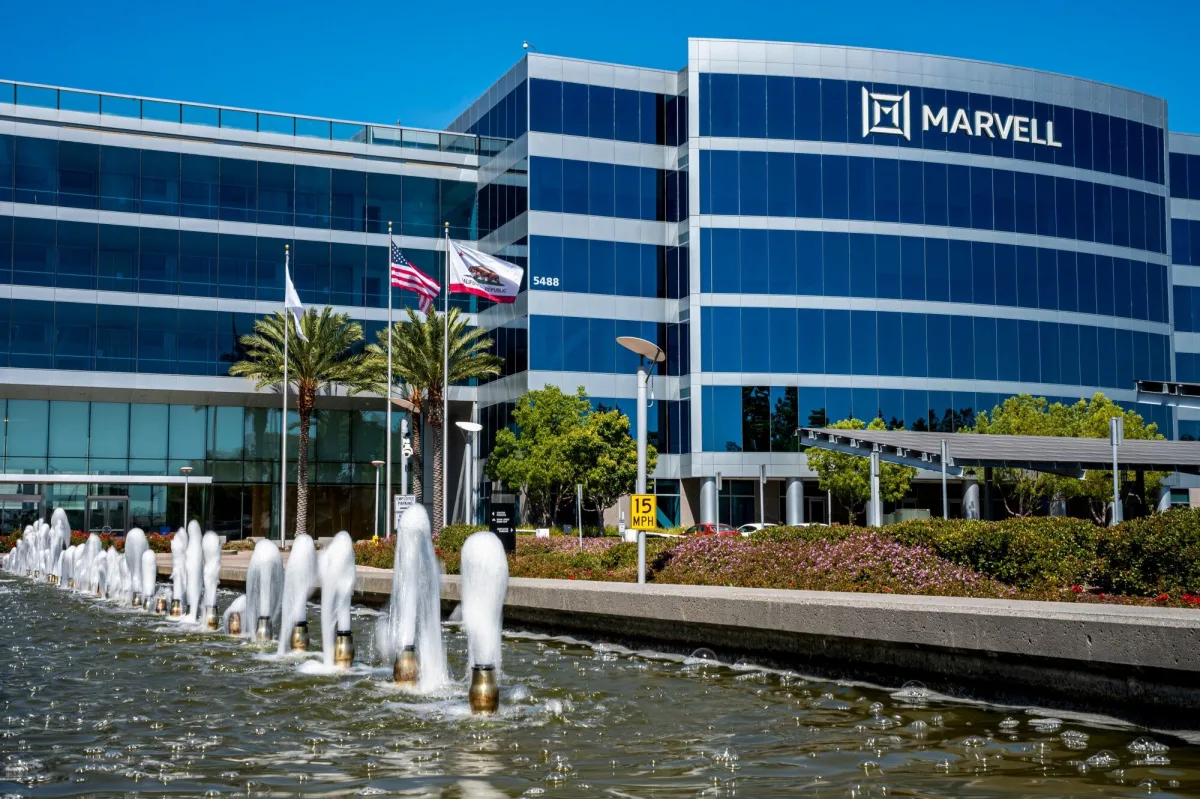
Marvell Technology Inc. saw its shares rise nearly 11% after reporting better-than-expected third-quarter earnings and a strong forecast, driven by demand for AI computing. The company reported a profit of 43 cents per share, surpassing analyst estimates, and anticipates up to 64 cents per share in the current period. CEO Matt Murphy highlighted the success of Marvell's custom AI silicon programs, which are now in volume production. The company expects fourth-quarter sales of approximately $1.8 billion, exceeding the $1.64 billion average estimate.
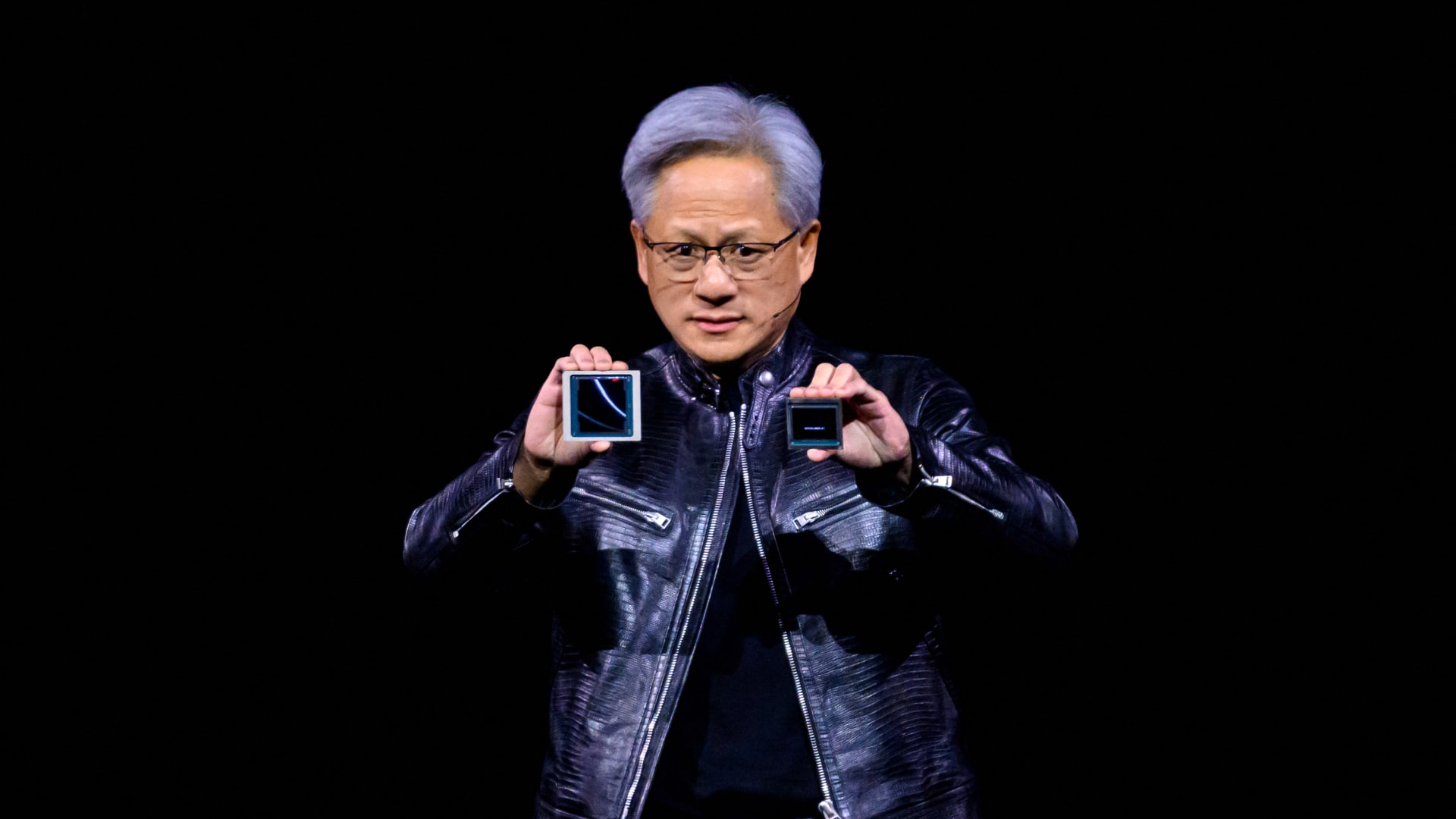
Nvidia CEO Jensen Huang predicts years of growth ahead for AI computing, emphasizing its impact on various industries including health care. The company unveiled Blackwell, the new generation of its AI graphics chips, essential for training and deploying large AI models. Huang highlighted AI's potential to accelerate research and development in fields such as science and health care, enabling simulations that could reduce the need for extensive wet lab screening. He also discussed Nvidia's technology's role in accelerating data processing and cutting costs across various sectors.
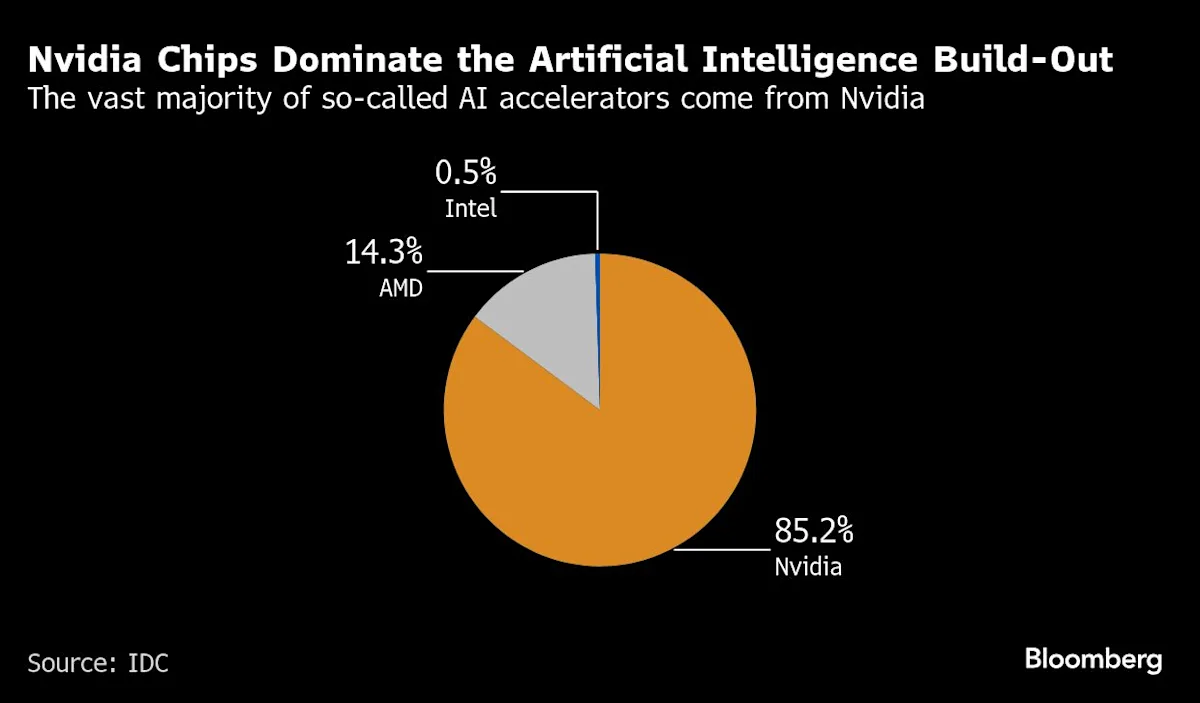
Qualcomm aims to challenge Nvidia's dominance in AI computing by expanding its presence in the AI chip market for smartphones and computers, positioning itself as a key player in the transition to an AI computing ecosystem. With Nvidia currently leading the market for AI chips in data centers and servers, Qualcomm's ambitions set the stage for a potential battle in 2024 as it seeks to become a major player in AI technology.
Asian stocks rose for a second day, following a global rally in equities that saw markets in the US, Europe, and Japan hit all-time highs. Most notably, Nvidia's market capitalization surged, driven by the AI computing boom. The bullish mood in Asia was also supported by a buoyant outlook for Nvidia and strong economic data from the US. Meanwhile, China's economic slowdown and concerns about property-sector improvement were also in focus. In the US, traders took more hawkish Fed commentary in stride, and in commodities, oil slipped while gold fluctuated.
The upcoming iPhone 16 series is rumored to feature a significant upgrade in AI computing cores, potentially increasing the Neural Engine performance to 24 or 32 cores, along with improvements in existing processors. Reports also suggest that generative AI features will be exclusive to the 2024 iPhone series, and Apple is working on using generative AI to accelerate software development. Additionally, design changes related to the updated processor, including a new camera bump arrangement, may enable spatial video recording.
Huawei has announced a strategic shift towards artificial intelligence (AI), prioritizing it as their new focus for the next decade. The Chinese tech and telecoms giant, previously focused on cloud computing and intellectual property, aims to help industries leverage AI's potential. This move follows a similar decision by Alibaba earlier this month. Huawei's announcement coincided with allegations made by China against the United States, accusing the US of infiltrating Huawei servers 15 years ago. The claims are significant as the US has long suspected Huawei of spying, leading to trade restrictions. Huawei has denied these allegations and operates independently of the Chinese government.