Research suggests that cooking methods impact health and longevity, with high-heat techniques like grilling and frying increasing harmful compounds called AGEs linked to aging and disease. Using water-based cooking, marinating, and adding herbs can reduce these compounds, promoting healthier aging.
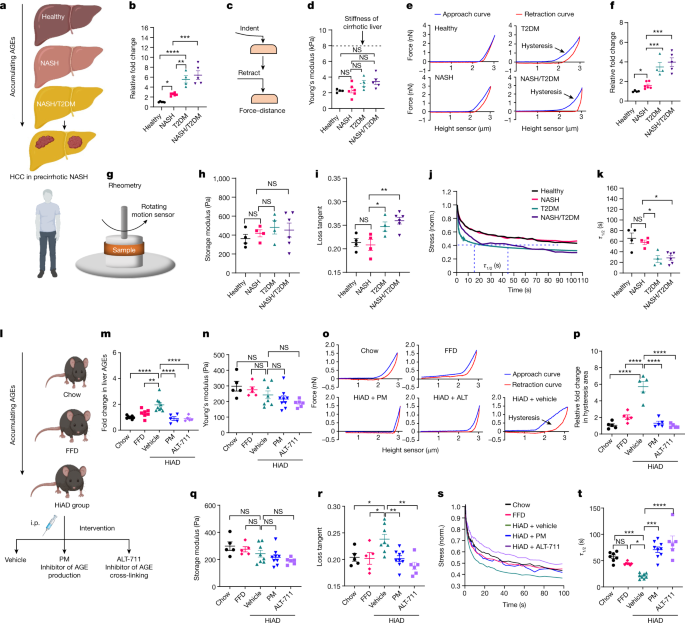
The accumulation of advanced glycation end products (AGEs) in the extracellular matrix (ECM) of the liver leads to increased viscoelasticity, creating a tumorigenic environment that promotes the progression of hepatocellular carcinoma (HCC). Studies in human and mouse liver samples, as well as 3D hydrogel models, demonstrate that AGEs modulate collagen architecture and network connectivity, resulting in enhanced viscoelasticity. This increased viscoelasticity activates the YAP mechanotransductive pathway, promoting tumour growth and invasion. Inhibiting AGE production or disrupting AGE–collagen cross-links reverses the changes in viscoelasticity and reduces tumour growth, highlighting the potential for targeting ECM viscoelasticity in the treatment of liver cancer.
Chemicals called advanced glycation end products (AGEs) found in cooked or processed foods have been linked to increased hunger and reduced ability to make healthy dietary choices, according to a study published in eLife. AGEs are formed when sugars react with proteins, fats, or nucleic acids during cooking or processing. The study, conducted on nematode worms, found that exposure to AGEs led to increased feeding behavior, suggesting that AGE accumulation can contribute to overeating. The research also identified a specific signaling pathway involved in the adverse effects of AGEs. While the study was conducted on worms, it highlights the harmful effects of AGEs on health and emphasizes the importance of mindful dietary choices to reduce AGE accumulation.
Researchers at the Buck Institute have discovered that advanced glycation end products (AGEs), chemicals found in cooked or processed foods, increase hunger and make it harder to resist unhealthy food choices. AGEs are formed during the Maillard reaction, which gives food its appealing brown color but also causes inflammation and oxidative damage in the body. The study, conducted on nematode worms, found that AGEs not only contribute to disease and decreased lifespan but also increase appetite. The researchers identified a signaling pathway mediated by specific AGEs molecules that enhance feeding and neurodegeneration. Understanding this pathway may help explain overeating due to modern AGEs-rich diets and the connection between AGEs and obesity. The study emphasizes the importance of limiting AGEs accumulation for overall health and making mindful, healthy food choices.