Tag

Aerobraking

All articles tagged with #aerobraking

Starship Could Fast-Track NASA’s Uranus Mission
space8 hours ago

Starship Could Fast-Track NASA’s Uranus Mission

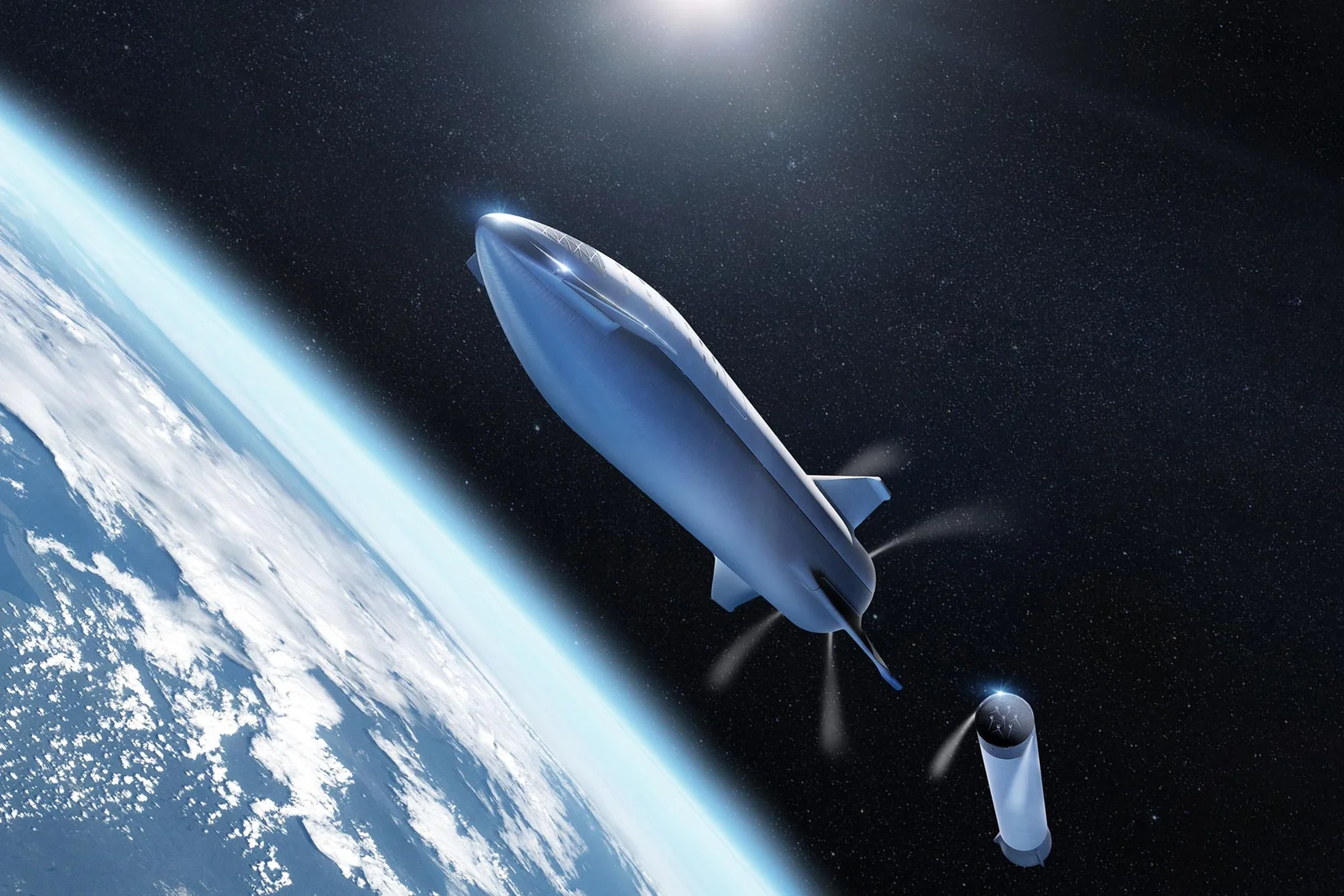
A MIT/IEEE Aerospace Conference paper proposes using SpaceX’s Starship as the launcher and propulsion enabler for a Uranus Orbiter and Probe (UOP). By refueling in orbit and potentially employing Starship as an aerobraking shield, the mission could reach Uranus in about 6.5 years—roughly half the previously projected time and without needing planetary gravity assists—while cutting operational costs. However, a UOP funding decision remains uncertain, Starship’s aerobraking concept is unproven for ice giants, and launch windows in the 2030s (or the next feasible window in the mid‑2040s) will heavily influence feasibility.


X-37B Spaceplane Executes Unprecedented Orbital Maneuver
science-and-technology1 year ago

X-37B Spaceplane Executes Unprecedented Orbital Maneuver

The U.S. Space Force's secretive X-37B space plane is set to perform aerobraking maneuvers to lower its orbit and dispose of unnecessary hardware. This technique uses atmospheric drag to adjust the spacecraft's altitude, conserving propellant compared to traditional thruster burns. The maneuver marks a significant milestone for the Space Force, showcasing advanced capabilities in space operations. The X-37B's current mission, OTV-7, involves testing space radiation effects and space domain awareness technologies.

US Spaceplane X-37B Executes Unprecedented Orbital Maneuver
space1 year ago

US Spaceplane X-37B Executes Unprecedented Orbital Maneuver

The US military's secretive X-37B spaceplane has successfully executed a novel aerobraking maneuver, using atmospheric drag to lower its orbit with minimal fuel use. This technique, demonstrated in a video by Boeing Space, is part of the X-37B's seventh mission, which began in December 2023. The mission involves disposing of space debris and testing reusable space vehicle technologies. Despite increased transparency, many details of the X-37B's operations remain classified.

Boeing's Space Plane Executes Sudden Orbital Deceleration
science-and-technology1 year ago

Boeing's Space Plane Executes Sudden Orbital Deceleration

Boeing's X-37B spaceplane, part of a top-secret US military mission, has begun advanced aerobraking maneuvers to lower its highly elliptical orbit without using excessive fuel. This technique uses atmospheric drag to gradually reduce the spacecraft's apogee, allowing for efficient space debris mitigation. The maneuver, hailed as a groundbreaking innovation by US Space Force officials, marks a significant milestone in extending spacecraft mission durations and advancing space capabilities.

Space Force's Secret Spaceplane Executes Pioneering Orbital Maneuver
science-and-technology1 year ago

Space Force's Secret Spaceplane Executes Pioneering Orbital Maneuver

Boeing has released a video detailing the U.S. Space Force's X-37B spaceplane's groundbreaking orbital maneuver using aerobraking, which allows it to change orbits with minimal fuel by utilizing atmospheric drag. This maneuver marks a significant advancement in spaceplane technology, as it saves propellant and extends mission capabilities. The X-37B, which launched in December 2023, is currently on its seventh mission, carrying out experiments including a NASA project on plant seeds. The mission's end date remains uncertain, but the spaceplane's maneuvers suggest it may conclude soon.

X-37B Spacecraft Initiates Aerobraking to Adjust Orbit
space1 year ago

X-37B Spacecraft Initiates Aerobraking to Adjust Orbit

The U.S. Space Force's secretive X-37B space plane is performing aerobraking maneuvers to lower its orbit and dispose of unnecessary hardware. This technique uses atmospheric drag to adjust the spacecraft's altitude, conserving propellant compared to traditional thruster burns. The maneuver marks a significant milestone for the Space Force, showcasing advanced capabilities in space operations. The X-37B's current mission, OTV-7, launched on a SpaceX Falcon Heavy, is testing new technologies for space radiation effects and domain awareness.