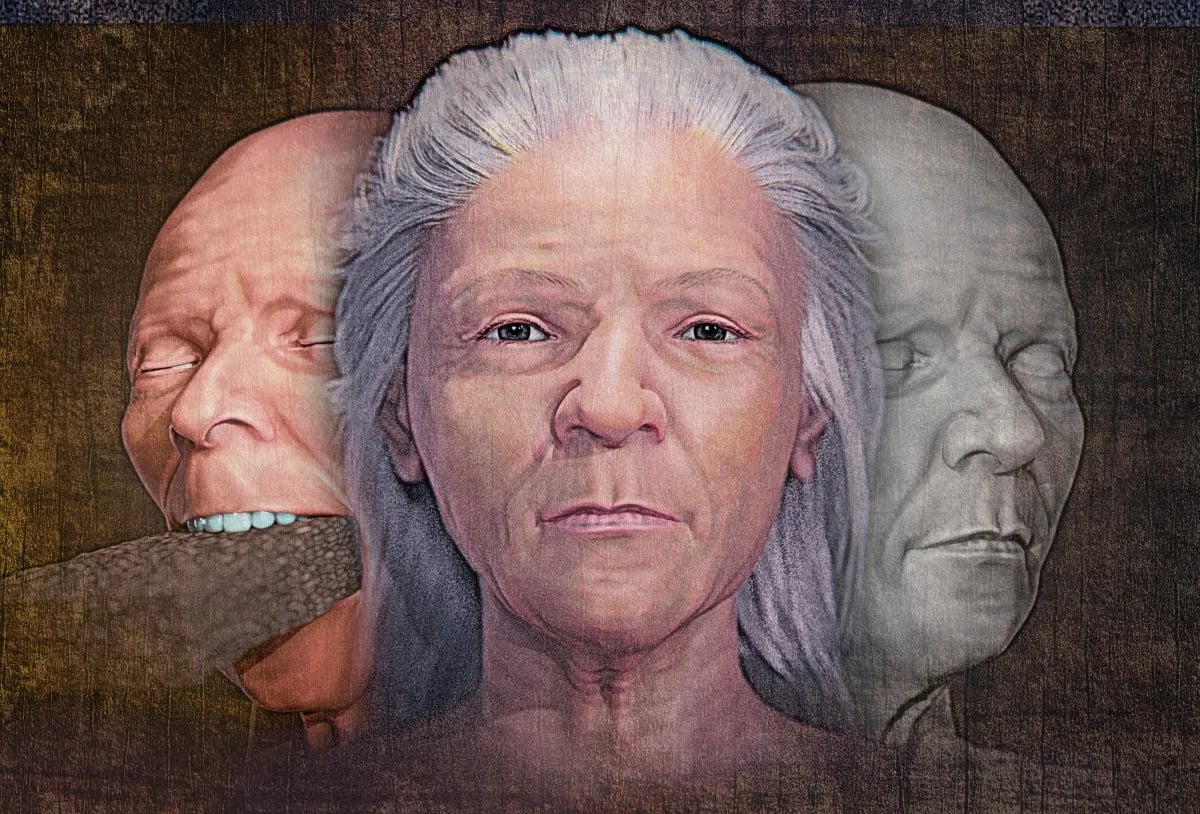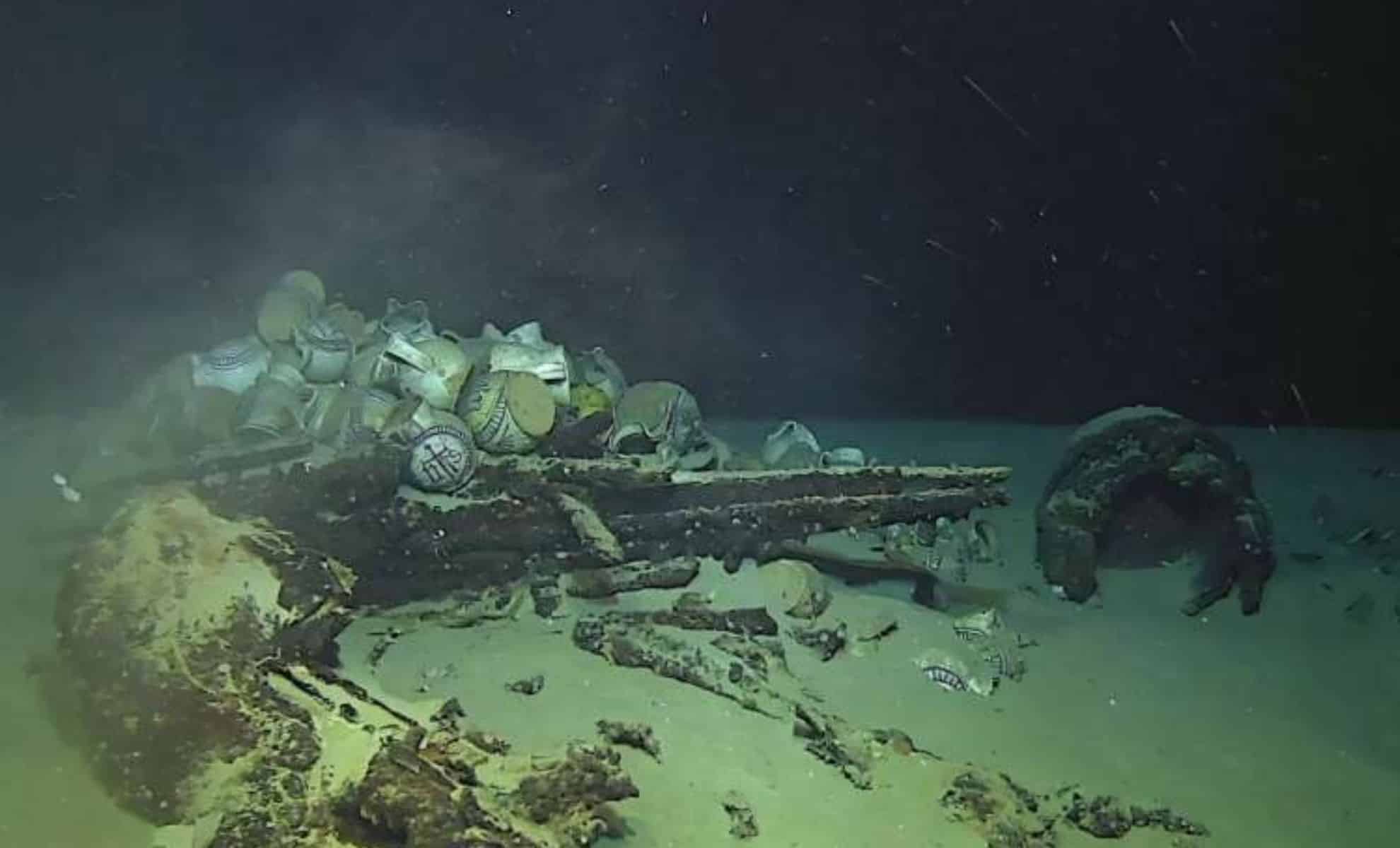
Archaeologists discovered the deepest shipwreck in French waters off Saint-Tropez at over 2.5 km deep, containing well-preserved 16th-century cargo like ceramics, metal bars, and cannons, providing valuable insights into Renaissance Mediterranean trade, with minimal modern disturbance due to its extreme depth.
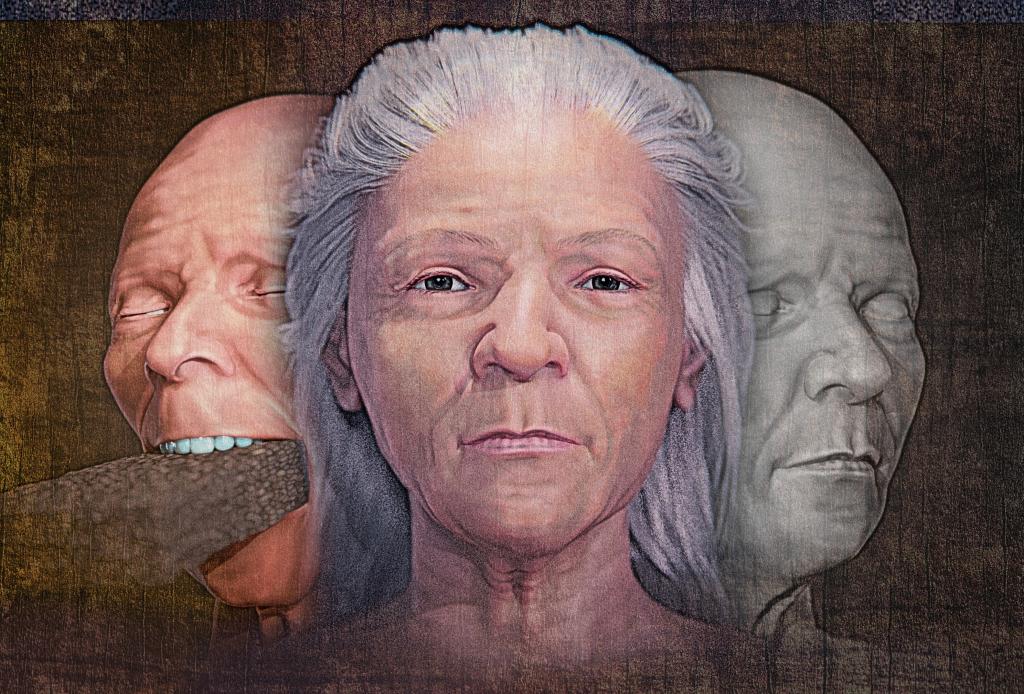
Researchers have reconstructed the face of a 16th-century Italian woman, buried in a mass grave for plague victims, who was believed to be a vampire due to a brick found in her mouth. The facial reconstruction, based on scans of the remains and historical data, revealed that the woman was around 60 years old and of lower class. The practice of placing a brick in the mouth of a suspected vampire was connected to the paranoia during the bubonic plague outbreak, and this is the first time archaeology has successfully reconstructed the ritual of exorcism of a vampire.
Scientists have reconstructed the face of a 16th-century woman found buried with a brick jammed into her mouth on the Venetian island of Lazzaretto Nuovo, believed to prevent her from feeding as locals thought she was a vampire. The woman, who lived into her 60s, was found in a mass grave from the bubonic plague era, and researchers used forensic reconstruction to investigate whether the brick was placed before or after her death, ultimately concluding that it was likely inserted while she was still alive.
Scientists have reconstructed the face of a 16th-century woman buried with a brick in her mouth on the Venetian island of Lazzaretto Nuovo, believed by locals to be a vampire responsible for the plague. Forensic researcher Cícero Moraes investigated the possibility of the brick being inserted while she was alive and concluded that it was feasible. The woman, who lived into her 60s, was found to be a lower-class European. The discovery sheds light on burial practices and superstitions of the time.