
Diminished Cloud Cover and Albedo Linked to 2023's Record Heat
TL;DR Summary
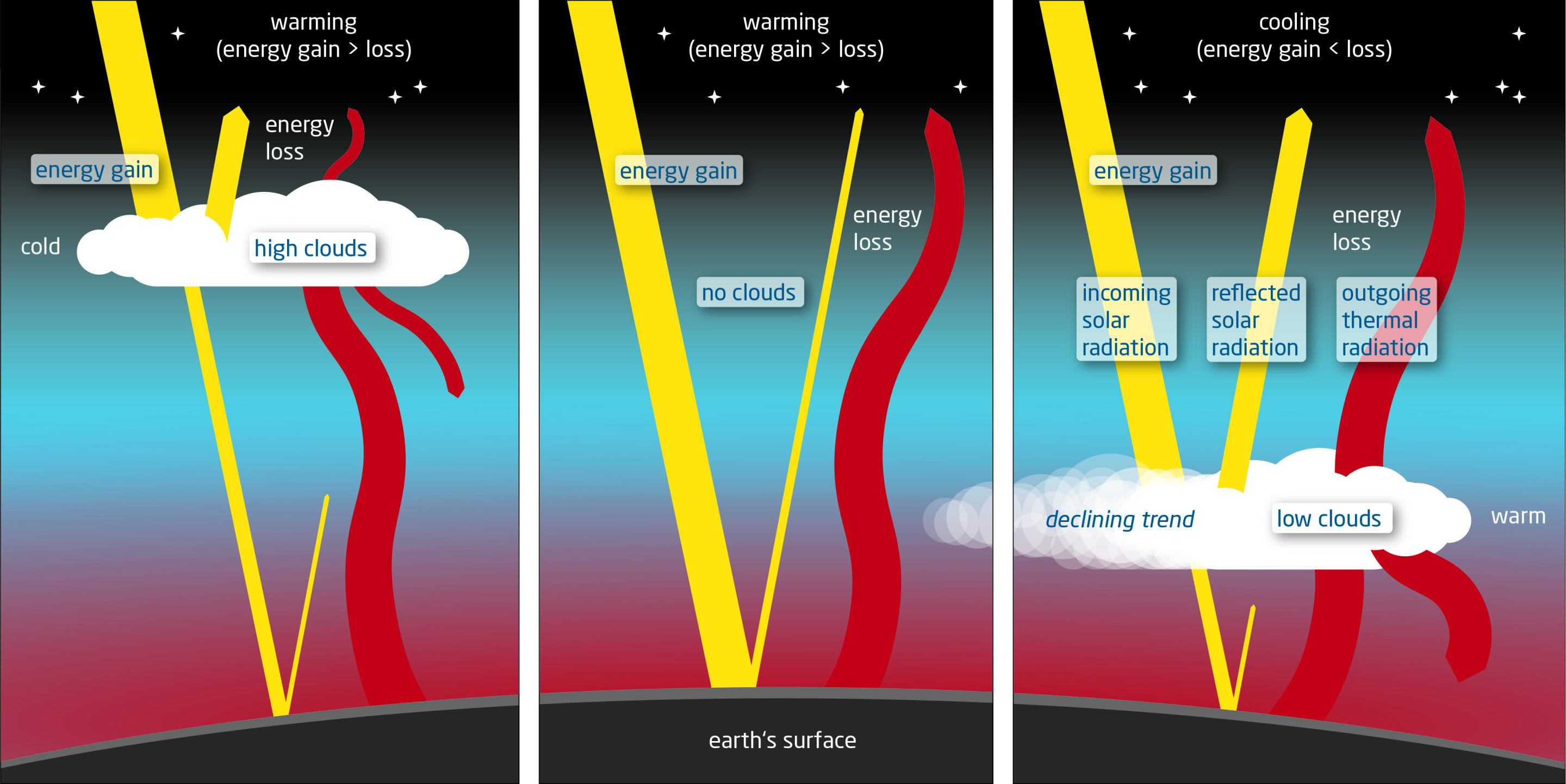
Researchers from the Alfred Wegener Institute have identified a decline in planetary albedo, particularly due to fewer low-altitude clouds, as a significant factor in the recent surge in global warming. This reduction in Earth's reflectivity has contributed to a 0.2 degrees Celsius increase in global temperatures, which was previously unexplained. The study suggests that this trend, exacerbated by reduced anthropogenic aerosols and natural fluctuations, could lead to more intense warming, potentially exceeding the 1.5 degrees Celsius threshold sooner than anticipated.
- Rapid surge in global warming mainly due to reduced planetary albedo, researchers suggest Phys.org
- Heat and high temperatures may be result of diminishing cloud cover: study NBC News
- We finally have an explanation for 2023’s record-breaking temperatures New Scientist
- Earth may be getting darker, which could explain 2023's record heat CBC.ca
- Decline of Reflective Low Clouds May Have Contributed to Recent Record Heat InsideClimate News
Reading Insights
Total Reads
0
Unique Readers
0
Time Saved
5 min
vs 6 min read
Condensed
93%
1,130 → 80 words
Want the full story? Read the original article
Read on Phys.org