
The Evolutionary Mysteries of Jupiter's Moon Europa
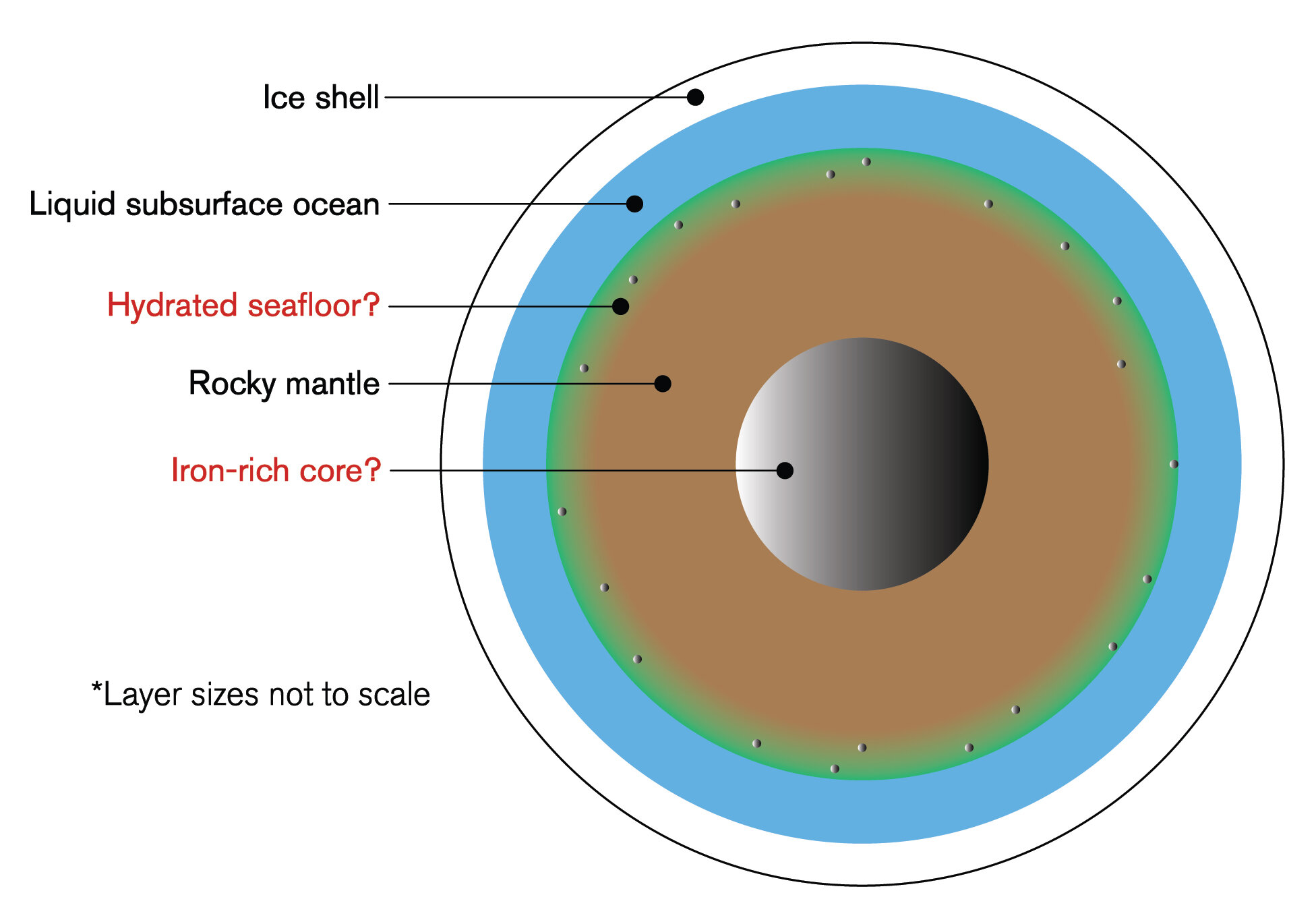
Scientists at Arizona State University have investigated the consequences of Europa forming with low initial temperatures and found that if Europa indeed formed from hydrated rocks, then enough of Europa's interior should get hot enough to release water directly from the hydrated rocks to form the ocean and ice shell. The study also contradicts the prediction that Europa formed with a metallic core during or shortly after accretion, instead arguing that Europa may not have started forming its metallic core until billions of years after accretion. The study implies that there may be limited hydrothermal activity and seafloor volcanism at Europa, which may hinder habitability.
- Jupiter's moon Europa may have had a slow evolution Phys.org
- Surprise! Jupiter's ocean moon Europa may not have a fully formed core Space.com
- Slow evolution of Europa's interior: metamorphic ocean origin, delayed metallic core formation, and limited seafloor volcanism Science
- View Full Coverage on Google News
Reading Insights
0
6
4 min
vs 5 min read
87%
807 → 105 words
Want the full story? Read the original article
Read on Phys.org