
Juno Estimates Europa’s Ice Shell at 29 Kilometers, Hinting at a Deeper Ocean
TL;DR Summary
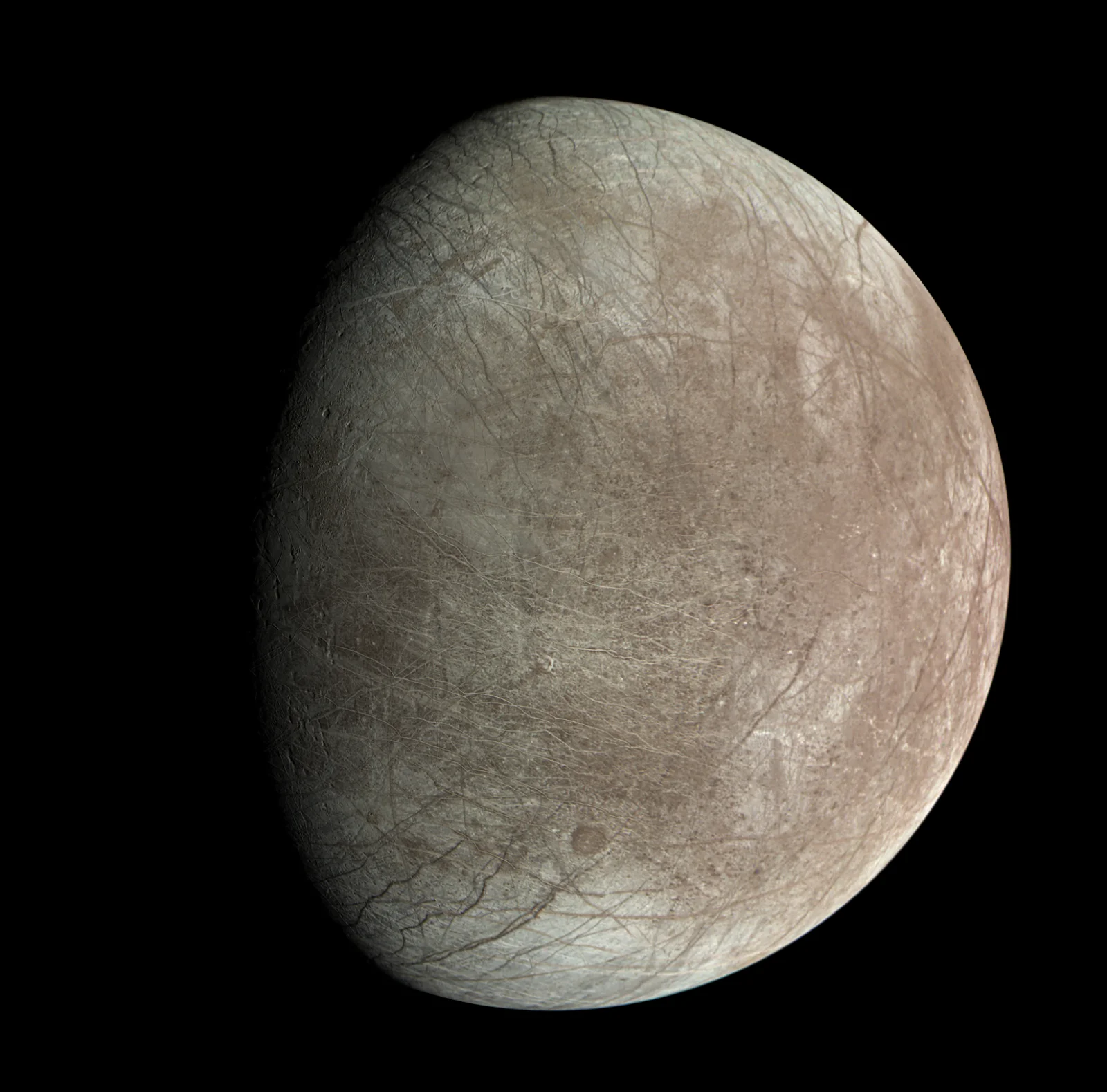
NASA’s Juno used its Microwave Radiometer to measure Europa’s near-surface ice shell during a 2022 flyby, finding an average thickness of about 29 km (18 miles) in the observed region and favoring thicker-shell models; if a salty layer exists, thickness could be reduced by about 3 miles. The data also reveal small near-surface scatterers—cracks and pores—not likely to provide major nutrient pathways to the subsurface ocean, with implications for future Europa Clipper and Juice missions.
- NASA’s Juno Measures Thickness of Europa’s Ice Shell NASA (.gov)
- NASA's Juno measures thickness of Europa's ice shell Phys.org
- Radar Scans of Antarctica Offer Clues to What’s Happening on Jupiter’s Moon The New York Times
- Sinking ice on Jupiter's moon Europa may be slowly feeding its ocean the ingredients for life Space
- Scientists Have Discovered a Fascinating New Way Jupiter's Moon Europa Could Support Life The Debrief
Reading Insights
Total Reads
1
Unique Readers
20
Time Saved
4 min
vs 5 min read
Condensed
92%
895 → 75 words
Want the full story? Read the original article
Read on NASA (.gov)