
"Revolutionizing Cosmic Exploration: The Future of Space-Based Gravitational Wave Research"
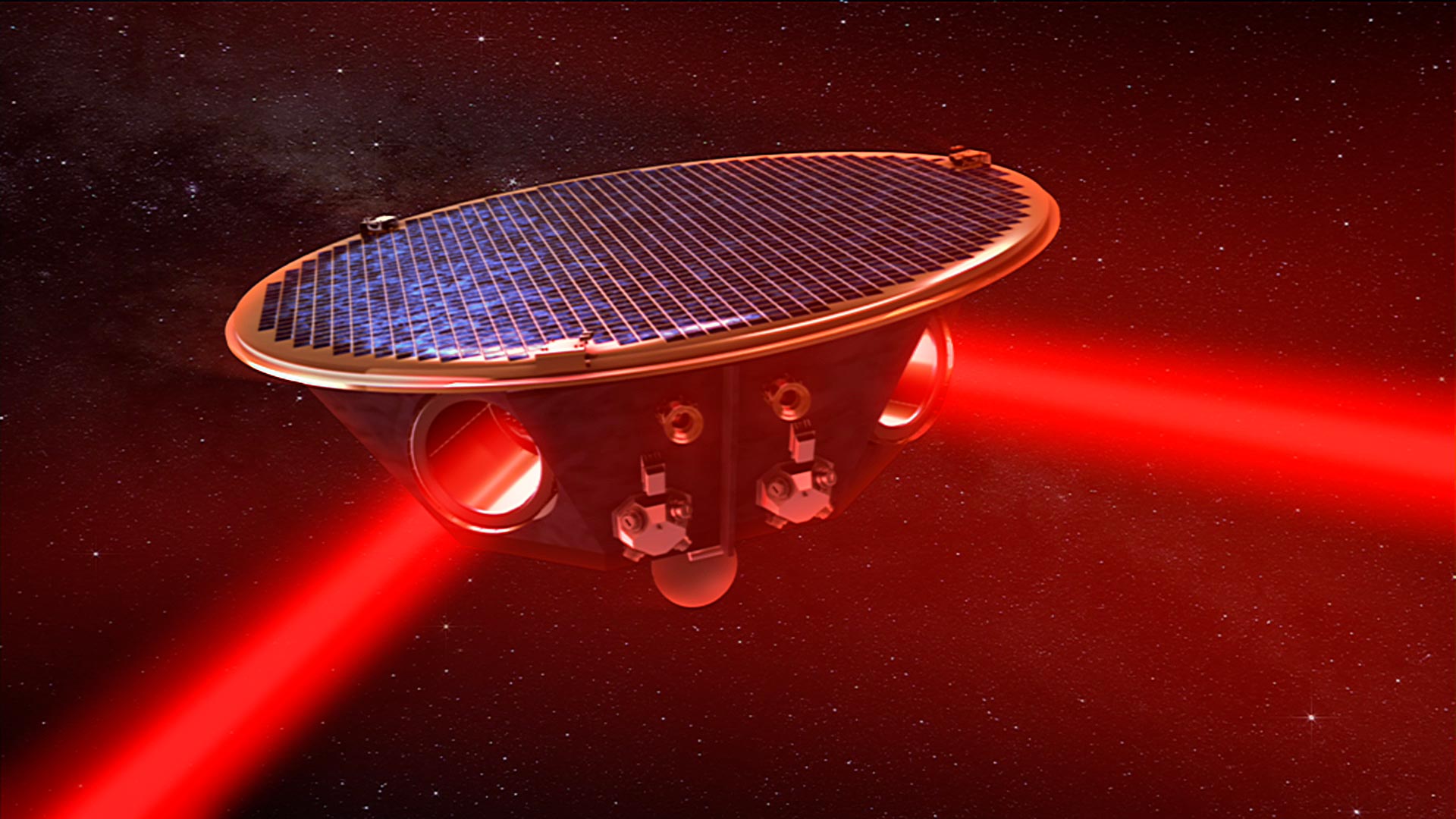
The LISA (Laser Interferometer Space Antenna) mission, a collaboration between ESA and NASA, aims to detect gravitational waves from space, offering new insights into the cosmos through advanced technology and international cooperation. LISA will enable observations of gravitational waves produced by merging supermassive black holes and will consist of three spacecraft flying in a vast triangular formation that follows Earth in its orbit around the Sun. The mission, scheduled for launch in the mid-2030s, will provide a panoramic view of gravitational wave sources, offering a unique contribution to astronomy and unveiling previously inaccessible aspects of the universe.
- How LISA – A Gravitational Wave Observatory in Space – Will Transform Our Cosmic Understanding SciTechDaily
- Scientists Are About to Chart a Course Through the Fabric of Space-Time Popular Mechanics
- 2024: NASA, ESA move forward on science supported by UMass Dartmouth faculty UMass Dartmouth
- UT physicists collaborate on upcoming space mission – The Daily Texan The Daily Texan
- ESA to use laser beams in space to study gravitational waves LiveNOW from FOX
Reading Insights
0
9
4 min
vs 5 min read
89%
889 → 97 words
Want the full story? Read the original article
Read on SciTechDaily