
"Extreme Parasitic Plant Balanophora: Insights into Convergent Evolution and Manipulative Host Interactions"
TL;DR Summary
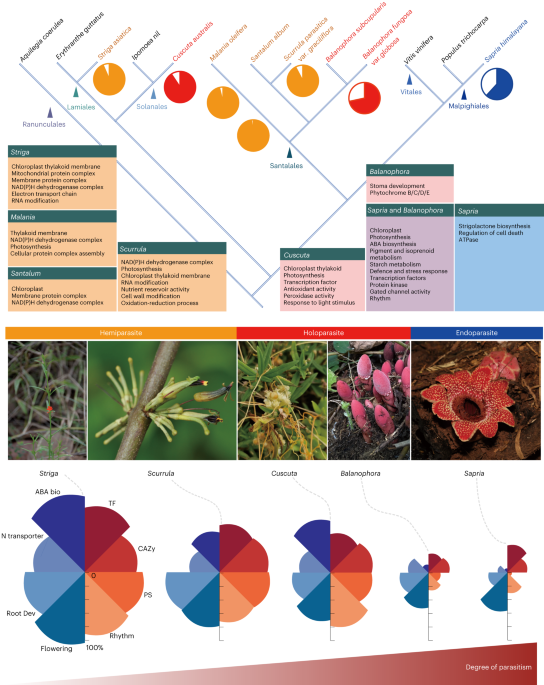
Researchers have sequenced and analyzed the genomes of Balanophora plants, which are extreme holoparasites that lack chlorophyll and obtain nutrients from host plants. The study reveals that Balanophora genomes have undergone convergent evolution with other parasitic plants, showing similar gene losses and adaptations. The findings provide new insights into the genetic mechanisms underlying parasite-host interactions and shed light on the evolution of plant parasitism.
Topics:science#comparative-analysis#evolution#genomics#host-parasite-interactions#parasitic-plants#science
- Balanophora genomes display massively convergent evolution with other extreme holoparasites and provide novel insights into parasite–host interactions Nature.com
- Parasitic plant convinces hosts to grow into its own flesh—it's also an extreme example of genome shrinkage Phys.org
- These parasitic plants force their victims to make them dinner Popular Science
- Extreme parasitism: Balanophora convinces a host to grow into its tissue Earth.com
- Strikingly convergent genome alterations in two independently evolved holoparasites Nature.com
Reading Insights
Total Reads
0
Unique Readers
1
Time Saved
23 min
vs 23 min read
Condensed
99%
4,601 → 64 words
Want the full story? Read the original article
Read on Nature.com