
"Nanotube Revolution: Expanding the Family Beyond Carbon"
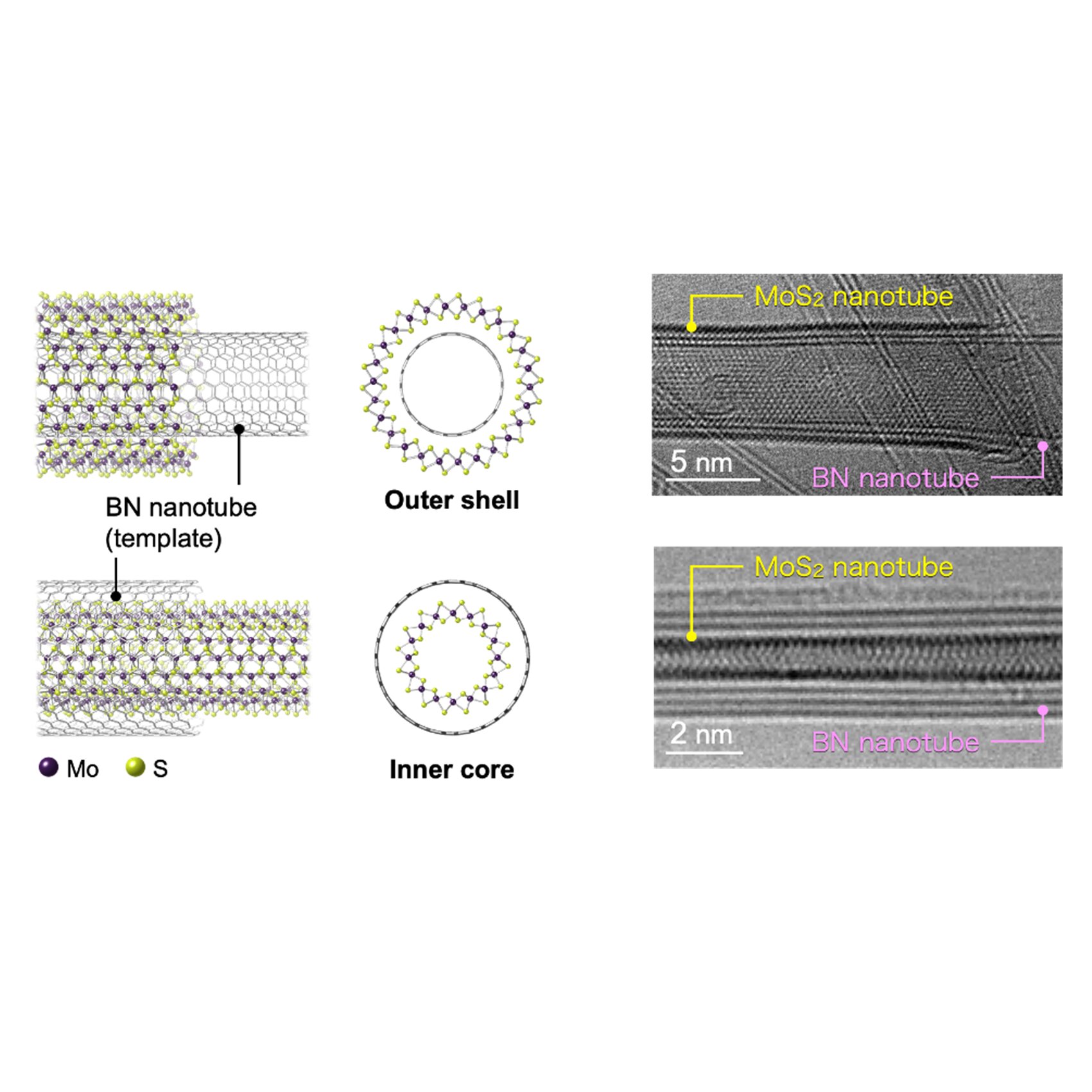
Researchers from Tokyo Metropolitan University have successfully engineered a range of new single-walled transition metal dichalcogenide (TMD) nanotubes with different compositions, chirality, and diameters by using boron-nitride nanotubes as templates. This breakthrough allows for the synthesis of diverse nanotube structures, providing insights into their growth mechanism and unique optical properties. The team also discovered randomly distributed chiral angles in the nanotubes, offering new understanding of the relationship between chirality and electronic states. The ability to create a variety of TMD nanotubes opens up possibilities for exploring their exotic properties and applications in semiconductors.
Reading Insights
0
0
3 min
vs 4 min read
87%
694 → 93 words
Want the full story? Read the original article
Read on Phys.org