
The Rise and Fall of a Saber-Toothed Predator During the Great Dying.
TL;DR Summary
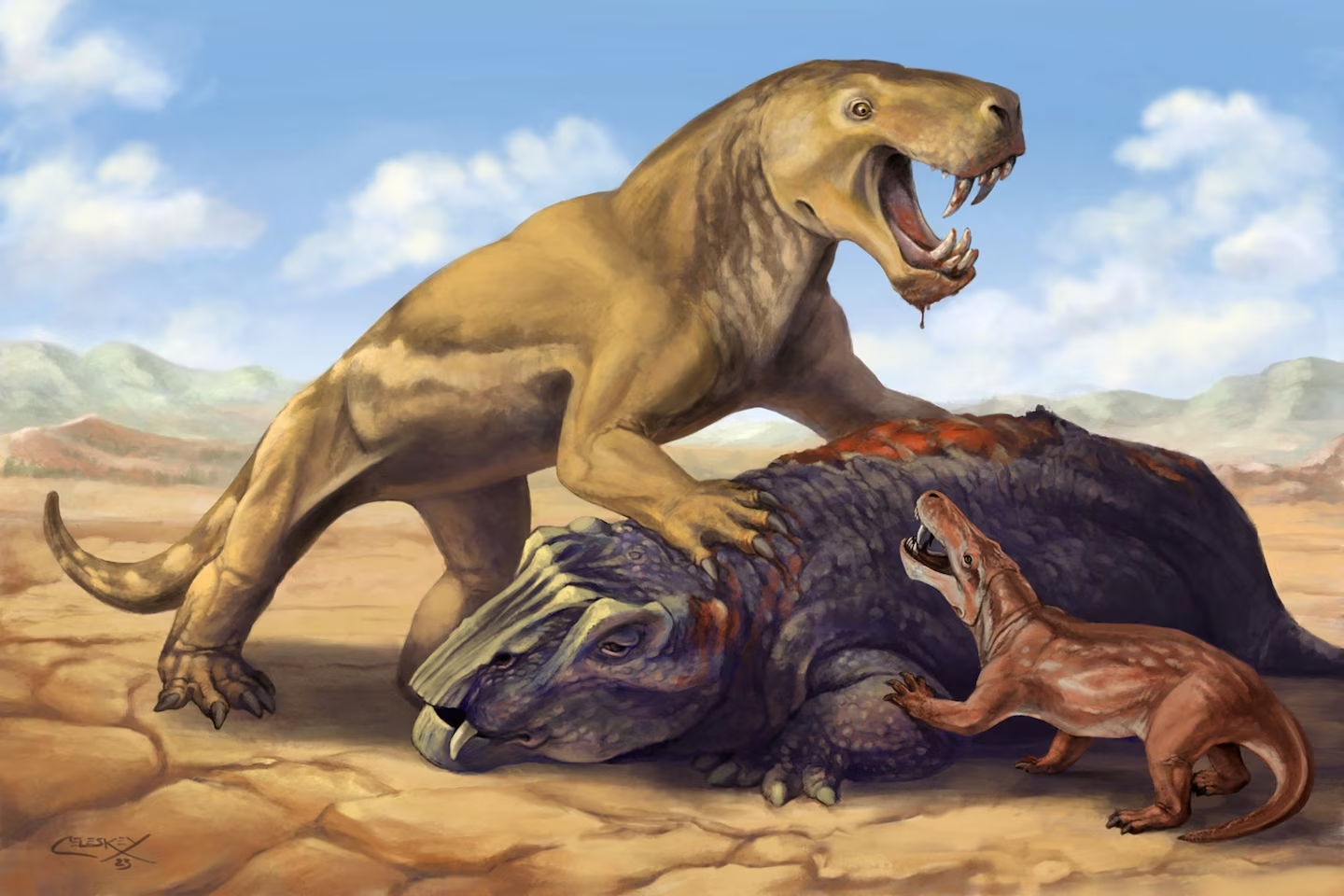
Fossil evidence shows that Inostrancevia, a saber-toothed apex predator, migrated 7,000 miles during the "Great Dying" mass extinction event 252 million years ago to find a new habitat before also going extinct. The fossils date from the late Permian period, an era of mass extinction so extreme that it is known as the "Great Dying." The event, triggered by climate change and fueled by volcanic eruptions, would have made it difficult for large predators such as Inostrancevia to find food. The researchers warn that Earth's largest mass extinction has parallels today as the planet undergoes another mass extinction.
Topics:science#climate-change#great-dying#mass-extinction#migration#saber-toothed#science-and-environment
- Saber-toothed predator tried to outrun extinction but failed The Washington Post
- The Proto-Mammal That Stalked a Dying World DISCOVER Magazine
- Fearsome saber-toothed giant dominated at dawn of 'Great Dying', but its reign was short-lived Livescience.com
- During the 'Great Dying,' This Saber-Toothed Predator Reigned Smithsonian Magazine
Reading Insights
Total Reads
0
Unique Readers
7
Time Saved
2 min
vs 3 min read
Condensed
76%
412 → 98 words
Want the full story? Read the original article
Read on The Washington Post