
Unveiling the Influence of Landscape Dynamics on Earth's Biodiversity
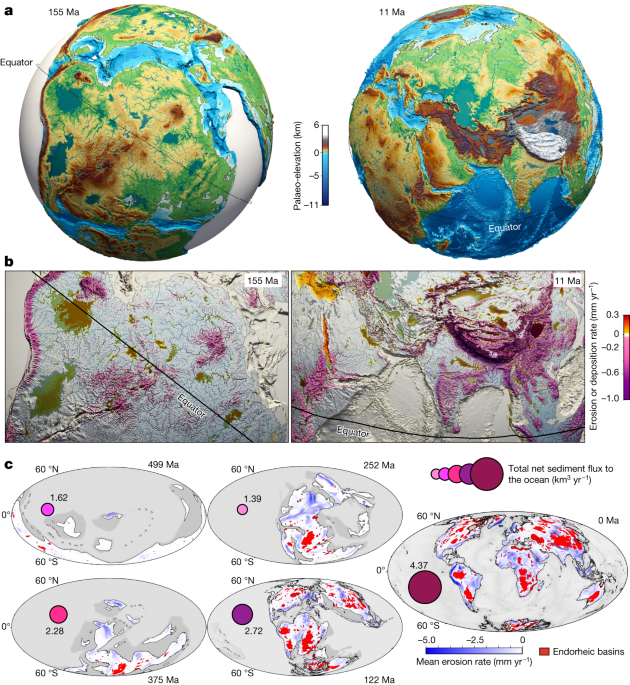
A new study examines the relationship between landscape dynamics and the diversification of marine and terrestrial life over the Phanerozoic eon. The researchers propose a method to quantify global-scale physiographic changes using a landscape evolution model. They find that sediment flux to the oceans and the diversity of marine animal families are strongly correlated, suggesting that nutrient availability plays a crucial role in marine biodiversity. Similarly, sedimentary flux onto continents and the physiographic variety of the landscape are found to be key factors in the diversification of terrestrial plants. The study highlights the importance of abiotic factors, such as sediment flux and physiographic changes, in shaping the biodiversity patterns of marine and terrestrial life.
- Landscape dynamics and the Phanerozoic diversification of the biosphere Nature.com
- New unified theory shows how past landscapes drove the evolution of Earth's rich diversity of life The Conversation
- Ancient life thrived after supercontinents trapped nutrient-rich soil New Scientist
- The overlooked role of landscape dynamics in steering biodiversity Nature.com
- Landscape dynamics determine the evolution of biodiversity on Earth, research reveals Phys.org
- View Full Coverage on Google News
Reading Insights
0
1
57 min
vs 58 min read
99%
11,525 → 114 words
Want the full story? Read the original article
Read on Nature.com