
Eocene global warming predicts wetter future.
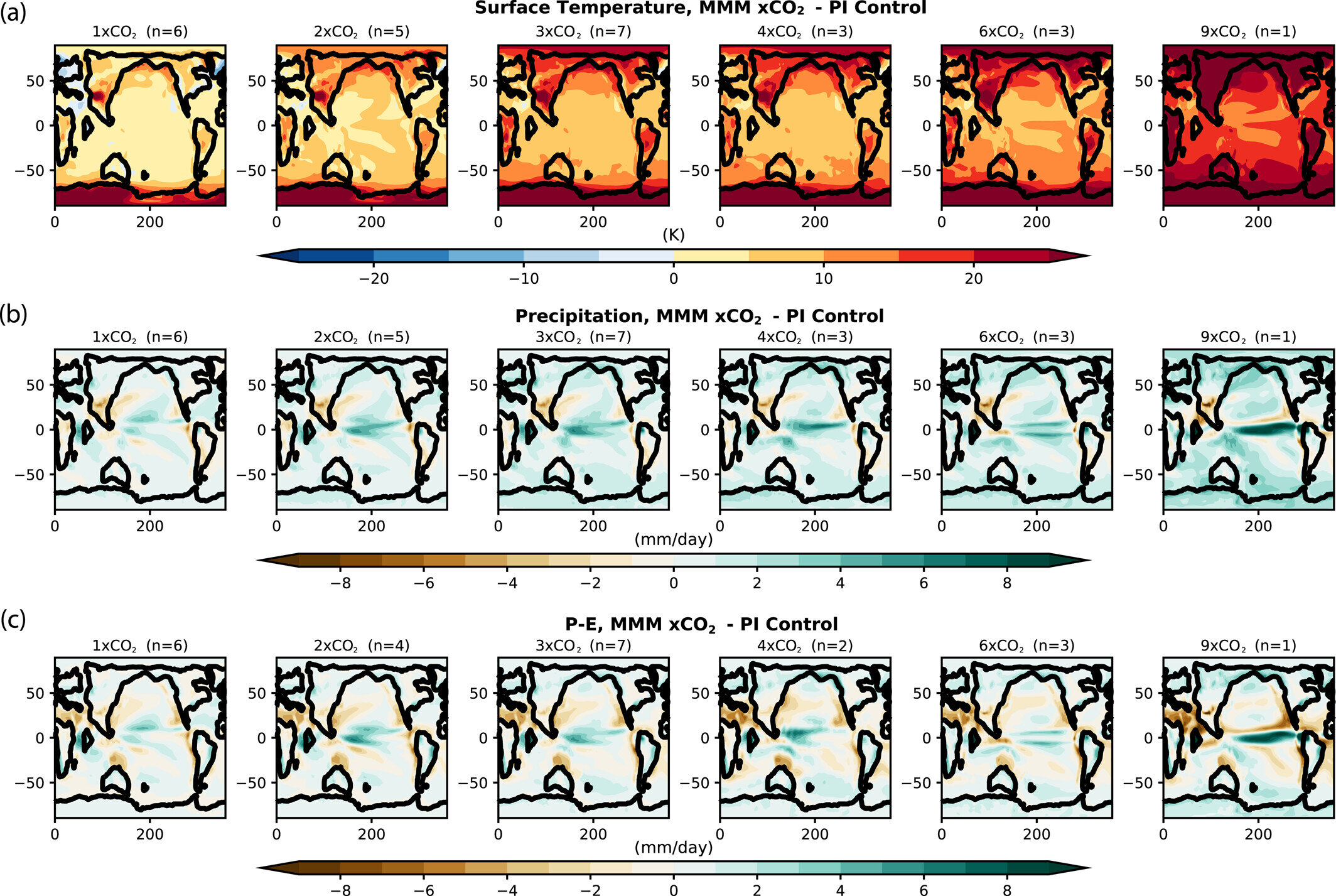
Modeling of Earth's response to global warming has suggested that dry regions will become more arid and wet regions will experience more precipitation, with an uneven distribution of moisture in the atmosphere. However, scientists have studied ancient global warming events to suggest that, at least for the subtropics, this may not be the case. The Early Eocene Climatic Optimum (56–48 million years ago) was one of the warmest intervals of the last 66 million years, with mean global surface temperatures over 14°C warmer than present. Researchers have used the Deep-Time Model Intercomparison Project (DeepMIP) to reconstruct global mean rainfall patterns during the early Eocene across the planet and found that higher global mean surface temperatures correlated with increased mean annual precipitation estimates.
Reading Insights
0
1
3 min
vs 4 min read
83%
733 → 122 words
Want the full story? Read the original article
Read on Phys.org