
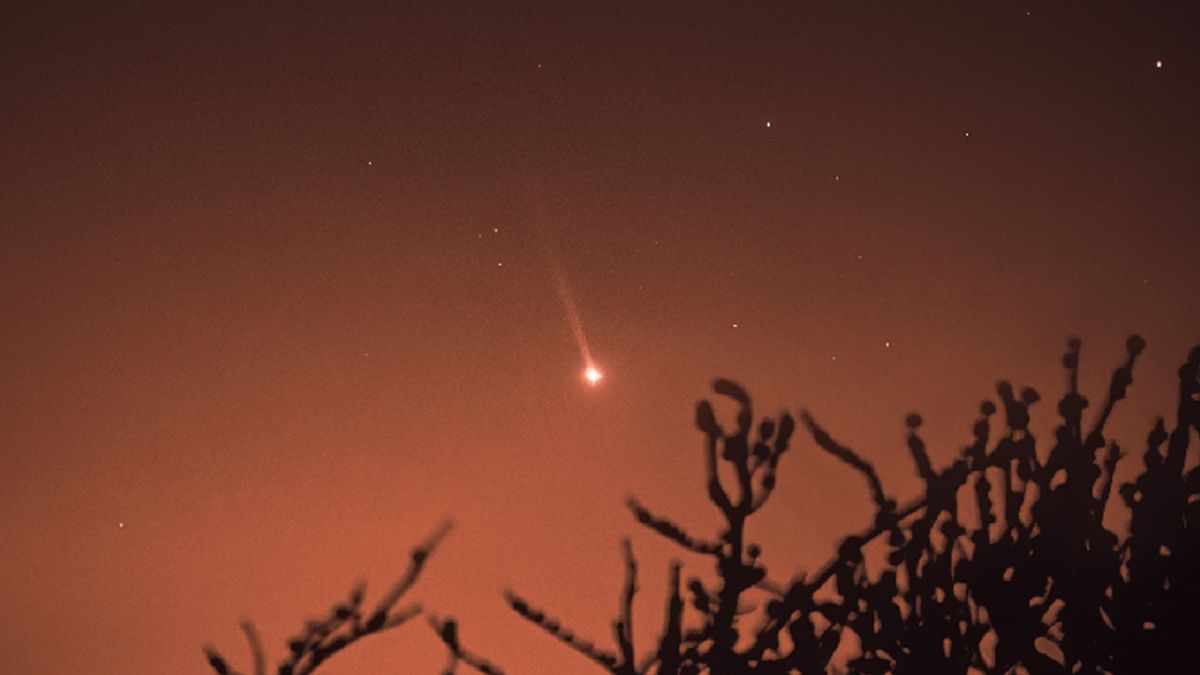
Stunning Image Captures Mercury's Giant Comet-Like Tail Near Sun
TL;DR Summary
Mercury's comet-like tail, made predominantly of sodium ions, was captured in a stunning image by astrophotographer Sebastian Voltmer. The tail is created by solar wind and micro-meteor impacts scattering sodium ions from the planet's surface. Mercury's tail is most visible from Earth 16 days after perihelion, which occurred on April 1 this year. The planet's tail stretches up to 14.9 million miles long, around 62 times greater than the distance between Earth and the moon. Mercury's tail is almost invisible to the naked eye, but can be seen with a specialized filter that highlights yellow wavelengths of light.
Reading Insights
Total Reads
0
Unique Readers
5
Time Saved
2 min
vs 3 min read
Condensed
83%
569 → 98 words
Want the full story? Read the original article
Read on Livescience.com