
"NASA's Webb Reveals Bizarre 'Cat's Tail' Dust Structure in Beta Pictoris"
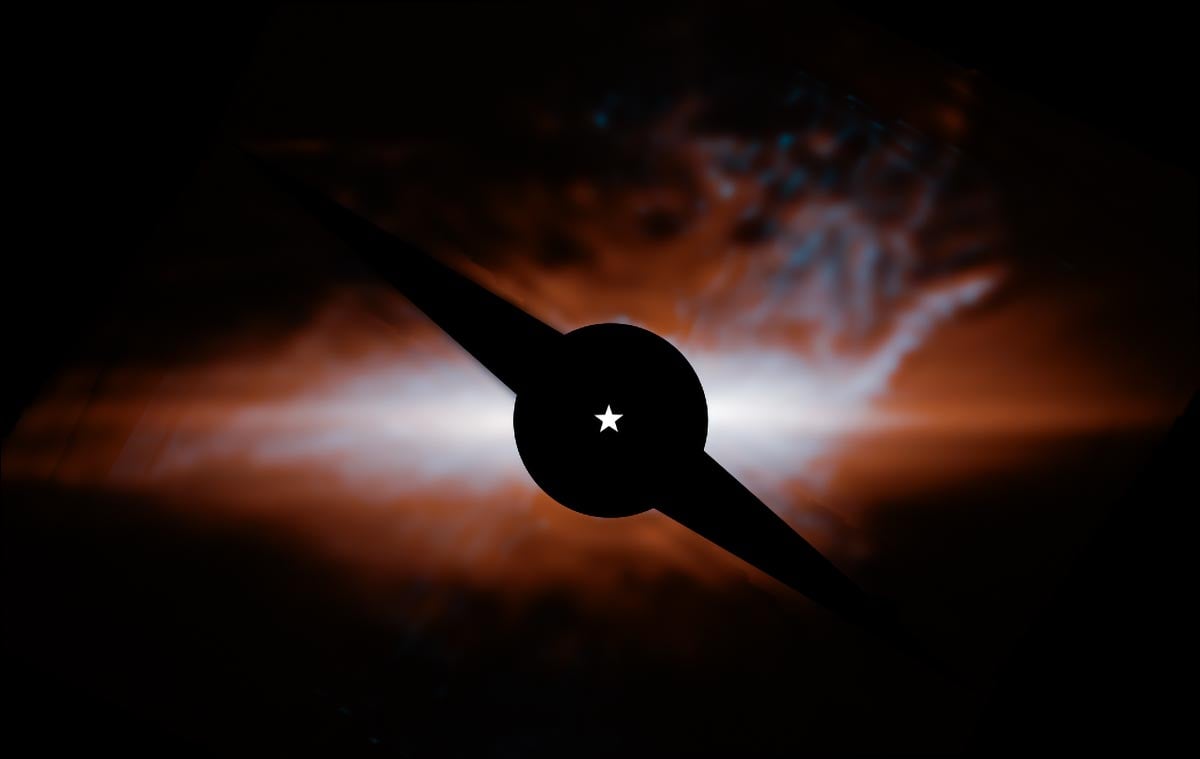
TL;DR Summary
The James Webb Space Telescope has discovered a cat's tail-shaped dust structure within the Beta Pictoris system, indicating recent dust production events and complex interactions within the system's debris disks. This finding expands our understanding of planetary system dynamics and provides new insights into the composition and temperature differences of the debris disks. The structure, estimated to span 10 billion miles, is believed to be the result of a dust production event, possibly a collision, that occurred around a hundred years ago. This discovery highlights the ongoing surprises and complexities within the Beta Pictoris planetary system.
Topics:science#astronomy#beta-pictoris#debris-disks#infrared-observations#james-webb-space-telescope#planetary-system-dynamics
- Webb's Infrared Eye Uncovers Bizarre “Cat's Tail” Dust Structure in Beta Pictoris SciTechDaily
- NASA's Webb Discovers Dusty 'Cat's Tail' in Beta Pictoris System NASA
- Webb’s New View of Beta Pictoris Suggests Recent Massive Collision Sci.News
- NASA's Webb Discovers Dusty 'Cat's Tail' in Beta Pictoris System | Webb WebbTelescope.org
- Webb discovers dusty cat's tail in Beta Pictoris system European Space Agency
Reading Insights
Total Reads
1
Unique Readers
8
Time Saved
9 min
vs 10 min read
Condensed
95%
1,825 → 96 words
Want the full story? Read the original article
Read on SciTechDaily