
"January's New Moon Showcases Mercury as a Brilliant 'Morning Star' on Friday"
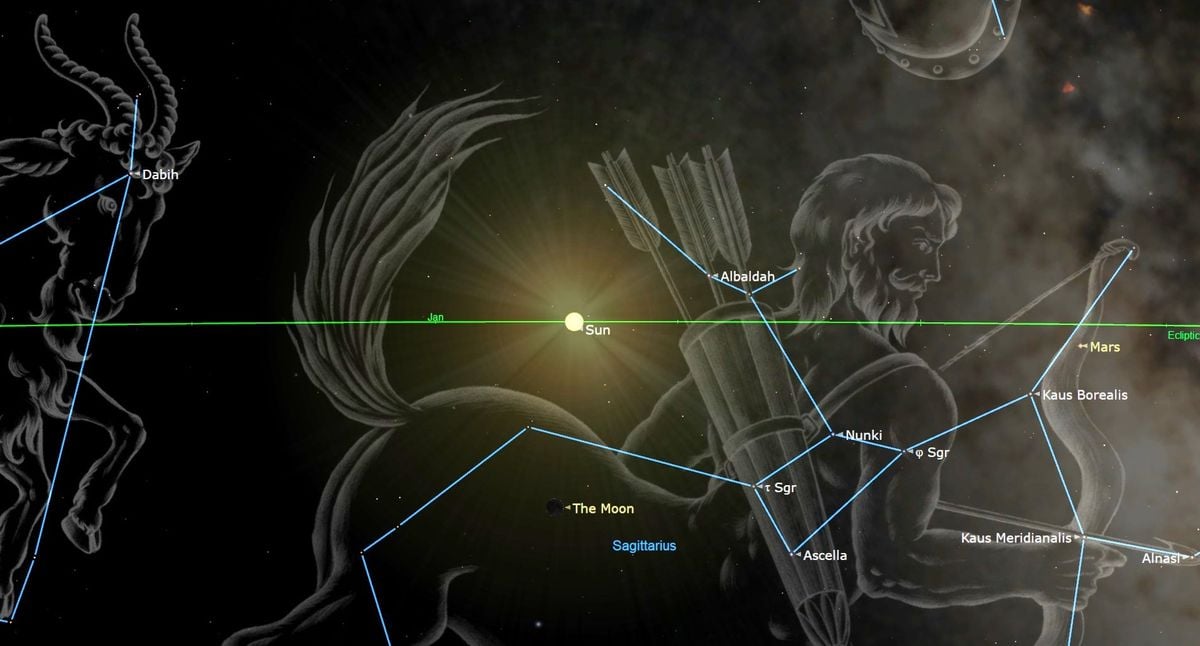
The new moon of January will occur on January 11, followed by Mercury reaching its greatest westward separation from the sun, making it visible as a "morning star." Skywatchers can use Venus to locate Mercury, and observing prospects for Mercury improve as one moves southwards towards the equator. In the evening sky, Jupiter and Saturn are visible, while winter constellations are in full swing for Northern Hemisphere observers. Southern Hemisphere observers can look out for prominent constellations such as Puppis, Carina, and Vela. If you're interested in observing the night sky during new moons, guides to telescopes and binoculars are recommended, and for photography, there are guides on how to photograph the moon and planets, as well as the best cameras and lenses for astrophotography.
Reading Insights
0
1
10 min
vs 11 min read
94%
2,108 → 125 words
Want the full story? Read the original article
Read on Space.com