
"James Webb Telescope Reveals Enormous 13-Billion-Year-Old Dead Galaxy, Challenging Cosmology"
TL;DR Summary
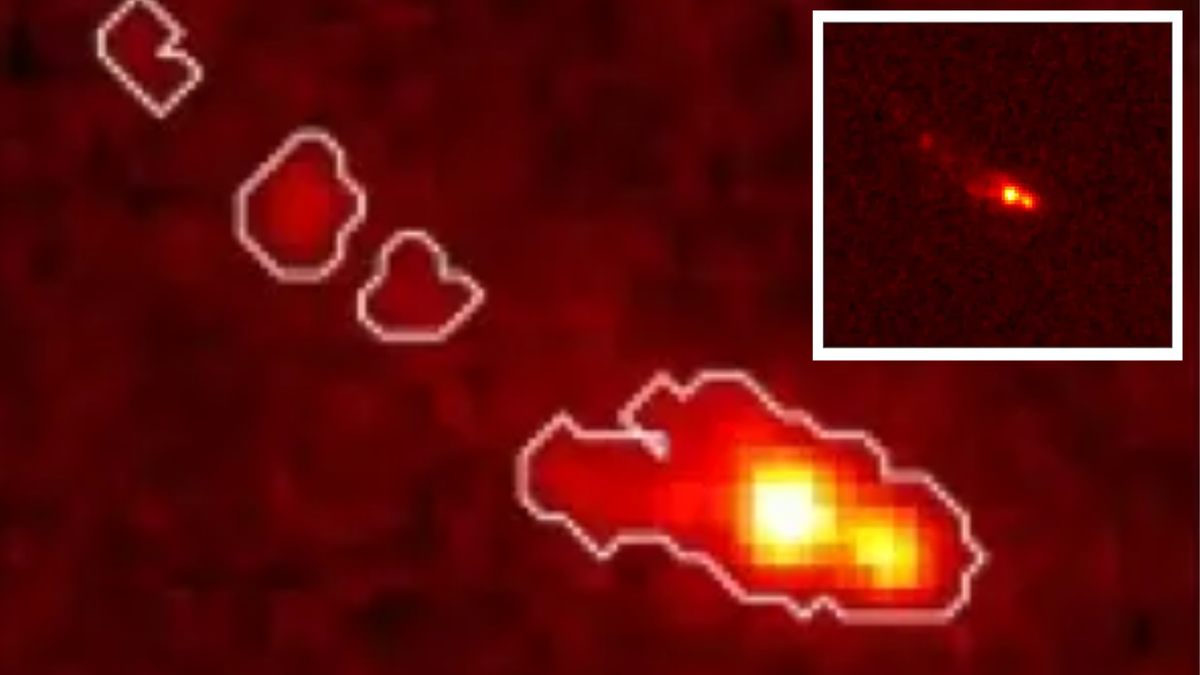
The James Webb Space Telescope has revealed that a speck of light observed by the Hubble Space Telescope is actually one of the oldest galaxies ever discovered, known as Gz9p3, seen just 510 million years after the Big Bang. The galaxy's massive size and mature state challenge previous understanding of early galaxies, and its complex shape indicates an ongoing merger between two galaxies. The observations also suggest a rapid accumulation of stars and metals in the early universe, shedding light on the role of galaxy mergers in stellar population growth.
Topics:science#ancient-galaxy#astronomy#early-universe#galaxy-merger#james-webb-space-telescope#stellar-population
- Speck of light glimpsed by Hubble is truly an enormous old galaxy, James Webb Space Telescope reveals Space.com
- James Webb telescope detects oldest 'dead' galaxy in the known universe — and its death could challenge cosmology Livescience.com
- The Webb Telescope Uncovered The Oldest 'Nearly Dead' Galaxy Astronomers Have Ever Seen Inverse
- Rewinding Cosmic Time With Webb's Discovery of a 13-Billion-Year-Old Dead Galaxy SciTechDaily
- Detailed pictures show galaxy growth in the early universe was much faster than first thought Phys.org
Reading Insights
Total Reads
0
Unique Readers
5
Time Saved
6 min
vs 7 min read
Condensed
93%
1,288 → 90 words
Want the full story? Read the original article
Read on Space.com