
Neanderthals' 75,000-year-old engravings found in Europe's oldest cave.
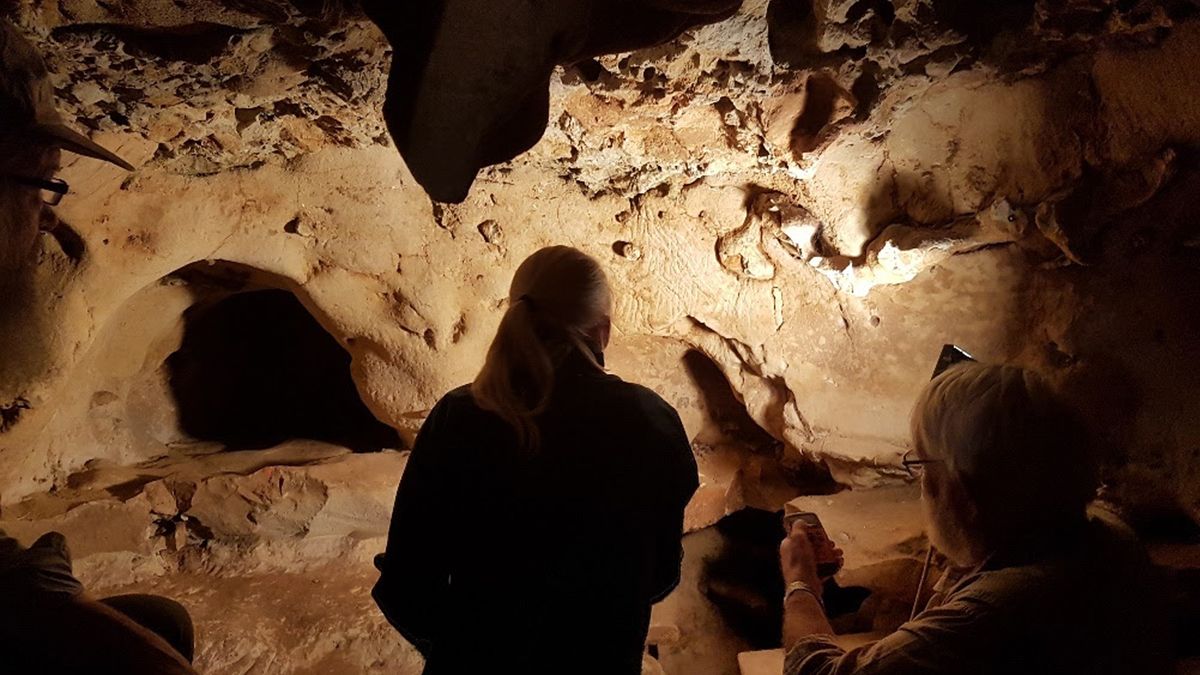
Neanderthals likely created Europe's oldest-known engravings, discovered in a French cave sealed for tens of thousands of years, according to a study published in PLOS One. The cave of La Roche-Cotard, 150 miles southwest of Paris, contained eight panels with more than 400 traces of abstract lines and dots. The researchers concluded that the engravings were made by Neanderthals with their fingers, just as the researchers did in an experiment. The engravings are lines called "finger flutings," made when someone swiped their fingers flat along the silt-covered wall. The cave closed up at least 57,000 years ago and possibly as long as 75,000 years ago, making it "highly unlikely" that anatomically modern humans had access to the inside of the cave.
- Neanderthals created Europe's oldest 'intentional' engravings up to 75000 years ago, study suggests Livescience.com
- Oldest Known Neanderthal Engravings Were Sealed in a Cave for 57000 Years Smithsonian Magazine
- World's Oldest Cave Engravings Found, But Homo Sapiens Were Not The Artist IFLScience
- Could these marks on a cave wall be oldest-known Neanderthal “finger paintings”? Ars Technica
- Neanderthal cave engravings identified as oldest known, more than 57,000 years old Phys.org
Reading Insights
0
1
4 min
vs 5 min read
86%
839 → 121 words
Want the full story? Read the original article
Read on Livescience.com