
Effort amplifies dopamine through local acetylcholine signaling in the reward circuit
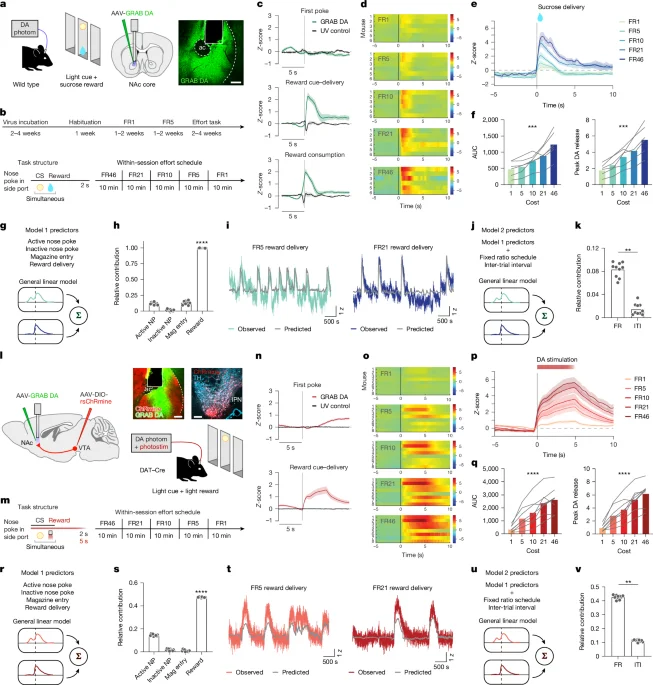
New mouse study shows that high effort for a reward triggers rapid acetylcholine release in the nucleus accumbens, which acts on nicotinic receptors to boost dopamine release at the terminals. This cholinergic modulation specifically enhances dopamine during high-effort rewards and tracks exerted effort rather than reward size. Blocking nicotinic signaling (DHβE) or acetylcholine transmission blunts the enhanced dopamine response and impairs effortful behavior, while low-effort reward consumption remains intact. The findings suggest that local DA terminal modulation by acetylcholine, rather than ventral tegmental area cell-body activity, drives effort-based reward seeking.
Reading Insights
1
3
84 min
vs 85 min read
99%
16,989 → 90 words
Want the full story? Read the original article
Read on Nature