
Cocaine Chemogenetics Reduces Drug-Seeking Behavior
TL;DR Summary
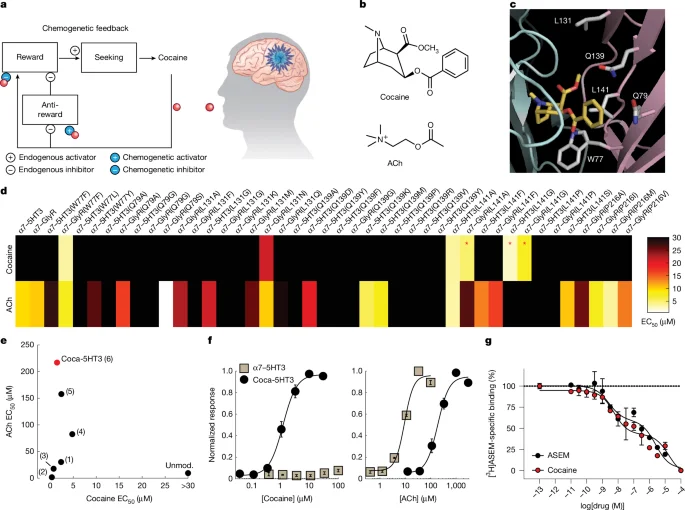
Researchers developed cocaine-gated chemogenetic receptors that can precisely respond to cocaine exposure, allowing for targeted modulation of neural circuits involved in addiction. These engineered channels, selective for cocaine over natural rewards and other drugs, were used to suppress cocaine-seeking behavior in rats by activating specific brain circuits during drug exposure, thereby reducing dopamine release and reinforcing effects. This innovative approach offers a new avenue for studying and potentially treating cocaine addiction through dynamic, drug-specific neural control.
Reading Insights
Total Reads
0
Unique Readers
8
Time Saved
59 min
vs 60 min read
Condensed
99%
11,889 → 76 words
Want the full story? Read the original article
Read on Nature