
Unveiling the Cosmic Origins: Early Universe's Black Holes and Galaxies
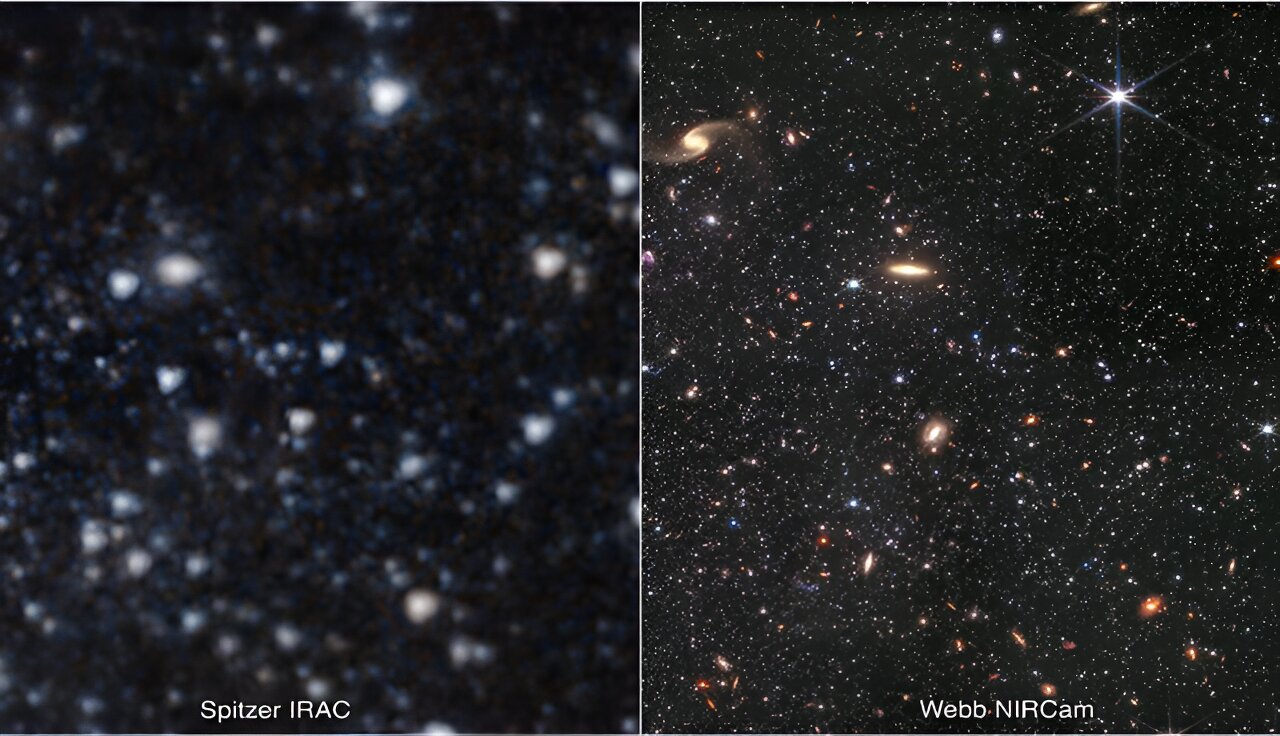
Using data from NASA's James Webb Space Telescope, a research team led by Rutgers University has uncovered clues to the conditions of the early universe by cataloging the ages of stars in the Wolf–Lundmark–Melotte (WLM) galaxy, a neighbor of the Milky Way. The team's findings, published in The Astrophysical Journal, provide a detailed picture of WLM's star formation history, revealing that the galaxy's ability to produce stars fluctuated over time, pausing for a few billion years due to the high temperature of the early universe before reigniting. This research, part of NASA's Early Release Program, sheds light on the evolution of galaxies and the impact of early universe conditions on star formation.