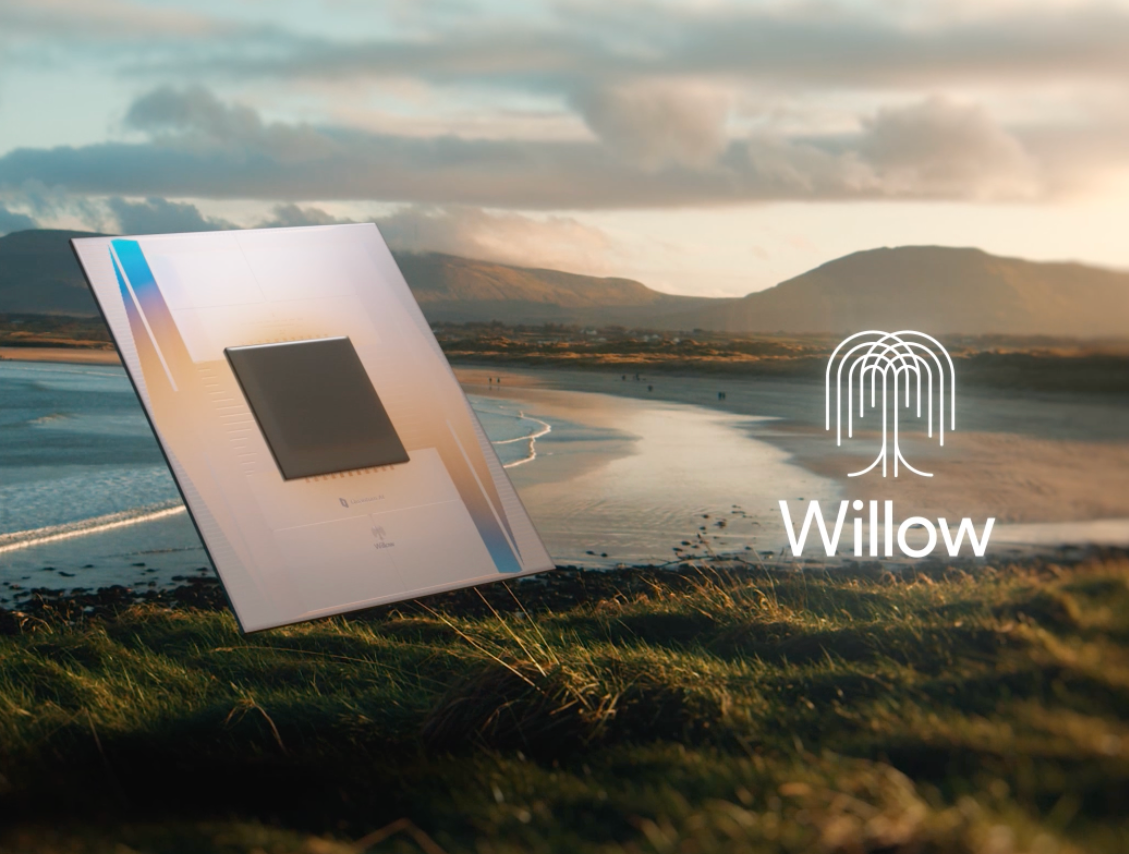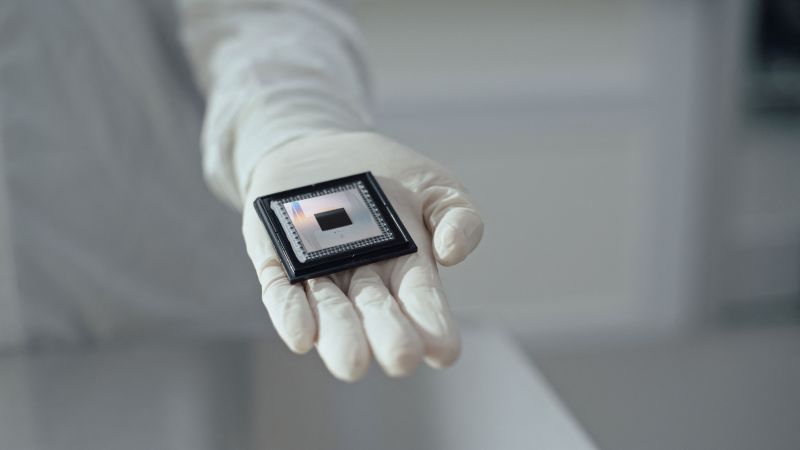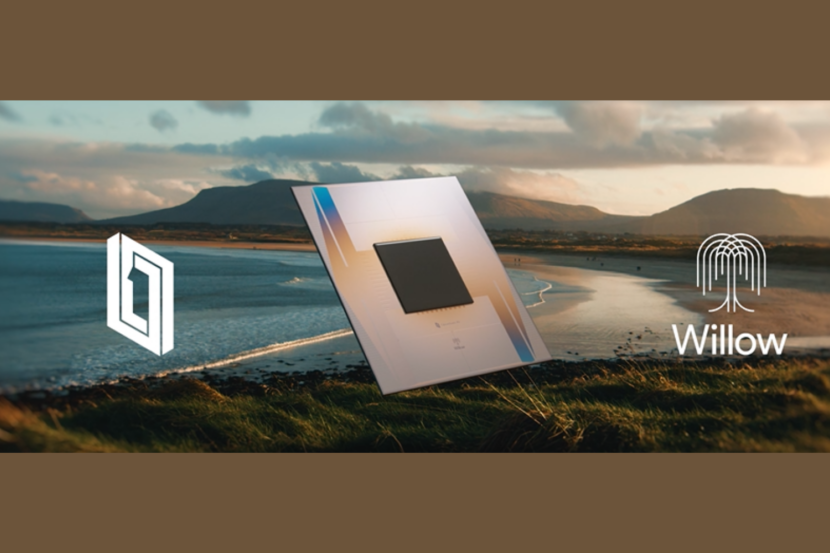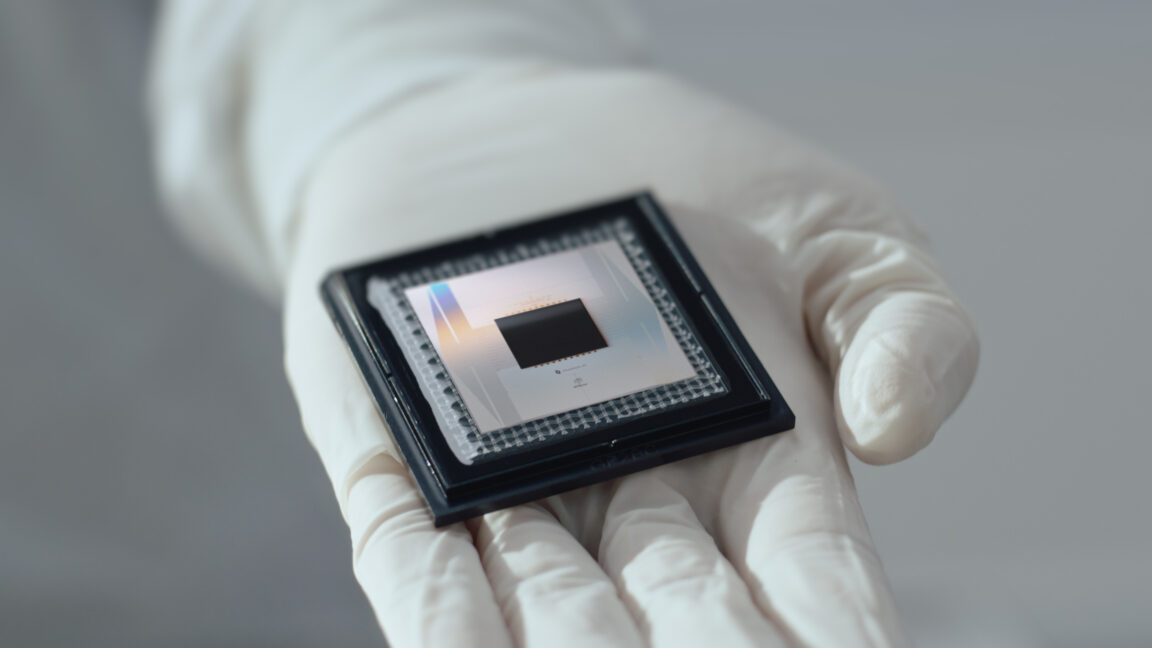
Google's CEO Sundar Pichai announced a major breakthrough in quantum computing with the Willow chip achieving the first verifiable quantum advantage, running algorithms 13,000 times faster than classical supercomputers, marking a significant step toward practical quantum applications and boosting Google's competitive edge in the field.

Google has unveiled a new quantum computing chip called Willow, capable of performing complex calculations in just five minutes, drawing significant attention to quantum computing companies. This development has led to increased interest in quantum stocks, with companies like QUBT, RGTI, IONQ, and QBTS being highlighted for their potential in the market.
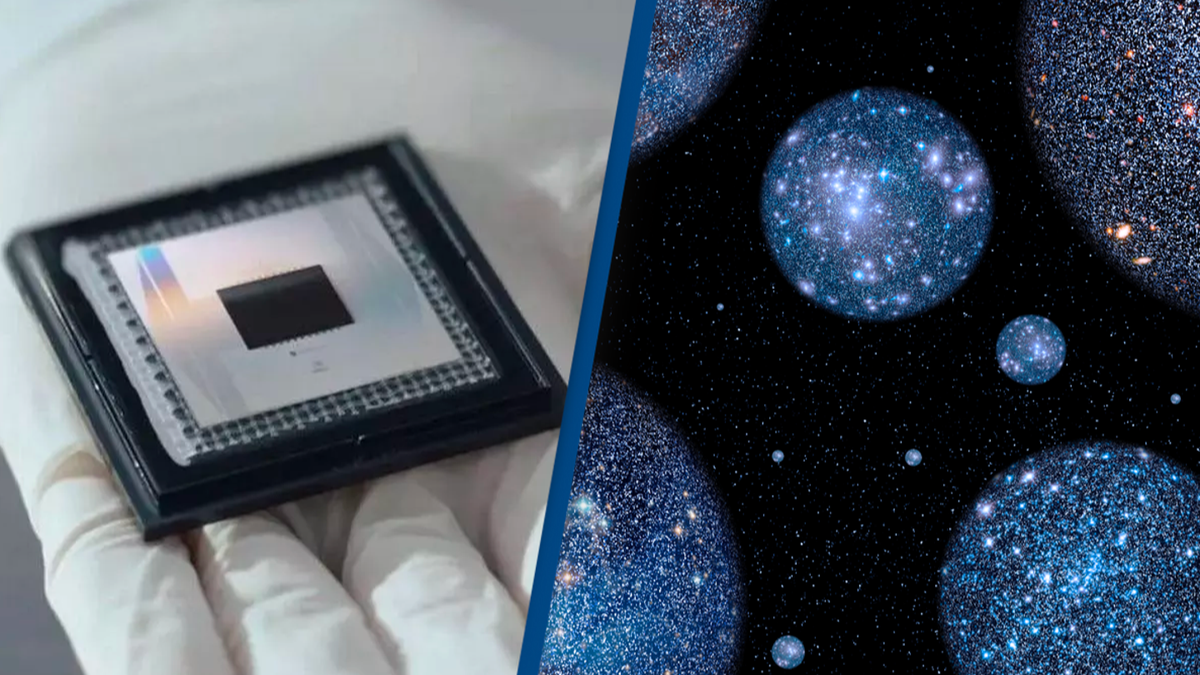
Google has unveiled a revolutionary quantum computing chip named 'Willow' that reportedly performs computations in under five minutes, which would take current supercomputers ten septillion years. This unprecedented speed has led Google to suggest that quantum computation may occur across parallel universes, supporting the multiverse theory. The Willow chip marks a significant advancement in quantum computing, with potential future applications in practical, commercially-relevant algorithms that surpass the capabilities of conventional computers.
Google's new quantum computing chip, Willow, is being hailed as a breakthrough, causing a surge in quantum computing stocks like D-Wave Quantum and Rigetti Computing. The chip reportedly reduces errors exponentially with more qubits, sparking both excitement and concerns about its potential to crack encryption like Bitcoin's. Investors, including hedge fund manager Eric Jackson, are optimistic about the sector, with analysts particularly bullish on stocks like QBTS and RGTI.
Google's new quantum chip, Willow, has demonstrated computing capabilities far beyond the world's best supercomputers, completing tasks in minutes that would take traditional systems billions of years. This breakthrough, which impressed figures like Elon Musk, marks a significant step towards practical quantum computing, as it shows reduced error rates even with increased qubits. While quantum computers won't replace conventional systems soon, Willow's success highlights their potential in fields like drug discovery and weather prediction, offering more energy-efficient solutions than current supercomputers.
Google has unveiled a new quantum chip named Willow, marking a significant advancement in quantum error correction. The chip stabilizes a single logical qubit to the point where errors occur only once per hour, a major improvement over previous systems. Willow's architecture and error-correcting algorithms allow for exponential error suppression as the number of encoded qubits increases. This development is a crucial step towards practical large-scale quantum computing, although achieving the necessary error rates for widespread application remains a challenge.
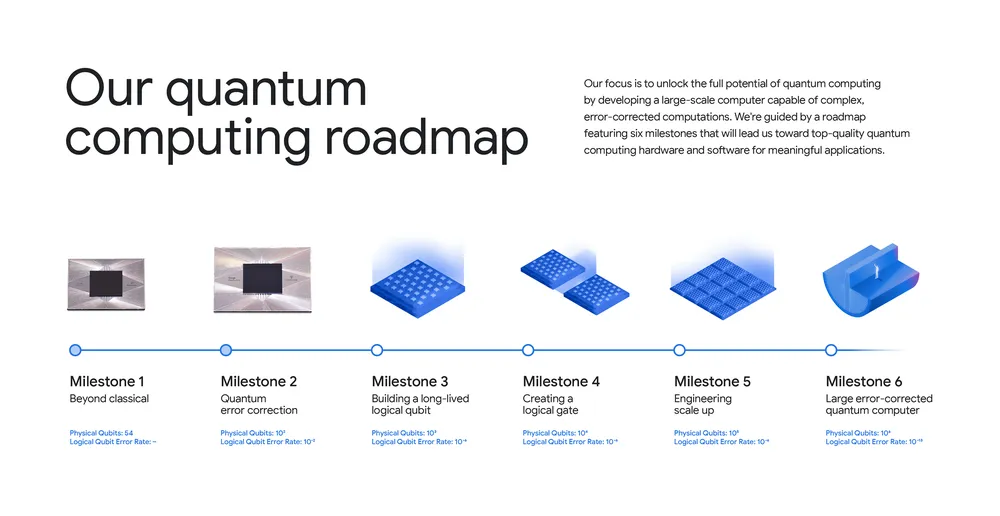
Alphabet's stock surged over 5% after Google announced a breakthrough quantum computing chip named Willow, capable of performing computations in minutes that would take supercomputers 10 septillion years. This advancement marks the second milestone in Google's quantum computing roadmap, aiming for a large, error-corrected quantum computer with applications in various fields like drug discovery and energy. The announcement highlights Willow's ability to reduce errors as more qubits are used, a significant step in quantum error correction.
Google has unveiled its new quantum computing chip, Willow, which reportedly performs computations at speeds suggesting it may be tapping into computational power from parallel universes, supporting the multiverse theory. This claim, made by Google Quantum AI founder Hartmut Neven, has sparked both intrigue and skepticism. While some experts find the idea plausible, others caution that the performance benchmarks are based on Google's own metrics, which may not conclusively prove the existence of parallel universes. The Willow chip aims to reduce errors in quantum computing, a significant challenge in the field.
Google has unveiled its latest quantum chip, Willow, which focuses on reducing errors by incorporating more qubits, rather than claiming quantum supremacy as it did controversially in 2019. The company continues to use random circuit sampling (RCS) as a performance metric, despite its lack of real-world applications, while competitors like IBM and Honeywell use quantum volume for a more comprehensive assessment of quantum computing capabilities.
Google has unveiled its new quantum chip, Willow, which has impressed even Elon Musk. The chip is touted as a breakthrough in quantum computing, capable of solving problems that would take traditional computers billions of years. Willow's key innovation is its ability to reduce errors exponentially as it scales, a challenge that has persisted for nearly 30 years. This advancement could lead to significant scientific and technological developments, including new medicines and energy solutions. Google is also making resources available to help developers create future-solving algorithms.
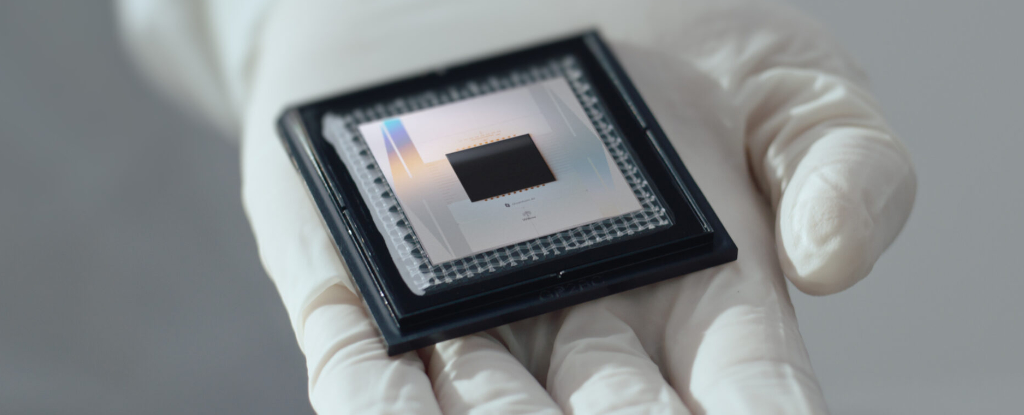
Google announced a breakthrough in quantum computing with its new Willow chip, which solved a complex problem in five minutes that would take a classical computer an impractical amount of time. The chip features 105 qubits and incorporates error-correction techniques that improve reliability as more qubits are added. This advancement marks a significant step towards practical quantum computing, with potential future applications in fields like medicine and artificial intelligence. Google's dedicated fabrication facility aims to accelerate the development of future chips.
Google Quantum AI has unveiled its new quantum chip, Willow, which can perform computations in minutes that would take supercomputers 10 septillion years. The chip marks a significant advancement in quantum computing by exponentially reducing errors as more qubits are added, achieving "below-threshold" error rates. Willow's breakthrough in real-time error correction on a superconducting quantum system highlights its industry-leading performance. The chip's development is part of Google's long-term roadmap to create commercially relevant quantum applications, with collaborations like Nvidia fostering further advancements.
Google's quantum computing team has achieved a significant milestone by stabilizing an error-corrected quantum bit for an hour using their new Willow chip, which features 105 qubits. This advancement demonstrates the potential of quantum error correction to support complex algorithms. Google has also invested in its own fabrication facility to enhance process control and reduce noise in its superconducting processors. The work highlights the exponential improvements in error correction as more hardware qubits are dedicated to a single logical qubit, paving the way for more reliable quantum computing.
Google has announced a breakthrough in quantum computing with its new Willow chip, which can solve complex problems much faster than classical computers. The chip features 105 qubits and incorporates error-correction techniques that improve reliability as more qubits are added. This advancement is a significant step towards practical quantum computing, with potential future applications in fields like medicine and artificial intelligence. Google's dedicated fabrication facility aims to accelerate the development of future chips.