MIT researchers have significantly improved the precision of prime editing by engineering proteins to reduce errors, making gene therapy safer and more reliable for treating genetic disorders.
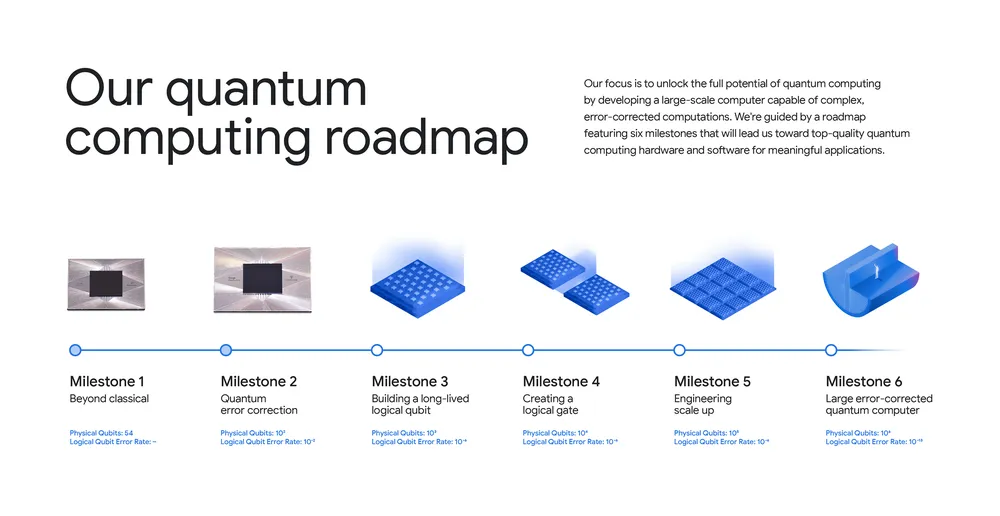
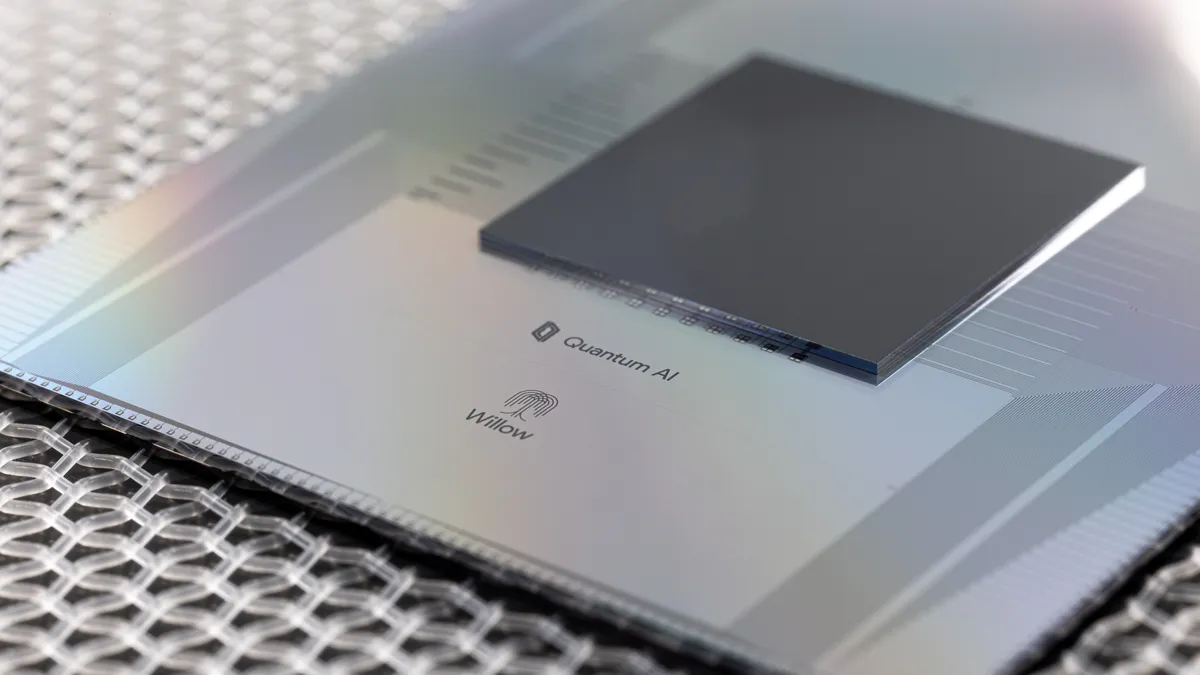
Google has unveiled its latest quantum chip, Willow, which focuses on reducing errors by incorporating more qubits, rather than claiming quantum supremacy as it did controversially in 2019. The company continues to use random circuit sampling (RCS) as a performance metric, despite its lack of real-world applications, while competitors like IBM and Honeywell use quantum volume for a more comprehensive assessment of quantum computing capabilities.
Google has unveiled its new quantum chip, Willow, which significantly reduces error rates as more qubits are added, a longstanding challenge in quantum computing. This breakthrough, known as 'below threshold,' allows Willow to perform computations exponentially faster than the world's most powerful supercomputer, Frontier. The chip's performance was validated using the random circuit sampling benchmark, indicating the potential for large-scale, practical quantum computers. Willow's advancements could revolutionize fields like drug development and battery design.
Physicists have successfully transformed a quantum processor into a time crystal, a state of matter that could enhance the practicality of quantum computing by reducing errors. Time crystals, which exhibit periodic motion without external influence, were proposed by Frank Wilczek in 2012. This breakthrough, achieved by a team from China and the US, demonstrates the potential of using topological time crystals to maintain stability in quantum systems, even amidst environmental noise. The research, published in Nature Communications, marks a significant step towards more reliable quantum computing.