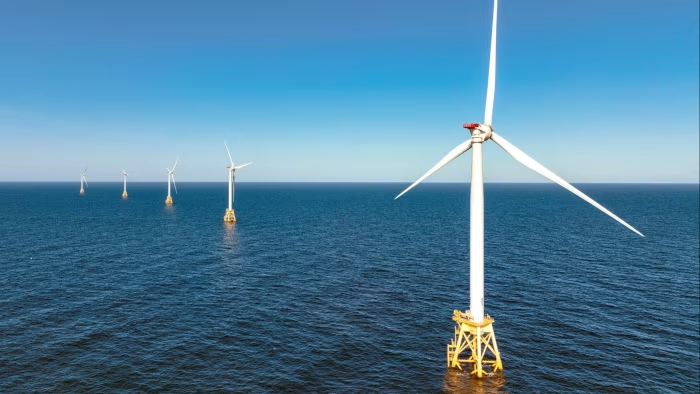
The US has halted construction on Ørsted's $1.5 billion Revolution Wind offshore wind farm off Rhode Island due to national security concerns, causing delays and financial strain for the Danish energy company, which is already facing challenges with its global projects and market confidence.
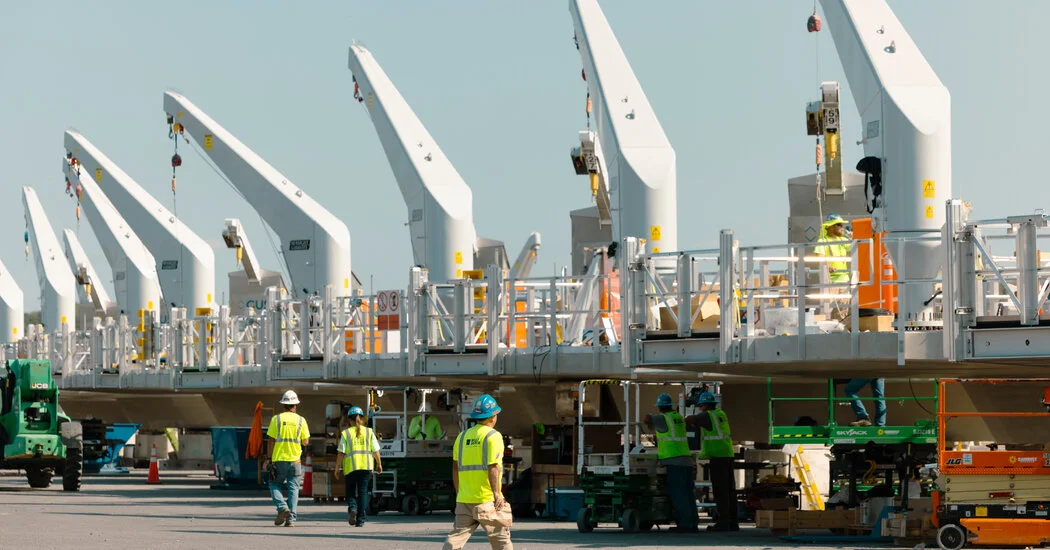
Orsted plans to raise $9.4 billion through a share offering due to industry challenges exacerbated by the Trump administration's skepticism towards wind energy, leading to a significant drop in its stock price and casting doubt on future offshore wind projects in the US.
Orsted will have a new partner in its US offshore wind projects as Eversource agrees to sell its 50% stakes in the South Fork and Revolution Wind projects to Global Infrastructure Partners (GIP), which is in the process of being acquired by BlackRock. The deal is valued at $1.1bn and marks a significant development in the US offshore wind sector.
A study by the US Department of Energy's National Renewable Energy Laboratory (NREL) has found that US offshore wind has the potential to generate 133 GW of power by 2050, accounting for 8% of US electricity. However, the deployment of offshore wind will be influenced by various factors, including decarbonization policies, technology costs, siting options for onshore renewables, and interregional transmission. The study highlights the need for greater coordination between local, state, and federal authorities in the power sector and offshore wind infrastructure planning.