TSMC, the world's largest contract chipmaker, reported a Q4 revenue of T$1,046.08 billion ($33.05 billion), surpassing forecasts and increasing 20.45% year-over-year, driven by rising interest in AI applications.
TSMC stock has received a new street-high price target from Goldman Sachs, which cites the company as a 'multi-year growth engine,' indicating strong future prospects for the semiconductor giant.
TSMC shares surged to a record high after Goldman Sachs raised its price target, driven by strong optimism over AI demand and the company's growth prospects, with analysts viewing AI as a multi-year growth engine for the chipmaker.
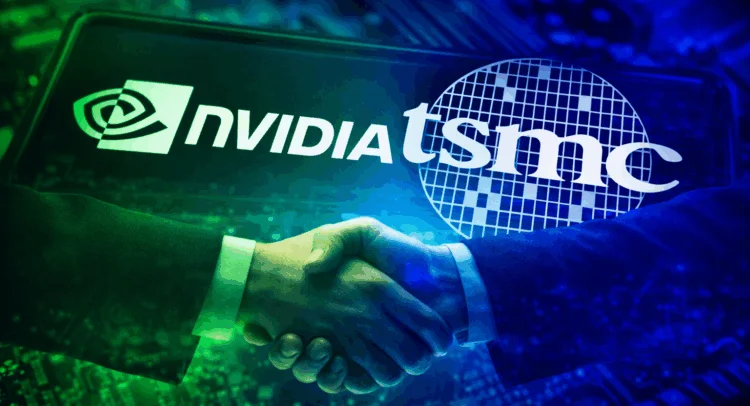
The article recommends Nvidia and TSMC as top long-term AI stocks, highlighting Nvidia's dominant GPU position and recent acquisitions, and TSMC's crucial role in manufacturing advanced chips for AI infrastructure, both poised to benefit from the ongoing AI growth over the next decade.
The U.S. government has granted TSMC an annual license to import U.S. chipmaking tools into its Nanjing facility in China, ensuring uninterrupted operations and deliveries, as part of a shift from previous exemptions that expired at the end of 2023. This license allows TSMC to continue producing chips, including mature node chips, at its Nanjing plant, which contributes about 2.4% to its revenue.
Nvidia is seeking to increase production of its H200 AI chips through TSMC due to high Chinese demand, with orders exceeding current stock and plans for expanded manufacturing starting in Q2 2026, amidst ongoing regulatory uncertainties.
Taiwan Semiconductor Manufacturing (TSMC) is positioned for significant long-term growth due to its crucial role in producing chips for AI development, benefiting from the increasing demand for AI accelerators and data center hardware, making it a compelling investment for the next decade.
A 7.0 magnitude earthquake struck off Taiwan's northeastern coast near Yilan, causing shaking in Taipei, minor damages, and evacuations at TSMC facilities, but no major damage or tsunami was reported. The event highlights Taiwan's vulnerability to earthquakes and the potential global impact on semiconductor supply chains.
A 6.6 magnitude earthquake struck off Taiwan's northeastern coast near Yilan, causing building damage and evacuations but no major injuries or tsunami threat. The quake prompted safety measures including evacuations at TSMC facilities, highlighting Taiwan's vulnerability to seismic activity and its importance in global semiconductor supply chains.
Billionaire hedge fund manager Philippe Laffont has invested about a third of his portfolio in six AI stocks, including Meta, Microsoft, TSMC, Amazon, Nvidia, and Alphabet, which he believes will dominate in 2026 due to the booming AI industry and increased data center spending. These stocks are positioned to benefit from the growing demand for AI infrastructure and computing power, making them attractive investments as they are currently below their all-time highs.
The semiconductor industry is expected to see significant growth in 2026, driven by AI and advanced chip manufacturing, with top stocks like TSMC, ASML, and Nvidia poised for substantial gains due to increased demand and capacity expansion.
The article recommends buying and holding Nvidia, TSMC, and ASML stocks for the next decade, highlighting their crucial roles in the AI and semiconductor markets, with strong growth prospects driven by expanding AI adoption and technological advancements.
TSMC reported a slowdown in its October sales growth to 16.9%, the slowest since February 2024, raising concerns about the sustainability of the AI boom despite ongoing investments by major tech firms like Nvidia, Meta, and Microsoft. The company's revenue increase covers only a single month, adding uncertainty to the future of AI-driven growth amid market volatility and limited chip supplies.
TSMC's October sales growth slowed to 16.9%, the slowest since February 2024, amid concerns over the sustainability of the AI boom, despite strong industry demand and significant investments by major tech companies. While short-term growth has cooled, industry leaders remain optimistic about AI-driven expansion, with chip demand remaining high and supply tight.